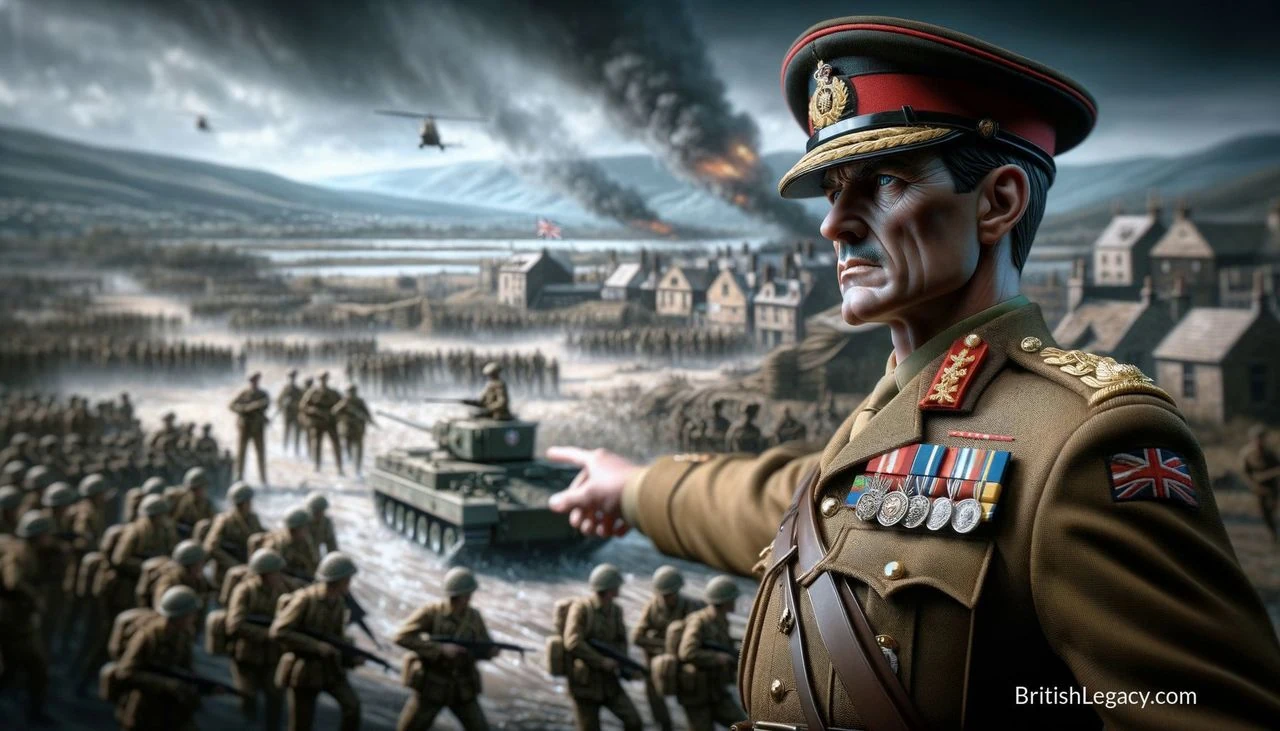
Sir Michael Jackson’s career placed him at two consequential points in Britain’s recent military history: the NATO deployment in Kosovo in 1999 and the leadership of the British Army as Chief of the General Staff from 2003. His work ranged from intelligence and staff appointments to operational command. In Kosovo, a confrontation over Russian forces at Pristina airport brought his judgement into sharp public focus; later, as the Army’s professional head, he served during the Iraq War and the wider War on Terror.
From Sheffield to military service
Michael David Jackson was born in Sheffield, Yorkshire, on 21 March 1944. He attended Stamford School before studying at the Royal Military Academy Sandhurst. In 1963 he was commissioned into the Intelligence Corps, beginning a military career that would span nearly four decades. The sequence of these early steps—from school to Sandhurst and then an intelligence appointment—preceded a career that took him through staff work, brigade command and the Army’s senior professional post.
His subsequent appointments included staff work during the Troubles in Northern Ireland and command of the 3rd Infantry Brigade. These roles took him between the work of a staff officer and the responsibilities of command. His career is described as bringing experience of both conventional and unconventional warfare, though no particular operations from this period are identified. The progression from intelligence service to senior leadership provides a more concrete outline of his development than the broad claims of strategic distinction sometimes made about military careers.
KFOR and the confrontation at Pristina
In 1999 Jackson commanded the NATO Kosovo Force (KFOR), the international force deployed in Kosovo after the conflict there. Its stated purpose was to help restore peace and stability in a region marked by ethnic conflict. Command in that setting involved military responsibilities in a tense international environment, where the conduct of forces and the risk of escalation mattered alongside the aims of the deployment.
One episode became particularly associated with Jackson’s command. Russian forces moved to Pristina airport, and Jackson negotiated with them over the transition there. The account of the episode also records a sharp exchange with US General Wesley Clark. Jackson’s reported response was: “I’m not going to start the Third World War for you”. The remark has since served as a shorthand for his refusal to let the airport dispute become a wider confrontation. Its significance lies not simply in the retort, but in the balance it suggests between maintaining military resolve and avoiding escalation between forces in a fraught international situation.
The episode also helps explain why Jackson’s Kosovo service occupies such a prominent place in accounts of his career. A negotiation at an airport may appear narrower than the wider task of restoring stability, but it brought the competing pressures of command into focus: military objectives, relations with allies and the possibility of a larger crisis. The record identifies the negotiations and the reported exchange, without setting out their full operational consequences. It is therefore possible to describe the tension surrounding the episode without claiming a definitive outcome or attributing unrecorded motives to those involved.
Leading the Army through a period of war
In 2003 Jackson became Chief of the General Staff, the professional head of the British Army. He held the position during the Iraq War and the wider War on Terror, a period that placed demands on the Army’s readiness and ability to adapt. His stated priority was modernisation: keeping the force versatile enough to meet contemporary and future threats.
He also argued for attention to the welfare of soldiers and their families, linking the well-being of personnel to the effectiveness of the military. His tenure is associated with revisions to training programmes and the strengthening of support systems. Those aims connect organisational decisions with the people expected to serve within the Army, although the available account does not name individual reforms or measure their effects. The work can be described as part of his responsibilities for the Army’s professional direction, rather than as a set of outcomes whose scale is established here.
Jackson’s senior role made him a public representative of the Army as well as its professional leader. The demands of the period brought operational readiness, organisational change and personnel welfare into the same field of responsibility. His career connected staff service during the Troubles and command in Kosovo with institutional leadership during the Iraq War and the War on Terror. That span helps explain why his public reputation rests both on a dramatic international episode and on the less visible work of leading a large military organisation.
Honour and public reputation
Jackson was appointed a Knight Grand Cross of the Order of the Bath (GCB) in recognition of his service. His public reputation has been closely linked to Kosovo, particularly the negotiations at Pristina airport and the reported exchange with Clark. Those moments offer a vivid account of his command, but they do not, on their own, describe the breadth of his career. He had entered the Army through the Intelligence Corps, served in staff roles, commanded a brigade and later led the service as a whole.
Claims that his career reshaped military doctrine or had a lasting influence in international military circles are not accompanied by specific examples in the account. A grounded measure of his position is the sequence of responsibilities he held, from intelligence officer to KFOR commander and Chief of the General Staff. Together, these appointments place him among senior British military figures whose work brought operational command, international relations and the development of the Army into the same career.
Why Sir Michael Jackson deserves a place in British Legacy
Jackson’s place in British Legacy rests on the responsibilities he held and the decisions associated with them. As commander of KFOR in 1999, he led an international force in a fragile post-conflict setting. The negotiations over Russian forces at Pristina airport show how a military commander could face pressure to act while also having to consider the danger of escalation. The reported exchange with Wesley Clark has kept that tension in public memory, but the underlying achievement was the exercise of command in a situation involving several forces and a volatile political context.
His later service as Chief of the General Staff brought a different contribution. From 2003, he led the professional head of the British Army through a period shaped by the Iraq War and the War on Terror, with responsibility for modernisation and an expressed concern for soldiers and their families. These strands connect Jackson’s story to the British military institution: its operations overseas, its leadership at home and the people expected to carry out its work. That record offers a specific basis for remembrance without turning his career into a claim of unmeasured influence or unqualified praise.