Certainly! Here’s a comprehensive, engaging, and informative article on Captain Albert Ball:
Captain Albert Ball: A Hero of the Skies in the Great War
In the annals of British military history, few names evoke as much reverence and admiration as that of Captain Albert Ball. A World War I flying ace and recipient of the prestigious Victoria Cross, Ball's story continues to capture the imagination and respect of those who cherish the great British legacy. His extraordinary skills, gallant spirit, and unwavering dedication to his nation’s cause have cemented his place in Britain’s rich and illustrious heritage.
Early Life: The Making of a Hero
Albert Ball was born on 14th August 1896 in Nottingham, England, a city known for its rich industrial history and legendary folklore of Robin Hood. The son of Sir Albert Ball, a wealthy businessman and politician, young Albert enjoyed the privileges of an affluent upbringing but was also imbued with a strong sense of duty and public service. He attended Trent College and the Nottingham High School, showing an early interest in mechanics and technology—a foreshadowing of his future role in aviation.
Soaring to New Heights
With the outbreak of World War I, Ball enlisted in the British Army in 1914, joining the Sherwood Foresters (Nottinghamshire and Derbyshire Regiment). But it was in the nascent Royal Flying Corps—an entity that would later become the Royal Air Force—where Ball found his true calling. By 1915, he had earned his pilot’s wings and was soaring above the trenches, quickly making a name for himself.
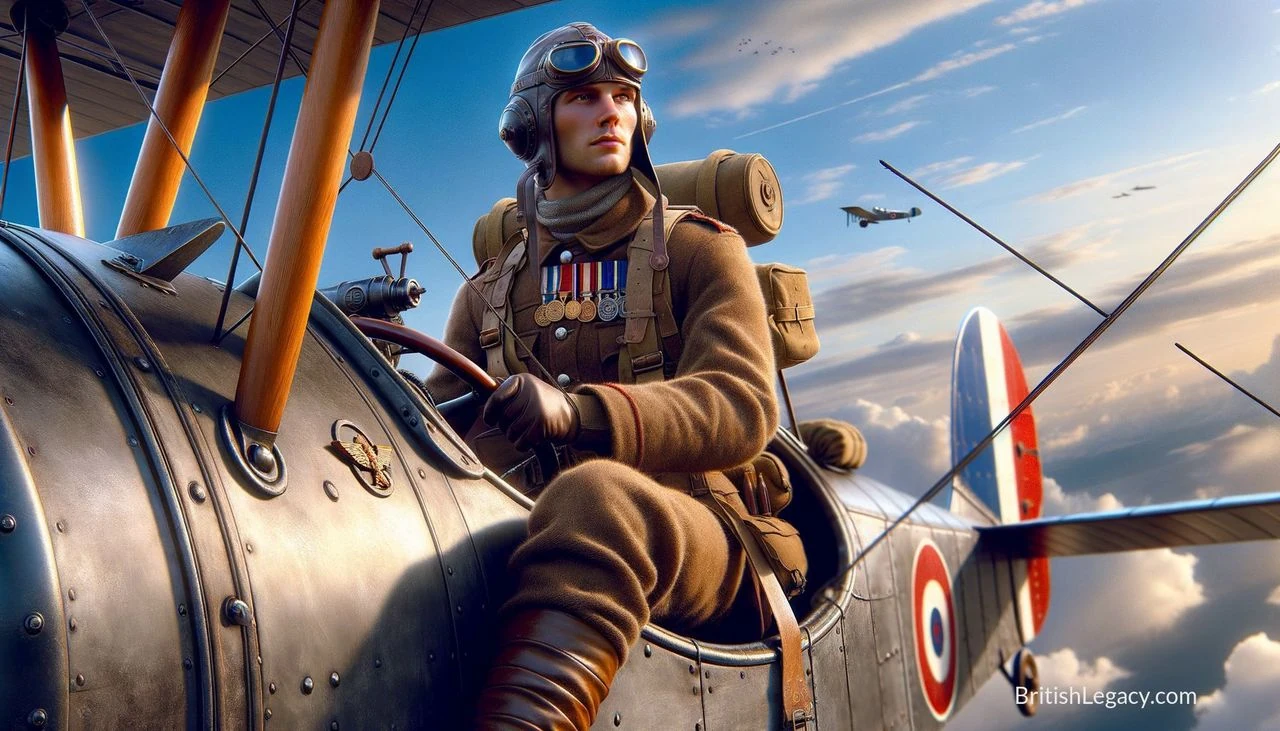
Ball's flying style was as bold as it was innovative. Unlike many of his contemporaries, he favoured solitary missions, which allowed him to engage enemy aircraft on his own terms. His favourite aircraft was the Royal Aircraft Factory S.E.5, in which he developed astounding feats of aerial combat. Ball's exceptional piloting skills and keen marksmanship saw him swiftly rise through the ranks, becoming one of Britain’s top aces with 44 confirmed victories.
A Testament to Bravery: The Victoria Cross
Albert Ball's heroics in the skies were more than just tactical successes; they were a beacon of bravery for soldiers and civilians alike. One of his most renowned engagements occurred on the evening of 6th May 1917. Ball left on an offensive patrol across the Western Front, engaging numerous enemy aircraft in a fierce battle. Tragically, his aircraft crashed near Annœullin, France. Though initially surviving the crash, Ball succumbed to his injuries.
In recognition of his bravery and extraordinary service, Captain Albert Ball was posthumously awarded the Victoria Cross, Britain’s highest military decoration for valour. His citation highlighted his "most conspicuous and consistent bravery" and his "resolute refusal to accept defeat."
Legacy and Impact
Albert Ball's legacy transcends the statistics of aerial victories and military honours. He was not just a warrior in the skies but a symbol of youthful courage and relentless pursuit of excellence. His stories of daring engagements and chivalrous conduct resonated deeply with both his contemporaries and future generations.
Ball's efforts demonstrated the vital role of air warfare in military strategy, influencing Royal Air Force tactics in the years to come. His approach to solo flying missions and aggressive engagements set new precedents for air combat, reverberating through the annals of military aviation history.
Moreover, his life story captured the public imagination and contributed to the broader cultural narrative of World War I. Memorials and exhibits dedicated to Albert Ball can be found in Nottingham, including a statue in Nottingham Castle grounds, ensuring that his contributions are remembered by all. Schools, streets, and various institutions bear his name, a testament to his lasting impact on British heritage.
Wrap-Up
Captain Albert Ball’s story is one of gallantry, skill, and sheer determination. His exceptional service during World War I not only established him as one of Britain’s greatest flying aces but also left an indelible mark on the British legacy. Through his ultimate sacrifice, he embodied the spirit of bravery and resilience, inspiring countless others to strive for greatness. Ball's legendary feats in the skies continue to be a source of pride and admiration, firmly rooting him as a celebrated icon in the tapestry of British history.