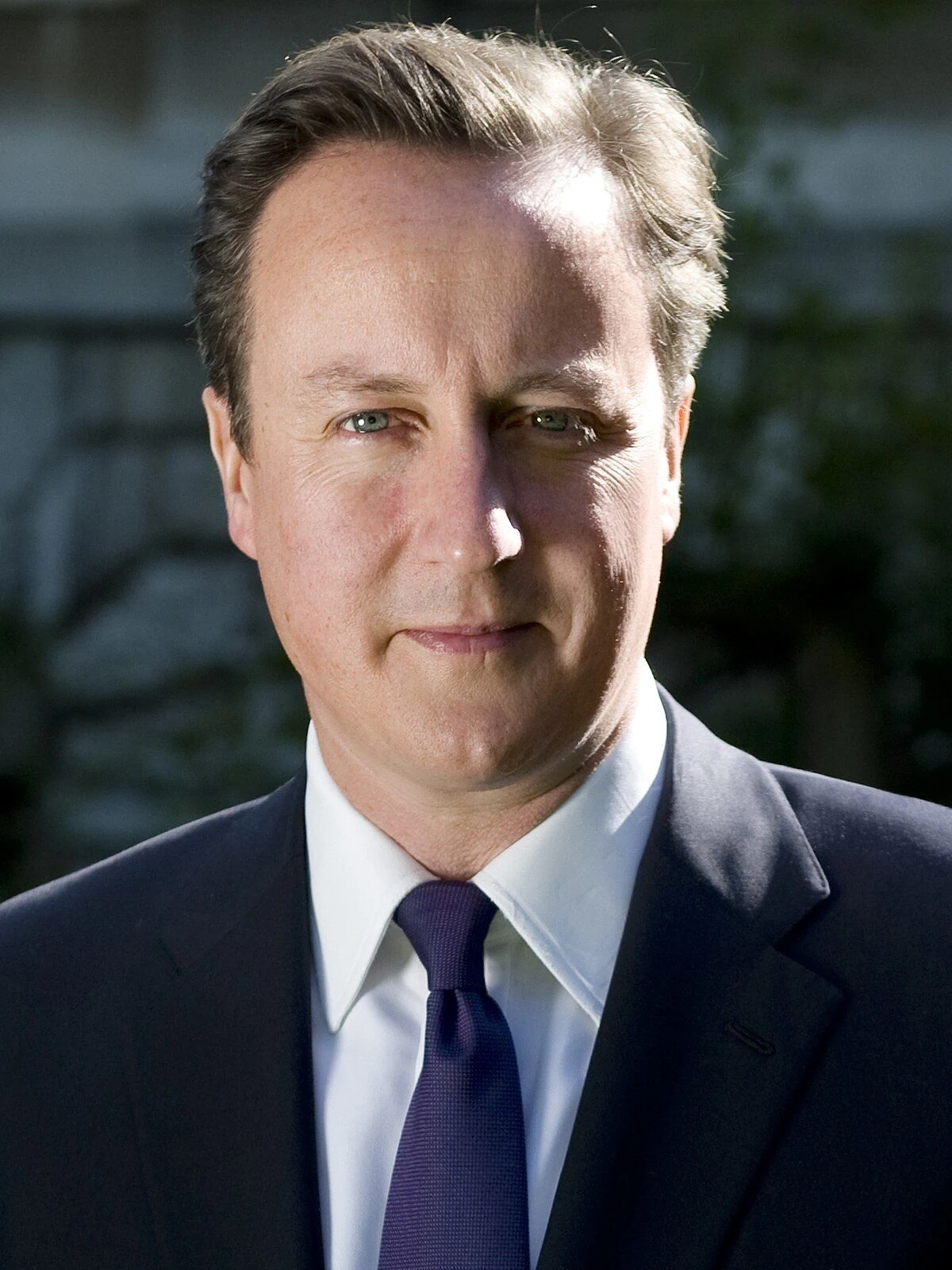
David Cameron’s premiership began with a coalition and ended with a referendum. In office from 2010 to 2016, he led the first Conservative–Liberal Democrat government of the post-war era, pursued spending cuts and domestic reforms, and promised a public vote on Britain’s European Union membership. He campaigned for the UK to remain. When voters chose to leave in June 2016, he announced his resignation. The referendum’s result became the defining event of his time in Downing Street, though his record also includes changes to education and welfare, the legalisation of same-sex marriage in England and Wales, and decisions on military intervention abroad.
From Oxford to the Conservative leadership
David William Donald Cameron was born in Marylebone, London, on 9 October 1966 and raised in Peasemore, Berkshire. He attended Eton College before studying Philosophy, Politics and Economics at Brasenose College, Oxford, where he graduated with a first-class degree in 1988. After university, he worked in the Conservative Research Department, served as a special adviser at the Treasury and Home Office, and became director of corporate affairs at Carlton Communications.
Cameron entered Parliament as Conservative MP for Witney in 2001. He held opposition posts before becoming leader of the Conservative Party in December 2005, succeeding Michael Howard. His campaign presented the party as needing renewal; he described himself as a modern, compassionate conservative. As leader of the opposition, he sought to change the party’s public image while managing tensions between its different strands, including over Europe.
In the 2010 general election, the Conservatives won the largest number of seats but fell short of an overall majority. Cameron and Liberal Democrat leader Nick Clegg agreed to form a coalition, the first in Britain since the Second World War. Cameron became prime minister on 11 May 2010, aged 43. The two parties had a Commons majority, but governing together required compromises between parties with distinct policies and electorates.
Coalition government and domestic change
The coalition made deficit reduction a central priority after the financial crisis. Cameron and Chancellor George Osborne pursued austerity, relying heavily on reductions in public spending. The government said its aim was to reduce the structural deficit; by 2015, the deficit as a share of national income had fallen to about half its 2010 level. National debt, however, rose as a share of GDP over the period. The scale and consequences of austerity remained contested, with critics arguing that spending restraint constrained recovery and harmed communities facing disadvantage.
Government policy also changed public services and welfare. Reforms included the introduction of Universal Credit and changes to housing benefit, while the Big Society agenda sought a greater role for voluntary organisations and other non-state providers in services. In education, the government expanded academies and free schools, revised the national curriculum and introduced the pupil premium, extra funding for schools serving pupils eligible for free school meals. These measures reflected Cameron’s stated interest in opportunity and social mobility, but their effects and the wider reform programme were debated.
One significant social reform was the Marriage (Same Sex Couples) Act 2013, which legalised same-sex marriage in England and Wales. Cameron backed the legislation and urged Conservative MPs to support it, although more Conservative MPs opposed the measure than supported it. It passed with support from Liberal Democrat and Labour MPs. The change marked a major extension of marriage equality, while exposing divisions within Cameron’s own party.
His government also held two other constitutional referendums before the EU vote. In 2011, voters rejected the proposed change to the electoral system. In 2014, Cameron agreed to a referendum on Scottish independence and campaigned for Scotland to remain in the United Kingdom; voters chose to do so. The EU referendum would become the third major constitutional vote held during his premiership.
Foreign policy and the decision on Europe
Cameron’s governments authorised British participation in the 2011 military intervention in Libya, undertaken under a United Nations mandate to protect civilians. The intervention helped bring about the fall of Muammar Gaddafi’s government, but Libya subsequently descended into instability. A later House of Commons Foreign Affairs Committee inquiry criticised the policy, concluding that the intervention’s aims expanded towards regime change without adequate planning for what followed. Cameron was ultimately responsible for the British policy, the committee said.
In 2013, Cameron lost a Commons vote on proposed military action against the Syrian government. Parliament later approved British air strikes against Islamic State in Iraq in 2014 and in Syria in 2015. These decisions showed the limits on a prime minister’s ability to secure parliamentary support for military action, as well as the changing demands of conflicts in the region.
Cameron had pledged an EU membership referendum before the 2015 general election, amid Euroscepticism within the Conservative Party and pressure from the UK Independence Party. After the Conservatives won an overall majority, his government renegotiated the terms of the UK’s EU membership and set the vote for 23 June 2016. Cameron argued for remaining in a reformed European Union; the campaign to leave, known as Vote Leave, won.
About 52 per cent voted to leave and 48 per cent to remain, on turnout of 72 per cent. The following day Cameron said he would resign, reasoning that, having argued for Remain, he should not lead the country into its next stage. Theresa May succeeded him as prime minister in July. Cameron later said he regretted the result and remained troubled by its consequences, while maintaining that he did not regret holding the vote. The decision placed a lasting political responsibility on his premiership: he called the referendum, campaigned on one side, and left office after the other prevailed.
Beyond Downing Street
Cameron resigned his Witney seat in September 2016 and kept a comparatively low political profile for several years. His memoir, For the Record, appeared in 2019. In 2017 he became president of Alzheimer’s Research UK, a role he left when he returned to government and later resumed in 2025.
In November 2023, Prime Minister Rishi Sunak appointed Cameron foreign secretary. To take the post, Cameron was made a life peer as Baron Cameron of Chipping Norton and entered the House of Lords. He served until the Conservatives lost the 2024 general election, when Labour took office and David Lammy succeeded him. His return to government after years outside frontline politics was unusual: a former prime minister had re-entered the Cabinet as a peer rather than an elected MP.
Why David Cameron deserves a place in British Legacy
Cameron’s place in British political history rests above all on the consequences of a decision made in office. The 2016 referendum gave voters a direct choice on EU membership, after years of dispute within the Conservative Party and wider public debate. Cameron set the vote in motion, campaigned for Remain and resigned when Leave won. That sequence connects the authority of a prime minister, a party’s internal pressures and a national vote whose result changed the country’s relationship with Europe. Recording his legacy means acknowledging both the democratic choice and the political responsibility attached to calling it.
His record also includes changes beyond Brexit. The coalition government he led brought together Conservatives and Liberal Democrats at a time of economic strain; its austerity programme reduced the deficit as a share of GDP while provoking sustained argument about public services and social costs. His government expanded academies and free schools, introduced the pupil premium and enacted same-sex marriage in England and Wales. These achievements and disputes matter because they affected public institutions and people’s lives, not simply the fortunes of a party. Cameron’s career offers a specific account of how modern British government can combine reform, compromise and political risk—and how a single referendum can come to define a premiership without erasing the rest of its record.
Sources
Adapted in part from David Cameron by Wikipedia contributors, under CC BY-SA 4.0. Text has been edited and combined with the existing article; this adapted text is shared under the same licence. Contributor history.