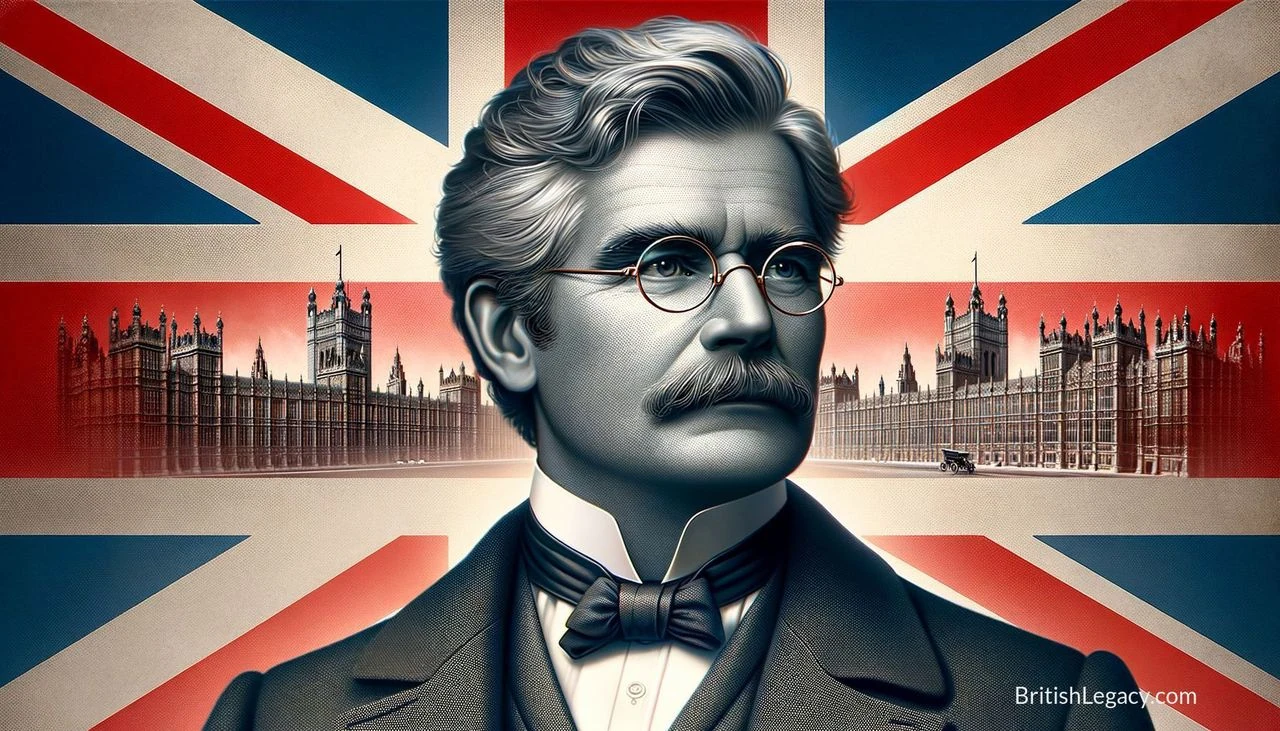
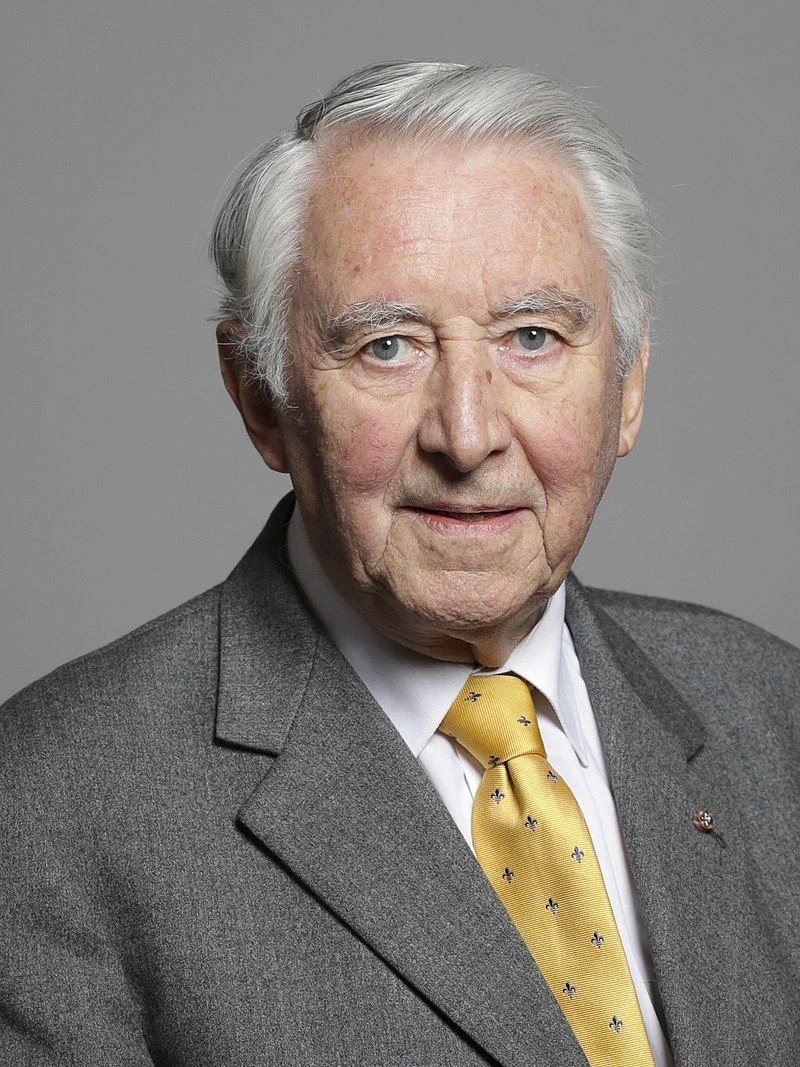
David Steel’s political career encompassed a landmark change in abortion law, an alliance between the Liberals and the Social Democratic Party, and the creation of the Liberal Democrats. He led the Liberal Party for 12 years, served as an MP for 32, and later became the first Presiding Officer of the Scottish Parliament. His record also includes difficult moments: the merger he championed weakened his own authority, and his handling of allegations concerning Liberal MP Cyril Smith brought a later reckoning.
From Kirkcaldy to the House of Commons
David Martin Scott Steel was born in Kirkcaldy, Scotland, on 31 March 1938. His father, also David Steel, was a Church of Scotland minister who later became Moderator of the General Assembly. Steel grew up in Scotland and Kenya and attended schools in Dumbarton, Edinburgh and Nairobi before studying law at the University of Edinburgh. At university he became active in Liberal politics and was elected Senior President of the Students’ Representative Council.
After graduating, Steel worked for the Scottish Liberal Party and then the BBC. He entered the Commons in a 1965 by-election for Roxburgh, Selkirk and Peebles, shortly before his 27th birthday, becoming the “Baby of the House”. He represented the constituency until 1983, then won the newly created seat of Tweeddale, Ettrick and Lauderdale. His parliamentary career lasted until 1997. From 1966 to 1970 he was president of the British Anti-Apartheid Movement campaign; in Parliament he became the Liberal Party’s employment spokesman and, in 1970, its chief whip.
A private member’s bill and party leadership
Steel introduced the Abortion Act 1967 as a private member’s bill. The Act legalised abortion in the United Kingdom under specified conditions. This was a substantial legislative achievement early in his career, and Steel later argued for further liberalisation of the law.
In 1976, after Jeremy Thorpe’s departure as Liberal leader and a short period with Jo Grimond as caretaker, Steel won the leadership contest against John Pardoe. He was 38. The following year he led the Liberals into a pact with James Callaghan’s minority Labour government. The Liberals agreed to support the government in return for prior consultation on policy. The arrangement lasted until August 1978. Critics argued that Steel should have secured more from the agreement; his defenders considered that it gave a weakened party time before an election.
The Liberals lost two seats at the 1979 general election. In 1981, moderates who had left Labour formed the Social Democratic Party (SDP), and the two parties joined forces as the SDP–Liberal Alliance. At first, the Alliance attracted strong public support and hopes of a breakthrough. Steel urged Liberal delegates to “prepare for government”. But its vote was spread across the country rather than concentrated in enough constituencies to win seats under the first-past-the-post system. In 1983 it won more than a quarter of the vote but secured only 23 seats: 17 for the Liberals and six for the SDP.
Alliance, merger and the limits of leadership
The Alliance’s two leaders, Steel and David Owen, had different political sympathies and an uneasy relationship. Their parties also disagreed over defence and potential agreements with other parties during the 1987 general election. Steel believed that a lasting alternative required a single party under a single leader, and became the chief advocate of merging the Liberals and the SDP.
The parties agreed to merge in 1988, despite opposition from Owen and some Liberal members. Steel’s achievement in winning agreement was followed by a serious misstep: a joint policy document, prepared by SDP advisers, was rejected by colleagues who demanded a redraft. The episode damaged his authority. He served briefly as joint interim leader of the new Social and Liberal Democrats, alongside Robert Maclennan, before becoming its foreign affairs spokesman. Paddy Ashdown succeeded him as leader. The party was renamed the Liberal Democrats in 1989.
Steel did not stand in the elections held during the new party’s early period. In 1989 he accepted an invitation to stand for the European Parliament as a pan-European gesture, but was not elected. He became president of Liberal International in 1994, serving until 1996.
From Westminster to Holyrood
Steel left the Commons at the 1997 general election and entered the House of Lords as Baron Steel of Aikwood. A campaigner for Scottish devolution, he was elected as a Liberal Democrat regional MSP for Lothians in 1999. On 12 May he became the first Presiding Officer of the Scottish Parliament, a role comparable to that of Speaker in the Commons.
Steel suspended his Liberal Democrat membership while Presiding Officer, regarding the office as non-partisan. Later Presiding Officers followed the same practice. He stepped down as an MSP when the Parliament was dissolved for the 2003 election, but remained in the chair until he had overseen the election of his successor, George Reid, on 7 May. He was Lord High Commissioner to the General Assembly of the Church of Scotland in 2003 and 2004.
Public service and a difficult final chapter
Steel’s public roles included seven years as president of Medical Aid for Palestinians, during which he visited the West Bank and Gaza. His honours included appointment as a Knight Commander of the Order of the British Empire in 1990 for political and public service. In 2004 he was made a Knight of the Order of the Thistle, Scotland’s highest honour.
His career was also marked by his response to information about Cyril Smith, the Liberal MP for Rochdale. Steel later acknowledged that a discussion with Smith in 1979 had led him to assume that Smith had abused children, but that he failed to investigate allegations published by Private Eye or to assess whether Smith posed an ongoing risk. The Independent Inquiry into Child Sexual Abuse criticised this failure as an “abdication of responsibility”. The Liberal Democrats suspended Steel in 2019, then reinstated him after ruling there were no grounds for action. In February 2020 he resigned from the party and announced his intention to leave the House of Lords; his retirement from the Lords took effect the following month.
Why David Steel deserves a place in British Legacy
Steel’s place in British political history rests on achievements with distinct consequences. As a backbench MP, he introduced the private member’s bill that became the Abortion Act 1967, changing the law across the United Kingdom. As Liberal leader, he helped bring the party into a formal arrangement with a minority Labour government, then pursued a longer-term alternative to the established parties through the SDP–Liberal Alliance and the 1988 merger. The Alliance’s large vote in 1983 did not translate into a comparable number of seats, a reminder that electoral systems shape what political support can achieve. The merger, despite its internal strains and Steel’s own loss of authority, established a new party that remains part of British political life.
His contribution also crossed institutional boundaries. After years in the House of Commons, Steel supported Scottish devolution and became the first Presiding Officer of the Scottish Parliament. His decision to suspend party membership while holding that office helped establish a convention of non-partisanship for its subsequent occupants. Remembering Steel responsibly means including both this record of lawmaking and institution-building and the serious failure he later acknowledged over allegations concerning Cyril Smith. Taken together, those parts of his career offer a more useful legacy than unqualified praise: a politician who helped reshape party politics and parliamentary practice, while leaving a clear example of the accountability expected of public office.
Sources
David Steel — revision 1376386787
Adapted in part from David Steel by Wikipedia contributors, under CC BY-SA 4.0. Text has been edited and combined with the existing article; this adapted text is shared under the same licence. Contributor history.