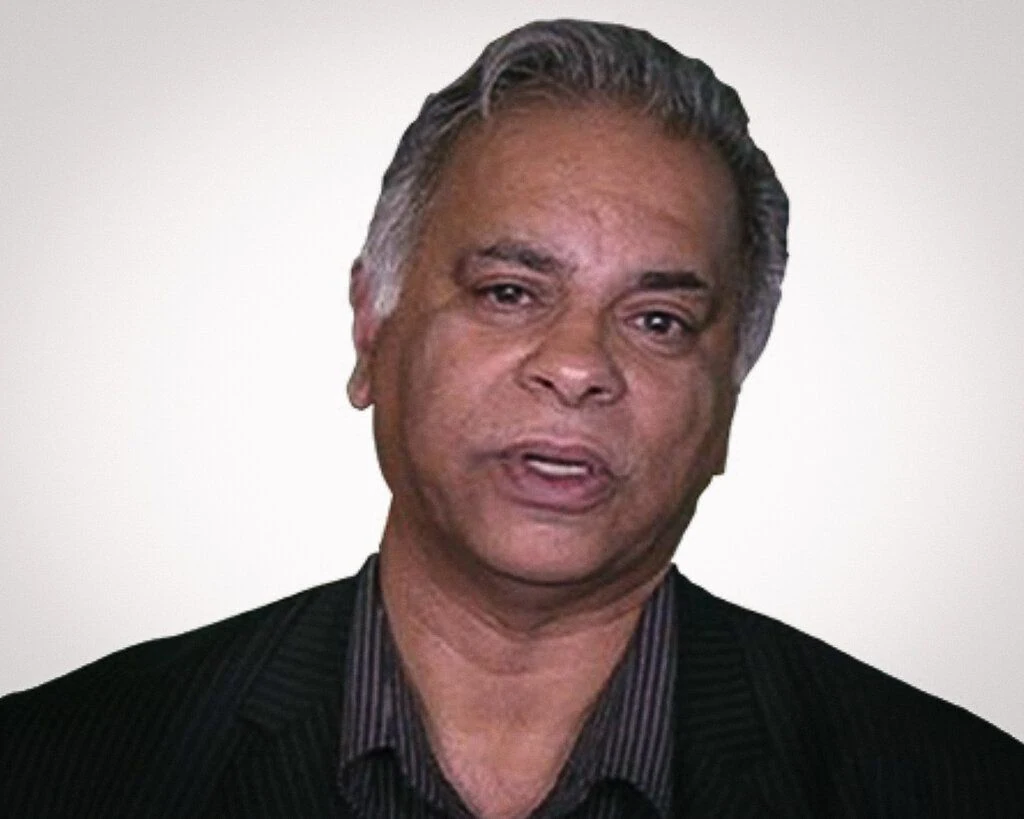
In modern British civil rights, some people matter because they spoke memorably, and some because they built something others could rely on when public institutions fell short. Suresh Grover belongs firmly in the second tradition. As founder of The Monitoring Group, he is presented in the record of British activism as a figure who helped turn anger, grief and fear into organised action.
That mattered in a Britain where racial attacks in the 1980s and 1990s were not abstract arguments but lived realities, particularly in places such as Southall and East London. Grover's answer was not simply to denounce prejudice in general terms. In 1989 he helped create an organisation intended to support victims of racial violence directly and to challenge the wider systems that failed them. That practical, stubborn combination of care and scrutiny explains why his work still stands out.
His public importance widened further through campaigning around the murders of Stephen Lawrence and Ricky Reel, and through sustained criticism of institutional racism in policing. In the account preserved here, Grover's work links neighbourhood defence, public accountability and a broader vision of equality. It is a story about what civil rights activism looks like when it is rooted in the daily needs of ordinary people and yet capable of changing the national conversation.
Building an answer to racial violence
The source material places Grover's resolve in formative early experiences during a politically turbulent period. Whether considered personally or politically, the important point is clear: his activism did not arise from abstract theory. It grew out of a determination to confront injustice where it was being felt most sharply.
When The Monitoring Group was created in 1989, it answered a specific need. Racial violence and systemic discrimination were not being discussed as occasional misunderstandings. They were presented as persistent dangers affecting communities that were often expected to cope alone. Southall and East London appear in the supplied account because they were places where these pressures were visible and urgent. By grounding the organisation in those realities, Grover's work took civil rights out of the realm of slogan and placed it in the realm of organised protection.
That is one of the most important things about his contribution. Many public causes attract sympathy; fewer create durable ways of helping people through the consequences of hatred and neglect. The Monitoring Group was described from the outset not merely as a campaigning body but as a response to repeated attacks and repeated institutional failure. In other words, it was built to face both the violence itself and the structures around it.
What The Monitoring Group actually offered
The organisation's primary mission, as described in the current and original text, was to assist victims of racial violence and to act as a watchdog where systems failed. That pairing deserves attention. Support without scrutiny can leave the underlying problem untouched; scrutiny without support can leave victims carrying the full burden on their own. Grover's approach joined the two.
Under his leadership, The Monitoring Group offered free and confidential support. The supplied account specifies legal advice, emotional support and advocacy that could bring cases to public attention. Each part of that matters. Legal advice helps people navigate institutions that may already feel intimidating. Emotional support recognises that violence and harassment are not only matters of evidence or procedure, but experiences that can leave people isolated and afraid. Advocacy, meanwhile, refuses to let a case disappear into private distress or administrative delay.
This is where Grover's work becomes especially significant in British public life. Civil rights are often discussed in the language of law, policy or principle. The Monitoring Group translated those large ideas into something more immediate: standing beside people who needed help, and using their experiences to expose broader patterns of injustice. In that sense, the organisation was both protective and political. It could help individuals and communities to recover while also forcing uncomfortable public questions about why such attacks were happening and why official responses were so often inadequate.
From individual cases to police reform
Grover's activism did not stop at documenting racial violence. The supplied article presents him as a vocal critic of institutional racism within the police force, especially in cases where official failures deepened the original harm. That criticism placed him within one of the most consequential British arguments of the late twentieth century: whether policing treated all citizens equally, and what should happen when it plainly did not.
The murders of Stephen Lawrence and Ricky Reel are central here. Grover was involved in the campaigns that followed both tragedies, and those campaigns helped reveal how much was at stake when investigations were mishandled or shaped by systemic bias. These were not only questions about individual errors. They became questions about trust, accountability and whether justice could be relied upon by communities already living under pressure.
According to the preserved account, Grover and The Monitoring Group played a significant role in bringing about the public inquiry into the Stephen Lawrence case. That inquiry led to the Macpherson Report, published in 1999. Its identification of institutional racism within the Metropolitan Police made a profound difference to British public debate, because it named a problem that campaigners had long argued was real. The report also called for sweeping changes in how police services across the UK handled racial issues. In the article's account of Grover's legacy, this is one of the clearest measures of his impact: activism that helped push the country from denial towards reform.
The significance of that achievement is not ceremonial. Police reform matters because the police are among the most powerful public institutions in everyday life. When campaigners force change there, the effect reaches well beyond a single case. It alters standards, language, expectations and the terms on which authority is challenged. Grover's work is therefore remembered not only for protest, but for helping create conditions in which official Britain had to listen.
A wider argument for equality
Although racial violence and policing form the sharpest line of Grover's public work in the supplied text, the material does not present him as a single-issue activist. It describes a broader vision of equality and social justice, one that connects racial justice to other forms of unfairness rather than treating them as separate moral compartments.
That is why the article links his advocacy with movements for gender equality and socioeconomic fairness. The point is not that every cause is identical. It is that injustice is often sustained through overlapping structures, and effective civic action requires alliances as well as specialism. Grover's contribution, on this account, was to strengthen those alliances and to keep the fight for civil rights open to the full range of injuries people experience in public life.
There is also something distinctively valuable in the style of leadership implied here. Grover's work is described less as self-display than as persistence: organising, supporting, criticising, holding institutions to account, and staying with difficult issues long enough to force recognition. That helps explain why his legacy is framed not only in terms of immediate relief for victims, but in terms of national conversations and policy reform. He is significant because the work operated at both levels at once.
Why Suresh Grover deserves a place in British Legacy
Suresh Grover deserves a place in British Legacy because his contribution speaks to one of the hardest tests of any country: what happens when citizens face violence and the institutions meant to protect them do not respond fairly. The answer offered by his work was neither resignation nor mere rhetoric. Through The Monitoring Group, he helped create a structure of support for victims of racial violence while also insisting that private suffering had public meaning. Legal advice, emotional support and advocacy were not side issues to the larger cause. They were the means by which principle became real in British life.
His importance also lies in the scale of the questions his activism helped force into view. Campaigns linked to Stephen Lawrence and Ricky Reel, and the pressure that contributed to the inquiry ending in the Macpherson Report, helped make institutional racism impossible to dismiss as a fringe complaint. That changed the country's language of accountability. It affected how policing, justice and equality could be discussed in Britain thereafter.
There is a further reason to remember him. Grover's work, as preserved in the record here, joins local defence with national reform and connects racial justice to the wider pursuit of equality. That is why he can be seen as an indispensable figure in British civil rights history and a cornerstone of modern civil rights activism in the UK. His legacy continues to inspire global movements, reflecting the universal pursuit of justice and human dignity. Future generations can admire not only his convictions, but the practical seriousness with which he turned those convictions into organised help, public pressure and lasting civic consequence.