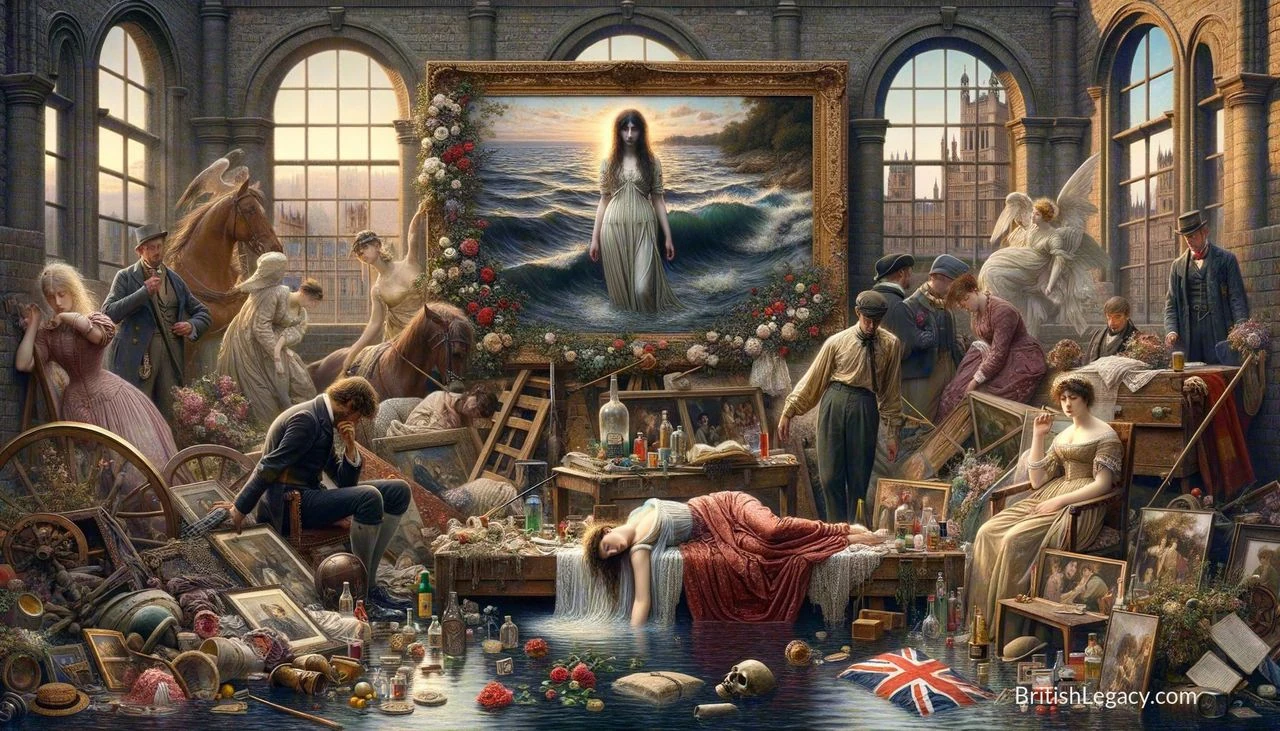
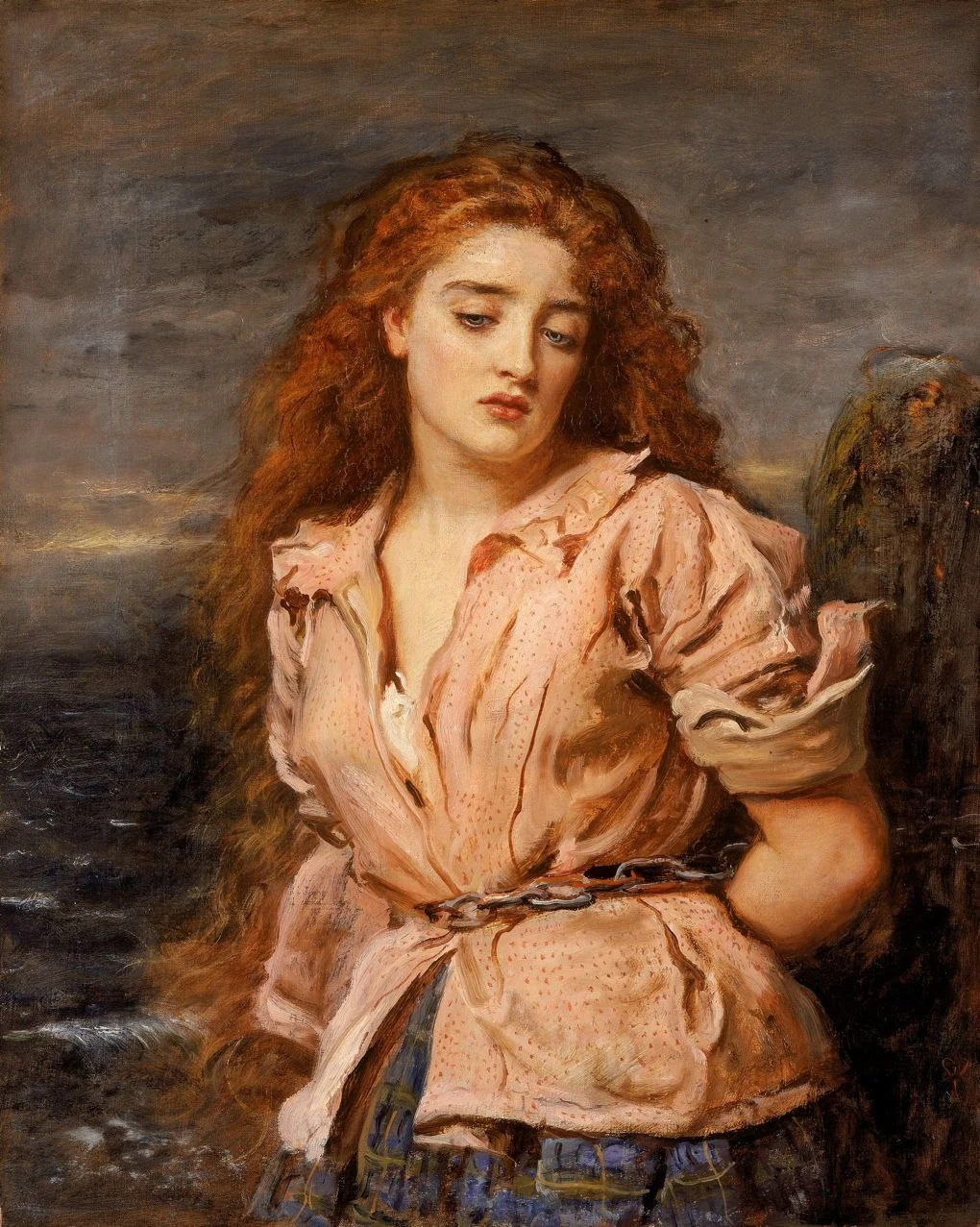
John Everett Millais entered the Royal Academy Schools at 11, but his career was not a straight march from prodigy to establishment figure. In 1848 he helped found the Pre-Raphaelite Brotherhood, whose early paintings challenged accepted ideas about how art should represent nature. Ophelia, with its carefully observed natural detail, became one of the clearest expressions of that approach. By the 1860s, Millais had developed a broader style and built a successful career in portraiture, illustration and landscape painting. He was elected president of the Royal Academy in 1896, the year he died.
A precocious start in art
Millais was born in Southampton on 8 June 1829 into a family with roots in Jersey. He spent much of his early childhood there, and retained a strong attachment to the island. His mother, Emily, encouraged his artistic ability and helped move the family to London so he could pursue opportunities at the Royal Academy. In 1840, aged 11, he became the youngest student admitted to the Academy’s Schools.
At the Academy he met William Holman Hunt and Dante Gabriel Rossetti. The three artists formed the Pre-Raphaelite Brotherhood at Millais’s family home in Gower Street in September 1847. The group’s name signalled its opposition to the conventions associated with art after Raphael. Its members sought a more attentive engagement with nature and with the subjects they depicted.
Pre-Raphaelite works and public controversy
Millais’s Christ in the House of His Parents (1849–50) provoked controversy through its realistic portrayal of the Holy Family at work in a carpentry workshop. Other early paintings developed the Brotherhood’s close observation of the natural world. In Ophelia (1851–52), details of plants and water form a dense setting for the figure drawn from Shakespeare’s Hamlet. The painting is now at Tate Britain.
His A Huguenot (1851–52) depicts a couple facing separation because of religious conflict. Millais returned to the theme in later works. Mariana (1850–51), meanwhile, drew on both Shakespeare’s play Measure for Measure and Alfred, Lord Tennyson’s poem of the same name. These paintings show the range of subjects within his early practice, from literary and historical narratives to carefully rendered scenes of the natural world.
The Blind Girl (1856), highlighted in accounts of Millais’s work, offers a different kind of subject: two sisters resting in a field after rain, one of them blind. Alongside Ophelia, it has become one of his best-known paintings. The two works show how his attention to setting could serve different emotional effects, rather than simply provide a display of detail.
A changing style and a growing career
By the mid-1850s, Millais was moving away from the tightly detailed Pre-Raphaelite manner and towards a broader style. The change brought criticism from John Ruskin, an early supporter, and from William Morris, who accused Millais of sacrificing artistic purpose for popularity and wealth. Millais, by contrast, argued that increased confidence allowed him to paint more boldly. His later work can be understood not only as a departure from his early style but as part of wider changes in nineteenth-century art.
In 1855, after Effie Gray’s marriage to Ruskin had been annulled, she and Millais married. They had eight children. The demands of family life have been proposed as one reason for the increase in Millais’s output, while Effie also helped promote his work and extend the couple’s social and intellectual connections.
Millais became a highly successful portraitist. He painted prominent figures including John Henry Newman, Alfred Tennyson, William Ewart Gladstone and Benjamin Disraeli. His work also appeared in books and magazines: he illustrated writings by Anthony Trollope and Tennyson, and produced a series of illustrations of the parables of Jesus. His later paintings ranged from historical subjects, including The Princes in the Tower (1878), to children’s portraits such as Bubbles (1886). The latter became widely known through its use in an advertisement for Pears soap, an example of how his paintings reached audiences beyond the gallery.
Landscapes, institutions and honours
From 1870, Millais returned to full landscape painting. Many of these works depict the Scottish countryside, particularly in Perthshire, where he spent part of each year hunting and fishing. Paintings such as Chill October (1870) and Christmas Eve (1887) favour autumnal or winter scenes, often showing moorland, water and difficult terrain. Their freer handling differs from the painstaking treatment of nature in his early Pre-Raphaelite pictures, while maintaining a close interest in the appearance of the landscape.
Millais was elected an associate member of the Royal Academy in 1853 and a full member in 1863. In 1885 Queen Victoria made him a baronet, the first artist to receive a hereditary title. After Lord Leighton’s death, Millais was elected president of the Royal Academy in 1896. He died later that year, on 13 August, in Kensington, aged 67. His final illness was throat cancer, and he was buried in the crypt of St Paul’s Cathedral.
His reputation has not stood still. Some critics once treated his later work as a retreat from the principles of his youth; more recent readings have placed it in the context of wider changes in the art of the late nineteenth century. A major retrospective at Tate Britain in 2007 attracted 151,000 visitors before travelling to Amsterdam, Fukuoka and Tokyo. Millais’s art has also remained part of popular culture through stage, screen and radio adaptations of the story of his relationship with Effie and Ruskin.
Why John Everett Millais deserves a place in British Legacy
Millais’s place in British art rests on more than a single celebrated picture. As a founder of the Pre-Raphaelite Brotherhood, he helped establish an approach that challenged accepted academic conventions and made close observation of nature central to the work. Ophelia gives that aim a particularly vivid form: its natural details are integral to the composition, not incidental decoration. His early paintings also show how such attention could serve subjects drawn from religion, literature and history. Their continued presence in public discussion and exhibition makes them an enduring part of Britain’s visual inheritance.
His later career matters too. Millais worked across painting, illustration and portraiture, depicting figures from Victorian public life and bringing images to readers through books and magazines. His portraits and illustrations help document the culture of his time, while his landscapes record a sustained engagement with the Scottish countryside. His changing style, at first condemned by some admirers, also makes his career a useful account of how an artist negotiates artistic conviction, public taste and a living. Remembering Millais means recognising both the disruptive energy of his early work and the varied practice that followed it—a legacy visible in galleries, print and the continuing life of his images.
Sources
Adapted in part from John Everett Millais by Wikipedia contributors, under CC BY-SA 4.0. Text has been edited and combined with the existing article; this adapted text is shared under the same licence. Contributor history.