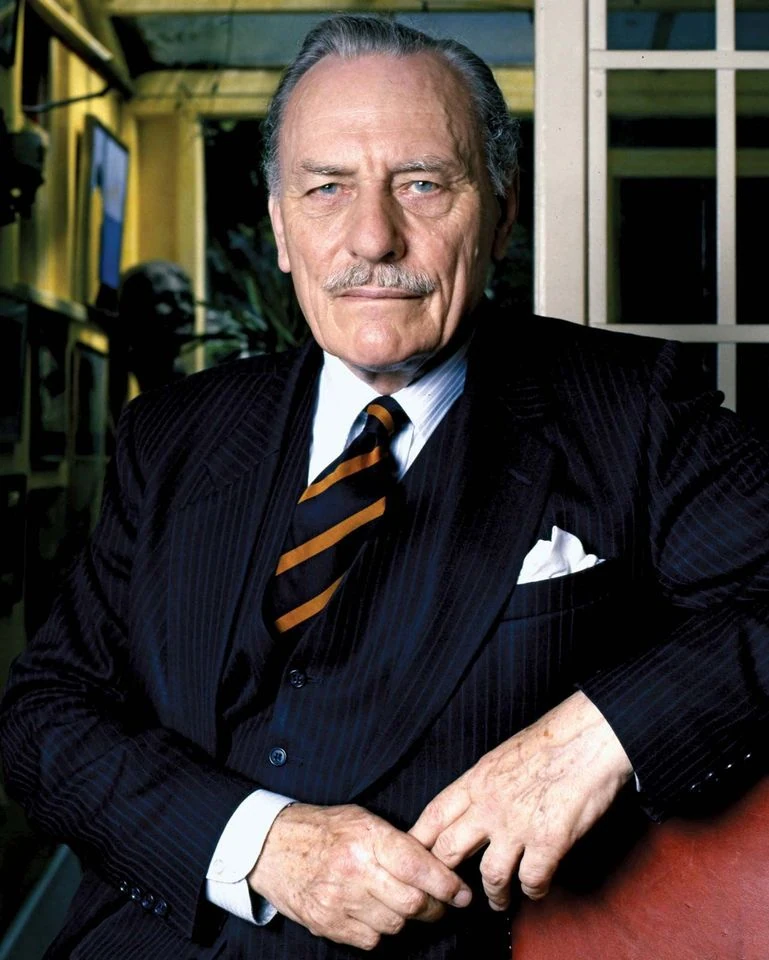
Enoch Powell’s public life held together strikingly different careers: classical scholar, wartime brigadier, Conservative minister and one of the most divisive speakers in modern British politics. His 1968 “Rivers of Blood” speech made him a national figure and continues to define how many people remember him. But understanding his place in British history also means following the arguments he pursued on the economy, Parliament, Europe and the United Kingdom’s place in the world.
A prodigious scholar from Birmingham
John Enoch Powell was born in Stechford, Birmingham, on 16 June 1912. The only child of a primary-school headmaster and his wife, he grew up in Kings Norton and showed an early aptitude for reading and languages. After attending King’s Norton Grammar School for Boys, he won a scholarship to King Edward’s School in Birmingham. At 17, he secured Trinity College, Cambridge’s top classics scholarship and went on to study there from 1930 to 1933.
Powell’s academic career advanced rapidly. He was elected a fellow of Trinity and published work on Greek texts. In 1937, aged 25, he became Professor of Greek at the University of Sydney, then the youngest professor in the British Empire. His scholarly work included a lexicon to Herodotus, published in 1938, and he also wrote poetry. When war broke out in Europe, he returned to Britain to enlist.
Powell served in the British Army from 1939 to 1945. He rose from private to brigadier, working in intelligence and military planning in North Africa and India. He helped plan operations in the North African campaign and later served in military intelligence in India and South-East Asia Command. He received the Member of the Order of the British Empire for his wartime service. Though his rapid rise in rank was remarkable, the sources also record that he never experienced combat and later wrote of feeling guilty about surviving the war.
From the Treasury to the Ministry of Health
After the war, Powell joined the Conservative Party and worked for its research department. He was elected MP for Wolverhampton South West in 1950, after an unsuccessful Conservative candidacy at a by-election in Normanton. His early parliamentary career included a spell as parliamentary secretary at the Ministry of Housing. In 1957, he became Financial Secretary to the Treasury, but resigned the following year alongside Chancellor Peter Thorneycroft and Nigel Birch. They objected to government plans for increased spending, which Powell believed would worsen inflation.
That resignation reflected a conviction he maintained throughout his career: government should restrain spending and allow market forces greater scope. He advocated control of the money supply and, in later speeches, proposed far-reaching free-market policies. At Morecambe in 1968, he set out a programme that included major tax reductions, privatisation of profitable state concerns and the ending of various subsidies. These were his proposals, not a programme he implemented as minister.
Powell returned to government as Minister of Health in 1960, holding the post until 1963. He introduced the 1962 Hospital Plan, which envisaged replacing psychiatric institutions with care in wards at general hospitals. The plan helped prompt debate about the treatment of people with mental illness and became one strand in the later move towards community care. Powell subsequently criticised the underfunding of that system, arguing that community care was more humane but not necessarily cheaper than institutional provision. His record in office also included introducing subsidised NHS prescriptions for the contraceptive pill in 1961.
Immigration, race and the 1968 speech
Powell had advocated immigration controls before the speech that made him famous. As a housing minister, he took part in discussions of immigration policy; later, he opposed the Labour government’s Race Relations Bill. On 20 April 1968, he addressed a Conservative Association meeting in Birmingham. He argued against continued immigration from the Commonwealth and warned of social conflict. Near the end, he quoted Virgil’s image of the River Tiber foaming with blood. The allusion supplied the speech’s familiar name, although the phrase “Rivers of Blood” does not appear in the speech itself.
The speech was condemned by The Times as an appeal to racial hatred. Conservative leader Edward Heath dismissed Powell from the Shadow Cabinet the next day. The response was also intensely supportive: the Wikipedia account records that Powell received almost 120,000 letters, predominantly positive, and describes demonstrations by dockers and other workers. The scale of that support made him a national public figure, but it does not settle the argument about what his words meant or what their effects were.
Powell’s views on immigration and race remain central to assessments of his politics. His warnings found a receptive audience among people concerned about immigration and social change; critics argued that the speech encouraged racial hostility. Later commentators have disputed how to characterise his beliefs and the speech’s consequences. What is clear from the record is that he opposed the Race Relations Act 1968 and used language that helped make immigration and race central, contested subjects in British political debate. His own explanations and supporters’ accounts do not erase the speech’s impact on those who heard it as a legitimation of racial prejudice.
Europe, Parliament and a return to Westminster
Powell’s political break with the Conservatives came over Britain’s membership of the European Economic Community. He had initially supported the prospect of membership as a means of advancing economic liberalism, but came to believe that it threatened Britain’s ability to govern itself through its own Parliament. Britain entered the EEC in January 1973. In February 1974, Powell left the Conservative Party, saying it had taken the country into the Community without an electoral mandate. He urged voters to support Labour because its leadership had promised to renegotiate membership and hold a referendum.
Powell returned to the Commons in October 1974 as Ulster Unionist MP for South Down, a Northern Ireland constituency he represented until losing his seat in 1987. He argued for Northern Ireland’s full integration into the United Kingdom and opposed devolution and power-sharing arrangements. He also campaigned against continued British membership of the EEC in the 1975 referendum, in which the electorate voted to remain.
His later parliamentary years brought other positions that complicate any account of him as a conventional Conservative. He opposed the retention of Britain’s independent nuclear deterrent, arguing that it could not prevent war and might expose the country to catastrophic retaliation. During the 1982 Falklands conflict, he supported military action to recover the islands, while insisting that Britain should not rely solely on arguments about the wishes of their inhabitants. He also declined a life peerage after losing his seat, saying acceptance would be inconsistent with his opposition to the Life Peerages Act.
Scholarship, writing and final years
Powell continued to write on classical, political and religious subjects. His books included The House of Lords in the Middle Ages, which he had worked on for 20 years, and a 1977 biography of Joseph Chamberlain. He published collections of poetry and a collected volume in 1990. In 1994, he published The Evolution of the Gospel, a translation and commentary that included a controversial argument about the death of Jesus. Classical scholarship remained an important part of his identity, even as public attention centred on his politics.
In late 1992, Powell was diagnosed with Parkinson’s disease. He continued to write and speak occasionally, including on European integration and British self-government. He died in London on 8 February 1998, aged 85, and was buried at Warwick Cemetery. His political opponents as well as allies acknowledged his force of mind and conviction, while the disagreement over his most famous speech remained unresolved. That combination of intellectual distinction, political influence and enduring controversy is essential to an honest account of his career.
Why Enoch Powell deserves a place in British Legacy
Powell deserves a place in British Legacy not as an uncomplicated hero, but as a figure whose career exposes important and difficult questions in British public life. His scholarship was substantial: appointed Professor of Greek at 25, he produced work on Herodotus and wrote across classical and political subjects. His wartime service took him from enlistment as a private to the rank of brigadier, and his parliamentary work included government posts, a major hospital plan and sustained argument about public spending. These achievements help explain why he mattered beyond the speech that made him famous.
His legacy also demands close attention to the consequences of political language. The 1968 speech brought immigration and race into the centre of national debate, drew support from thousands of people and led to his dismissal from the Shadow Cabinet. It is also remembered for language condemned as an appeal to racial hatred and for the hostility it helped intensify. Powell’s later campaign against European integration, and his return to Parliament as an Ulster Unionist, show how questions of sovereignty and the Union shaped his subsequent politics. Remembering him responsibly means preserving both the record of his intellectual and political influence and the serious harm and division associated with his rhetoric. That tension makes his story valuable to British Legacy: it illuminates how a politician can shape public argument while remaining a deeply contested part of the country’s history.
Sources
Enoch Powell — Wikipedia revision 1379671621 · Enoch Powell — Wikipedia
Adapted in part from Enoch Powell by Wikipedia contributors, under CC BY-SA 4.0. Text has been edited and combined with the existing article; this adapted text is shared under the same licence. Contributor history.