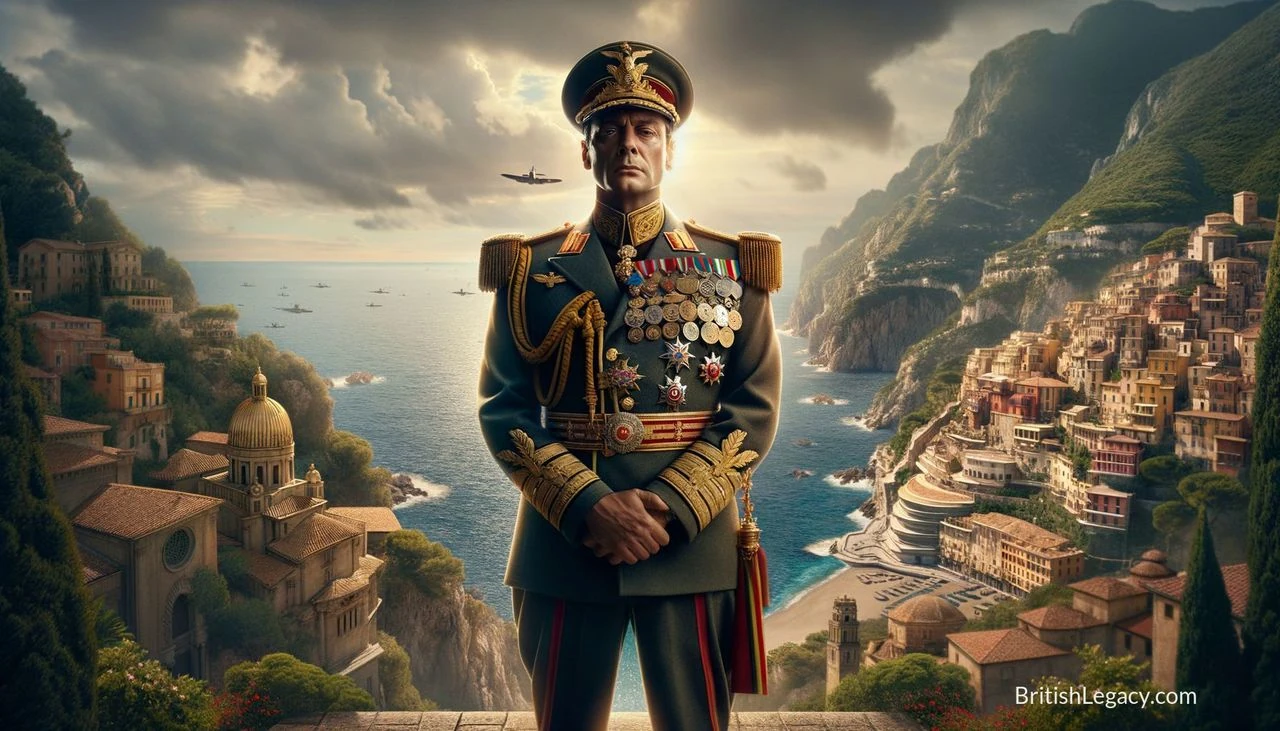
Field Marshal Sir Harold Alexander held senior Allied commands in North Africa and Italy during the Second World War, including command of the 15th Army Group. His wartime responsibilities encompassed coalition forces operating across several campaigns, from North Africa to the advance through Italy. After the war, he became Governor General of Canada, serving from 1946 to 1952, and later continued in public service in the United Kingdom.
Military service and the North African campaign
Alexander was born in London on 10 December 1891 and educated at Harrow School and the Royal Military College, Sandhurst. He served in the First World War before rising to senior command in the Second. In August 1942, he was appointed commander of Allied forces in North Africa. The role brought him into a campaign against Axis forces that also required coordination among Allied contingents.
During this period, the British Eighth Army, led by General Bernard Montgomery, won the Second Battle of El Alamein. The victory was followed by the retreat and eventual expulsion of German forces from North Africa. Alexander’s appointment placed him in senior command during this campaign; the account of the battle also makes clear that the Eighth Army and Montgomery had their own direct part in its outcome.
From the Middle East to the Italian campaign
In November 1942, Alexander was appointed Allied commander-in-chief in the Middle East. He later commanded the 15th Army Group in Italy. The campaign encompassed Sicily, the landings at Salerno and Anzio, and fighting in the mountains around Cassino. Rome was liberated on 4 June 1944.
The sequence of campaigns involved operations across different terrain and the work of British, American and other Allied forces. Alexander’s command therefore formed part of a multinational effort: the forces had to cooperate as the campaign moved from the landings to the advance towards Rome. These broad responsibilities distinguish his place in the Mediterranean war from the work of the individual armies and contingents operating under Allied command.
Public service after the war
In 1946, Alexander was elevated to the peerage as Viscount Alexander of Tunis and appointed Governor General of Canada. He held the office until 1952. The appointment took him from wartime command into a senior public role in a Commonwealth country, after which he returned to the United Kingdom.
Alexander continued in public service in advisory roles after his return. He was created an Earl in 1952 and remained involved in public service until his death on 16 June 1969. His career thus extended beyond military leadership: it included a Canadian vice-regal appointment and later advisory work in Britain. The available account gives no examples of particular initiatives from these later roles, so their significance is best described through the offices he held and the span of his service.
Why Harold Alexander deserves a place in British Legacy
Alexander’s place in British Legacy rests on the range of responsibilities he held during the Second World War and afterwards. In North Africa, he was appointed to senior Allied command in August 1942, during the campaign that included the Second Battle of El Alamein. In Italy, he later commanded the 15th Army Group through a series of operations that included landings at Sicily, Salerno and Anzio, fighting around Cassino, and the liberation of Rome. These were multinational campaigns, involving British, American and other forces. Remembering Alexander in that context recognises British command within the wider Allied effort without suggesting that one commander alone determined the outcome.
His post-war service gives this story a further British and Commonwealth dimension. As Governor General of Canada from 1946 to 1952, he occupied a senior public office in a country with constitutional ties to Britain; later, advisory work brought him back into public service in the United Kingdom. The documented outline of his career is brief, but its course—from First World War service to senior wartime command and post-war public office—shows how military and civic responsibilities could intersect in the life of a British field marshal. That combination, rather than unsupported claims of personal genius or influence, is the specific reason his career merits remembrance.