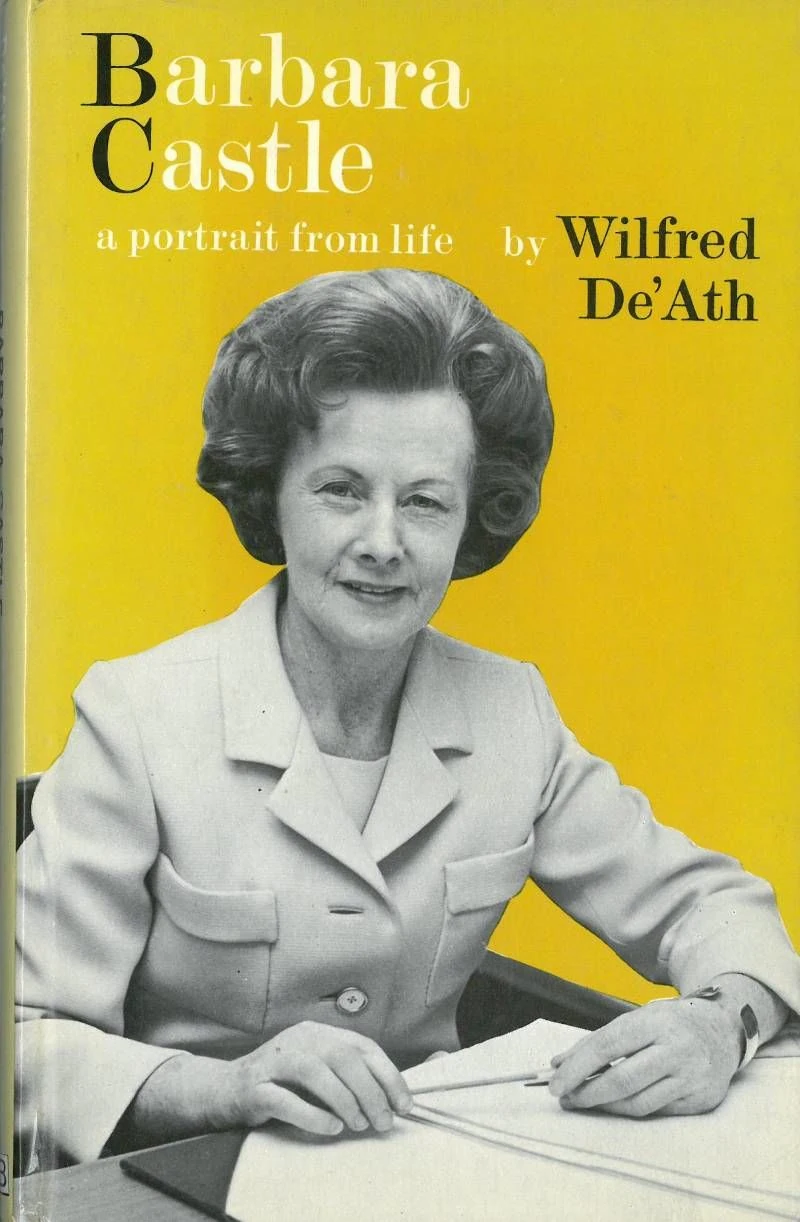
Barbara Castle’s political legacy can be traced through the rules and payments that shape everyday life: equal-pay legislation, road-safety measures, child benefit and support for carers. She did not achieve these changes alone, and not every proposal she championed succeeded. Her influence came from the work of a minister willing to turn public demands into legislation and administration, even when the argument divided her own party. Elected as Labour MP for Blackburn in 1945, Castle spent 34 years in Parliament and held senior government posts in several fields.
From a Labour household to Westminster
Born Barbara Anne Betts in Chesterfield on 6 October 1910, Castle grew up in a politically active socialist family. Her parents were involved in Labour causes, and her early life included time in northern towns shaped by industry and class politics. She went on to study at St Hugh’s College, Oxford, and worked as a journalist for Tribune and the Daily Mirror. Before entering Parliament, she served on St Pancras Metropolitan Borough Council. Journalism and local government gave her experience in public argument and political organisation before she took up a national role.
Blackburn elected Castle as its Labour MP in the 1945 general election. She made a serious effort to understand the constituency she represented, including its textile economy and the circumstances of local people. This attention to place formed part of a career that would range across national policy: her later posts covered aid, transport, employment and social security. Her long political partnership with Harold Wilson helped her reach Cabinet, but her significance also lay in the force with which she approached the responsibilities of office.
Castle was known for stamina, argument and a willingness to challenge opposition. That reputation could make her controversial, but it also suited a politician who wanted government to act rather than merely declare its intentions. She was not simply a voice for reform from outside the institutions of power. She worked within those institutions, took on difficult portfolios and pressed for practical changes. The record includes both measures that became lasting policy and a major proposal that was eventually withdrawn.
The Dagenham strike and equal pay
The 1968 strike by women sewing machinists at Ford’s Dagenham plant brought equal pay into sharp public focus. In June, 187 women walked out after being graded as less skilled than men. The dispute made visible a workplace system in which women’s labour could be essential while being valued less. Castle, then Secretary of State for Employment and Productivity, intervened in support of the workers and helped broker a settlement.
The strike was part of a longer campaign. Workers, trade unionists and other advocates had pressed for fairer pay before the dispute, and Castle was not the sole author of the movement or its aims. Her contribution was to use ministerial authority at a moment when the case for change could be carried into government. The Equal Pay Act 1970 gave that principle a legal form. Its stated purpose was to prevent discrimination between men and women in employment terms and conditions.
The Act was an important foundation, not a declaration that workplace inequality had ended. It did not make every workplace fair at once, nor did it settle every later argument about work of equal value. Its importance lies in establishing a legal basis for challenging discrimination and placing equal treatment in employment terms within British law. Castle’s role was consequential because she helped turn a demand advanced by workers and campaigners into an Act of Parliament.
This distinction matters to the history of reform. A minister can lend authority to a cause without originating it, and a law can make a difference without resolving the problem entirely. The Dagenham machinists made their grievance impossible to ignore; Castle helped move the issue from industrial dispute into legislation. The result was not a final settlement of questions about pay, but a legal foothold on which later efforts could build.
Transport policy and public safety
As Minister of Transport, Castle pursued measures that sought to reduce danger on Britain’s roads. Her record in this area included breathalysers, a national speed limit and measures concerning seat belts. In 1966, she told the House of Commons that she intended to require seat belts on the front seats of new motor cars and light vans. Pending that requirement, she proposed that vehicles should have anchorage points for belts.
These policies addressed everyday behaviour, and their adoption was not simply a matter of technical administration. Measures such as speed limits and seat-belt requirements asked drivers and manufacturers to accept rules in the interests of safety. Their familiarity today can obscure the political decisions involved in making them public policy. Castle’s approach treated road safety as a responsibility for government as well as individual road users.
The measures also show the range of her ministerial work. Equal pay concerned treatment at work; transport policy concerned the risks of travelling by road. In both fields, Castle used the machinery of government to address practical problems through rules. Her record should not be turned into a claim that she alone created every policy associated with these changes. It does show a minister willing to make safety a government concern and to press measures that affected drivers and vehicle standards.
A difficult proposal on trade-union law
In 1968 Castle became Secretary of State for Employment and Productivity and First Secretary of State. In that role she pursued reform of trade-union law through the white paper In Place of Strife. The proposals divided the Cabinet and drew strong opposition from parts of the labour movement. They were eventually withdrawn.
The episode complicates any simple portrait of Castle as a politician whose reforms were always welcomed by her allies. She was a Labour minister, but she was prepared to challenge institutions and assumptions within the movement as well as those beyond it. Supporters could see the initiative as an attempt to address difficult questions about power in industrial relations; critics could regard it as overreach. Whatever judgement is made of the proposal, its failure is part of the record.
There is a difference between holding a conviction and securing a policy. In Place of Strife did not become law, but the dispute around it exposed disagreement about how trade unions, government and the public should exercise power in industry. Castle’s career included both legislation that endured and a proposal that could not survive political opposition. Remembering both makes her more legible as a working politician, rather than reducing her to a list of victories.
Benefits for children and recognition for carers
When Labour returned to office in 1974, Castle became Secretary of State for Social Services. The Child Benefit Act 1975 introduced a universal, non-means-tested and tax-free cash benefit for children, including the first child, paid to the mother. The scheme replaced an earlier patchwork of support. Castle presented its design as a way of directing assistance towards families who had gained less from tax allowances and towards the person managing the daily costs of raising children.
That arrangement gave family support a clearer and more direct form. A payment made for each child was less dependent on the details of a wage packet or a household’s access to tax allowances. The choice to pay the benefit to the mother also reflected the policy’s attention to who managed the practical costs of children’s food, clothing and care. It made support for children a visible part of social provision rather than leaving it solely to indirect arrangements.
In 1976, Castle’s department established Invalid Care Allowance, later renamed Carer’s Allowance. The original purpose was to provide income maintenance for someone who had given up the opportunity of full-time employment to care for a severely disabled relative. The benefit recognised that care could carry a substantial economic cost for the person providing it. It also brought unpaid caring work into the field of public policy, rather than treating it only as a private family matter.
Child Benefit and Invalid Care Allowance addressed different circumstances, but both concerned the relationship between household responsibilities and income. One provided support for children; the other recognised the financial consequences of giving up work to care for a disabled relative. These schemes did not remove the demands of parenting or caring. They did, however, make those responsibilities visible in the design of social security.
Diaries, autobiography and political memory
Castle kept diaries during her time in government. Published as The Castle Diaries, 1964–1970 and The Castle Diaries, 1974–1976, they offer a record of political life from someone involved in Cabinet government. The diaries were typed soon after the events they describe and are characterised in the supplied account as immediate, detailed and candid. Alongside them, her autobiography Fighting All the Way records her own account of her life and work.
These books help preserve more than the public results of Castle’s career. They provide a view of political decisions as they were experienced by a participant, including the disputes and calculations that do not appear in a list of Acts and ministerial titles. An autobiography is also an account shaped by its author’s perspective; it should be read as her record, not as a neutral substitute for the wider history. Taken together, the diaries and autobiography keep her voice and interpretation within the material through which her career is remembered.
That record fits a career that resists easy labels. Castle could be forceful and divisive, loyal to Labour and willing to confront its allies. Some of her efforts became policy; another major initiative was withdrawn. The combination matters: it shows the pressures on reform in a parliamentary system, where ministerial intent, political support and the response of affected groups all shape what government can do.
Why Barbara Castle deserves a place in British Legacy
Barbara Castle deserves a place in British Legacy because her work connected public arguments about fairness and safety with the practical mechanisms of government. The Equal Pay Act 1970 gave legal form to a demand pressed by women workers and campaigners, including the Ford Dagenham machinists whose strike made unequal treatment visible. Castle’s part was not to claim sole ownership of that struggle, but to use her position as a minister to help move it into legislation. The Act did not end discrimination; it established a basis for challenging it. That distinction allows her achievement to be remembered without suggesting that the work was complete.
Her contributions reached beyond employment. As Minister of Transport, she backed measures addressing road safety, including breathalyser use, speed limits and seat-belt requirements. As Secretary of State for Social Services, she was associated with Child Benefit and the establishment of Invalid Care Allowance, policies that recognised the costs of raising children and caring for a severely disabled relative. Those decisions touched work, travel and household income: parts of life experienced not only in Parliament but in workplaces, cars and homes. Castle’s career also included political failure and conflict, notably the withdrawal of In Place of Strife. That is part of what makes her legacy instructive. She understood that good intentions do not become public rights or services without legislation, administration and political argument. Her British legacy lies in that demanding work of turning social concerns into policy, while leaving room to assess both its achievements and its limits.