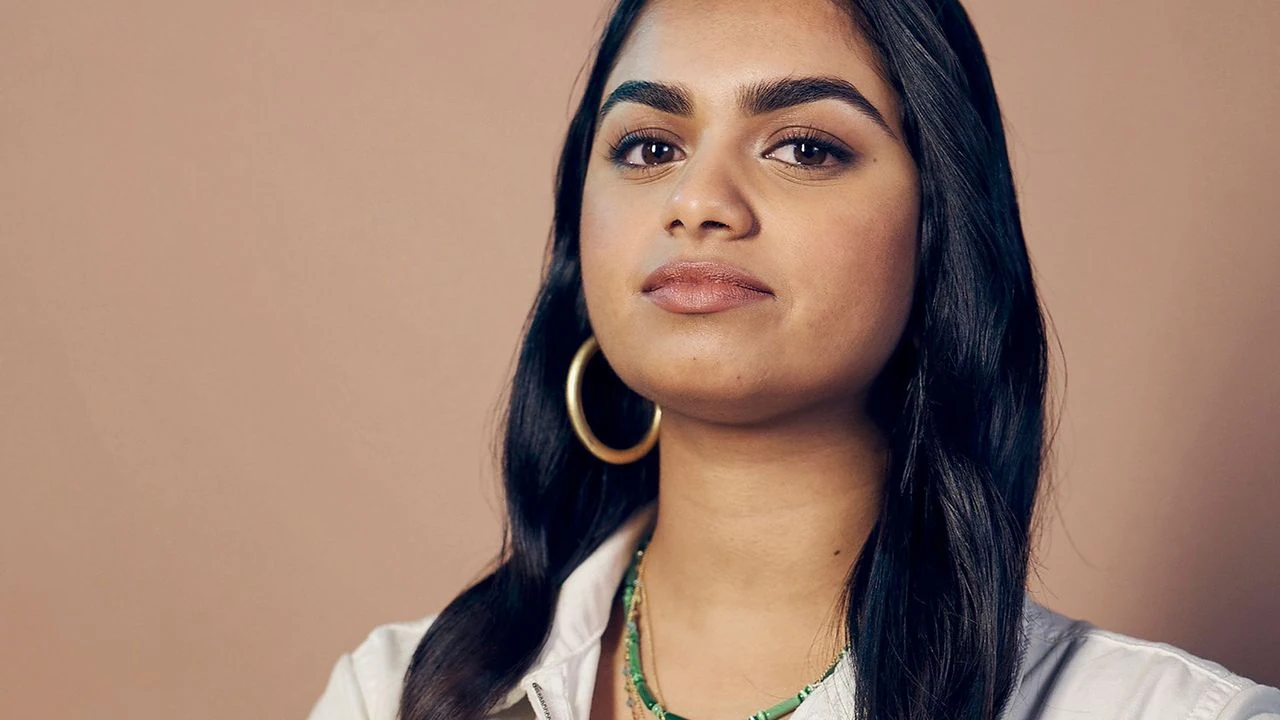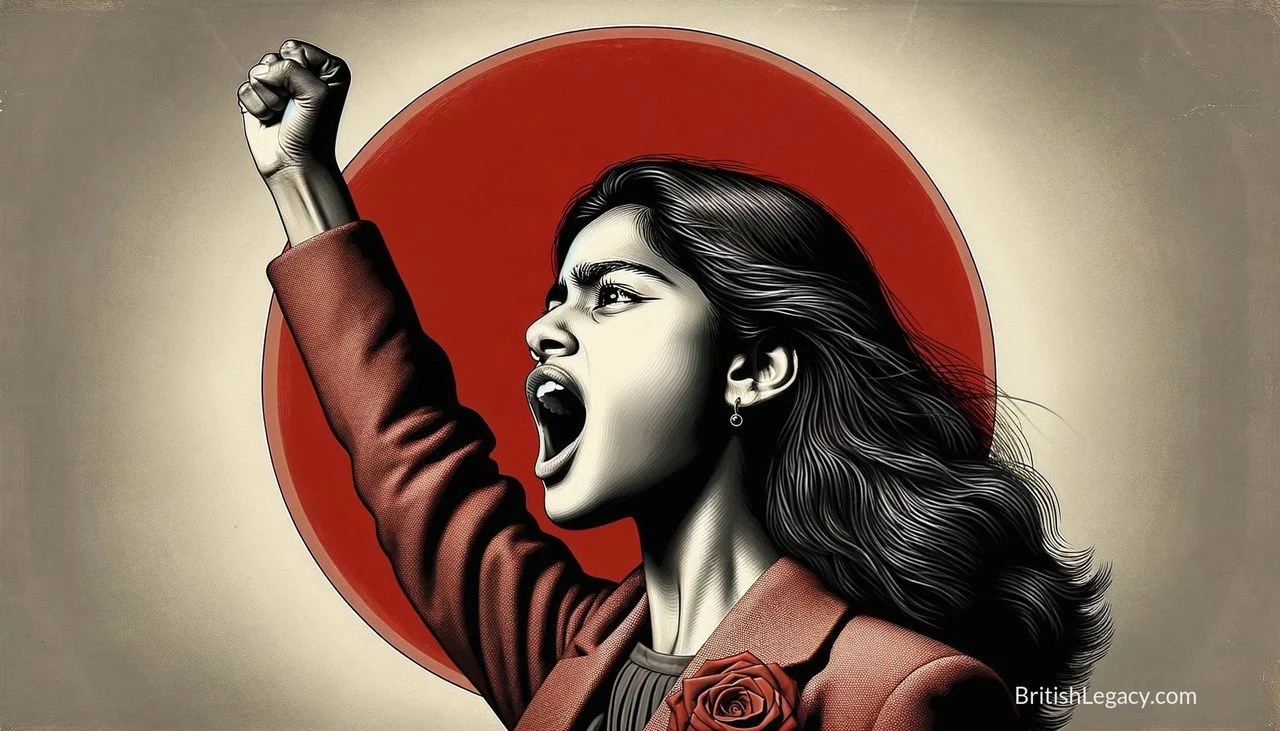
Amika George was 17 when she began a campaign that brought period poverty into public debate in Britain. Girls were missing school because they could not afford menstrual products, yet the subject was often surrounded by embarrassment. George treated that not as a private difficulty to be endured in silence, but as a barrier to education that institutions could address. Her #FreePeriods campaign grew from a petition into protest and public pressure, helping make free products in schools a question for government policy.
The change did not happen in a single announcement. The campaign developed through organising, publicity and continued argument, while government plans for England widened from provision for poorer pupils in secondary schools to a scheme covering state-funded schools and colleges. Products became available through the scheme from January 2020. George’s contribution was to make a neglected practical need difficult to dismiss: if pupils are expected to attend school, the conditions that affect their ability to do so belong in the discussion.
Making an everyday need visible
George was born in London in 1999 and grew up in Edgware in north-west London. She is an activist whose public work has centred on period poverty in the United Kingdom. Her campaign began with a problem that could be hidden precisely because it was so ordinary. Menstruation is a recurring fact of life, but access to the products needed to manage it is not automatic. For pupils without those products, the consequences can reach into the school day: discomfort, worry and difficulty taking part in lessons.
George’s case was direct. A right to education means little if practical circumstances prevent a pupil from attending or participating comfortably. The issue was not simply whether menstrual products were available somewhere, but whether a young person could get what she needed when she was at school. That framing connected an often-taboo subject with a responsibility familiar to parents, teachers and government: making education accessible in practice, not just in principle.
The campaign also challenged the silence around menstruation. When a problem is treated as too awkward to discuss, those affected can be left to solve it alone, and the scale of the difficulty can remain out of view. Speaking plainly about products and period poverty made it possible to argue about a concrete need rather than rely on euphemism. That clarity helped move the issue from the private experiences of individual pupils into a public conversation about provision and fairness.
George was close in age to the pupils whose circumstances the campaign addressed. She began organising while still at school, giving her work a connection to the setting at its centre. Her argument did not depend on describing education as an abstraction: it concerned what happens when pupils have to manage menstruation alongside uniforms, lessons and the pressures of school life. The campaign’s demand was similarly practical. It called for products to be available, rather than asking institutions merely to recognise that period poverty existed.
From petition to protest
In April 2017, while still in secondary school, George founded the #FreePeriods organisation. She also started a petition addressed to Westminster calling for action on period poverty. It gathered more than 200,000 signatures, giving the campaign a substantial public show of support. The petition helped establish that this was not an isolated concern, but George and other campaigners also took the argument beyond the online world.
In December 2017, George worked with Pink Protest on a demonstration outside Downing Street. More than 2,000 people attended, according to the supplied account of the action. The setting mattered: campaigners made their case at the centre of national government, bringing a subject often kept private into a public space. Protest did more than repeat the demand for products. It made visible the people willing to speak about the issue and challenged the idea that menstruation was unsuitable for public discussion.
The combination of a clear name, a petition and a demonstration gave #FreePeriods different ways to reach people. The campaign could state its purpose briefly, show the scale of support and press the government in person. Public attention also helped bring the argument to wider audiences. George received recognition from Teen Vogue, which included her in its 21 Under 21 list, and was named by TIME among its 25 Most Influential Teens of 2018. These acknowledgements recorded the campaign’s growing profile; they were not, by themselves, the change it sought.
George’s work also involved a policy argument with specific demands. In March 2019, the government announced funding for free sanitary products in secondary schools in England for poorer pupils. George and fellow campaigners welcomed the announcement but called for provision to be extended to primary schools and secured more firmly. The next step was a broader plan: later in 2019, the government said that all primary and secondary schools and colleges in England would be offered funded products.
Turning a campaign into provision
The period product scheme launched on 20 January 2020 for state-funded schools and Department for Education-funded 16 to 19 organisations in England. The change from the initial focus on poorer pupils in secondary schools to a wider offer for schools and colleges was significant. It placed products within the practical arrangements of education, where pupils could access them without each having to turn a private difficulty into a public request for help.
A scheme’s value depends on its delivery as well as its announcement. Schools and colleges need to understand how provision works and how products can be obtained. Official guidance addresses practical matters such as ordering, products and support for participating institutions. This administrative detail may be less visible than a protest, but it is where a policy becomes usable. A public commitment matters to a pupil only when products are available in the setting where they are needed.
The government reported that 99 per cent of secondary schools had used the scheme by 2025. That figure indicates the breadth of take-up reported by government; it does not mean that every pupil’s experience was identical or that all questions about access were settled. The campaign’s impact is best described with that distinction in mind: George helped secure a national scheme, while the scheme’s continued usefulness depends on practical provision in schools and colleges.
The policy was accompanied by a change in education. From September 2020, menstrual wellbeing formed part of compulsory health education in state-maintained schools. Product provision and teaching address different aspects of the issue. One can meet an immediate practical need; the other can help pupils understand menstrual health and make it easier to discuss. Both bring a previously neglected subject more clearly into the educational setting.
George’s campaign did not simply raise awareness and then disappear when ministers responded. Its progress illustrates the steps between public pressure and a policy operating in institutions: a demand is made, government announces a response, its scope is debated, guidance is developed and schools put arrangements into practice. George had argued for broader provision after the first announcement. That insistence on scope helps explain why the policy story is not just a story of a single ministerial decision, but of campaigning continuing as the details were shaped.
Recognition, writing and public debate
The campaign made George a prominent young activist. In 2018, the Bill & Melinda Gates Foundation gave her the Goalkeepers Campaign Award for #FreePeriods, presented at a ceremony in New York. She was also included in the Big Issue’s Top 100 Changemakers, according to the supplied Wikipedia account, as well as in TIME’s list of influential teenagers and Teen Vogue’s 21 Under 21. The recognition came from different organisations, but each reflected the reach of a campaign that had started with a school-age organiser and a petition.
Recognition is not a substitute for the work itself. Its significance here is that a campaign about access to products in schools had become visible beyond the immediate circle of organisers and policymakers. George’s public profile helped keep menstrual equity within discussion of youth activism and education. The issue could be named directly and considered as a matter of public responsibility rather than treated as a subject that should remain out of sight.
George has written about young people’s role in activism and about the need to address period poverty. Her public argument has included attention to the way a lack of products can push people towards improvised or unsafe alternatives, and to the importance of educating men as well as those who menstruate. Those points broaden the discussion beyond the purchase of products alone: stigma and lack of understanding can make a practical problem harder to disclose and address.
In 2021, George published Make It Happen: How to Be an Activist, a book that took her experience into guidance for others interested in campaigning. That year she was appointed a Member of the Order of the British Empire for services to education. The honours announcement described her as the youngest recipient on the 2021 Birthday Honours list; Wikipedia records that she was 21 at the time. The honour recognised her contribution to education, while the book offered another route through which her experience could inform future activists.
George studied at the University of Cambridge. The supplied Wikipedia article states that she studied history and that her degree included Indian colonial history and Britain’s ties to the slave trade. This part of her education sits alongside, rather than replacing, her public work: her reputation rests on the campaign she founded and the policy discussion it helped to change. The National Portrait Gallery has also profiled her in its work on reframing women in portraiture, placing an activist within a wider account of women who shape public life.
Why Amika George deserves a place in British Legacy
Amika George deserves a place in British Legacy because she helped change what equal access to education means in practice. Her campaign connected an everyday need with a public institution’s responsibilities. Rather than leave period poverty as an embarrassment for individual pupils to manage, she made it a subject of petitions, protest and debate with government. The policy outcome was concrete: England’s period product scheme began in January 2020 for state-funded schools and Department for Education-funded 16 to 19 organisations. Its reported use by 99 per cent of secondary schools by 2025 shows that the campaign’s central demand became part of school provision, not merely a slogan.
Her British legacy is also a record of how young people can participate in public life. George founded #FreePeriods at 17, gathered petition support, helped bring a large demonstration to Downing Street and continued to press for wider provision after the first policy announcement. She did not need to hold office to make an argument that officials had to address. The reach of the work lies in both what institutions provide and what the public can now discuss more openly: menstrual products, education and the barriers that can prevent pupils from taking part fully in school.
Recognition, a book and an MBE add to that record, but the lasting measure is practical. A pupil who can obtain products at school is less likely to face the day without something essential; a school has a clearer responsibility to consider access; and teachers can address menstrual wellbeing as part of education. These changes do not settle every question about poverty or access, and a national scheme still depends on local delivery. They do, however, mark a shift in expectation. George helped make it harder to treat period poverty as too private or too trivial for policy. That is a specific contribution to public life in England and a meaningful reason to remember her in British Legacy.
Sources
Amika George — Wikipedia, revision 1372347564 · Amika George — Wikipedia
Adapted in part from Amika George by Wikipedia contributors, under CC BY-SA 4.0. Text has been edited and combined with the existing article; this adapted text is shared under the same licence. Contributor history.