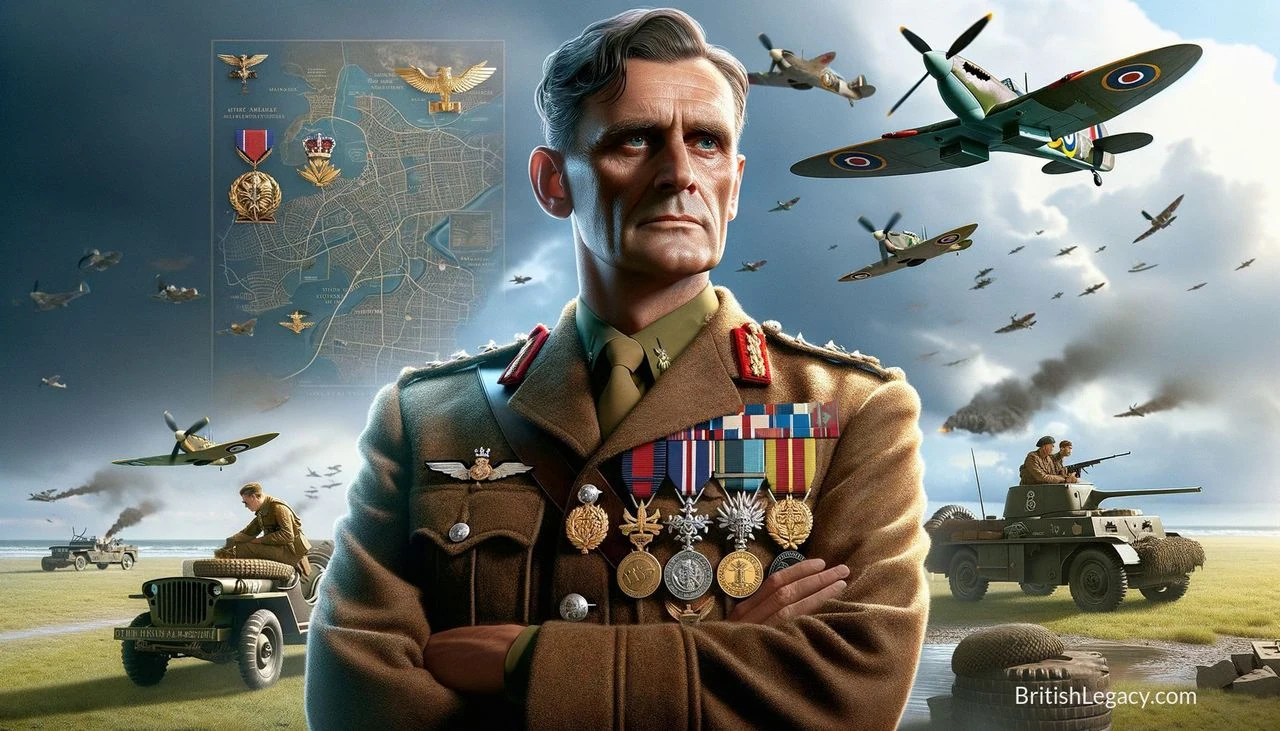
General Sir Bernard Freyberg: The Heroic Commander and the Battle of Crete
In the annals of British military history, few figures stand as tall as General Sir Bernard Freyberg. Born in New Zealand yet rising to remarkable prominence within the British Army, Freyberg's legacy is firmly intertwined with one of the most intense and gruelling episodes of the Second World War - the Battle of Crete.
A Distinguished Beginning
Born on 21 March 1889 in Richmond, New Zealand, Freyberg’s early life included a fervent interest in athletics, which imbued him with a robust physicality and tenacity that would become central to his military career. A dentist by profession, Freyberg’s world was upended with the outbreak of World War I, prompting him to enlist. Demonstrating extraordinary bravery, he gained the nickname “The Salamander” after being wounded multiple times and receiving the Victoria Cross for his actions at Beaucourt in 1916.
On the Forefront of World War II
By the onset of World War II, Freyberg had transitioned to a seasoned military leader, commanding the 2nd New Zealand Expeditionary Force. His expertise and spirited leadership did not go unnoticed, and soon he was entrusted with command during critical operations, most notably in Greece and North Africa. However, it was the Battle of Crete in 1941 where Freyberg’s name was indelibly etched into the pages of military history.
The Battle of Crete
Crete, a strategically vital Mediterranean island, was the focus of a major German airborne assault in May 1941. General Freyberg, commanding the Allied defence, was tasked with an unenviable challenge: facing an elite German paratroop invasion with limited resources and intelligence.
Despite the odds stacked against them, Freyberg's command demonstrated remarkable resilience. His ability to fortify positions and employ the island's limited defensive resources technically managed to delay and challenge the German onslaught. The Allies suffered heavy losses, and despite a valiant defence, the German forces eventually seized control. Yet, the battle marked the first significant instance of heavy losses inflicted on the German paratroops, leading to Hitler's decision to cease such large-scale airborne operations for the remainder of the war.
Legacy of Leadership
Freyberg's deft handling of the Battle of Crete earned him notable recognition; even in retreat, his leadership was a testament to his tactical nous and unwavering resolve under extreme pressure. His actions bore significant strategic implications, influencing the broader course of the war and subsequently shaping military doctrines worldwide.
Post-World War II, Freyberg continued his public service when he was appointed the Governor-General of New Zealand in 1946, a post he held until 1952. Deeply respected for his wartime service and leadership, his tenure as Governor-General further cemented his legacy as a bridge between New Zealand and Britain.
The British Legacy
Sir Bernard Freyberg’s contributions to the British military legacy are as enduring as they are inspiring. An exemplar of courage, strategic acumen, and indomitable spirit, Freyberg’s leadership during the Battle of Crete remains a paragon of military history. His story is not merely that of a battlefield commander but of a legacy interwoven with the broader tapestry of British Imperial and Commonwealth service.
In commemorating figures like General Sir Bernard Freyberg, the narrative of British heritage is enriched, embodying values of bravery, strategic insight, and perseverance. His life and career continue to serve as a stirring reminder of the very best in military leadership, contributing to the ongoing story of British and Commonwealth resilience and shared heritage.
In this often turbulent world, the legacy of Bernard Freyberg stands as a beacon of hope and a testament to the enduring strength of leadership against all odds — a worthy chapter in the great British legacy that has influenced the global stage.