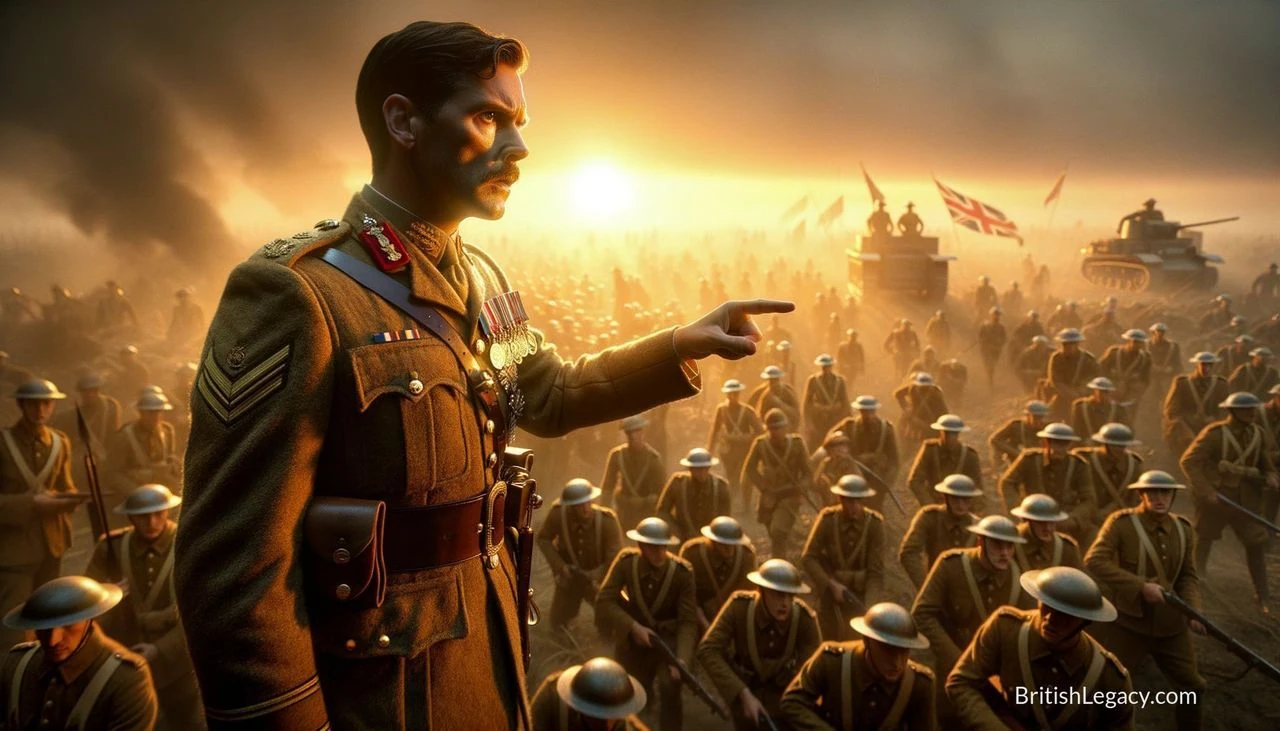
General Sir Douglas Haig: The Strategic Mind Behind the Battle of the Somme
In the annals of British military history, few names evoke as much reverence and debate as that of General Sir Douglas Haig. As the commander of the British Expeditionary Force (BEF) during the pivotal years of the First World War, Haig's leadership and decisions significantly shaped both the course of the war and the enduring legacy of British military strategy. Among his most famous—and scrutinised—military engagements is the Battle of the Somme, a campaign that remains one of the most talked-about episodes of the Great War.
Early Life and Military Career
Douglas Haig was born on 19 June 1861 in Edinburgh, Scotland, into a whisky-distilling family. His educational journey saw him through Clifton College and Brasenose College, Oxford, before he embarked on a career with the British Army by attending the Royal Military Academy Sandhurst. From his early days as a cavalry officer, Haig exhibited a flair for strategy and leadership, qualities that would later define his military career.
His rise through the ranks was marked by service in various overseas campaigns, including the Sudan and the Second Boer War, where he honed his tactical skills and earned a reputation for meticulous planning and unwavering dedication.
Leadership During the First World War
Appointed as the Commander of the BEF in December 1915, Haig assumed a role of immense responsibility just as the First World War was entering one of its most gruelling phases. The Western Front had devolved into a stalemate characterised by trench warfare, and the need for a decisive offensive was pressing.
It was within this context that Haig orchestrated the Battle of the Somme, an ambitious offensive aimed at breaking through German lines and relieving pressure on the French forces at Verdun.
The Battle of the Somme
Commencing on 1 July 1916, the Battle of the Somme was one of the largest and bloodiest battles in human history. The first day alone saw nearly 60,000 British casualties, a stark testament to the scale of the conflict. Despite the heavy losses, Haig committed to a prolonged offensive, which stretched until November 1916.
The battle is often remembered for its staggering casualties—over 1 million men from both sides—but it also marked significant tactical developments. The use of the tank in warfare, for instance, was pioneered during this campaign, and the lessons learned from the Somme would influence military tactics for years to come.
Controversy and Legacy
General Haig's leadership during the Battle of the Somme has been the subject of intense scrutiny and polarised opinions. Critics argue that his persistence in the face of massive losses reflects an inflexible and callous approach to command. Supporters, however, contend that his actions were constrained by the harsh realities of trench warfare and the technological limitations of the period.
Regardless of the debate, it is undeniable that Haig's decisions left an indelible mark on British military history. The Somme, despite its horrific cost, eventually contributed to the weakening of German forces and set the stage for the eventual Allied victory in 1918.
In the post-war years, Haig was honoured and commemorated for his service. He was made an Earl and played a crucial role in supporting war veterans, founding the Royal British Legion—a lasting testament to his commitment to those who served under his command.
Wrap-Up
General Sir Douglas Haig remains a towering figure in the narrative of British history, embodying the complexities and harsh realities of leadership during one of humanity's most devastating conflicts. His role in the Battle of the Somme, marked by both strategic innovation and tragic loss, continues to be a focal point for discussions on the legacy of the Great War.
Through his unwavering commitment and controversial decisions, Haig's legacy endures as a symbol of the profound challenges and sacrifices faced by the British Army, encapsulating a chapter of history that shaped the future of military strategy and the collective memory of a nation. As we reflect on his contributions, we are reminded of the immense cost of war and the enduring impact of those who lead through its most challenging moments.