The Great British Beer Festival is a large-scale public celebration of beer organised by the Campaign for Real Ale (CAMRA). Its changing venues and occasional cancellations are part of its history, but its defining offer has endured: a broad selection of British and international drinks, the Champion Beer of Britain awards, and the convivial bustle of a temporary pub on a festival scale.
A festival with a changing home
CAMRA’s first large beer festival took place in Covent Garden, London, in September 1975. It ran for four days, attracted 40,000 people and saw 150,000 pints of real ale consumed. The event was not formally called the Great British Beer Festival, but it became its forerunner. The first festival under the GBBF name followed in 1977 at Alexandra Palace.
The event has since moved between venues and cities. It was held at Alexandra Palace from 1977 to 1980, including in tents in 1980 after the Palace burnt down. Leeds hosted it in 1981 and 1982; Birmingham followed in 1983. There was no festival in 1984. Brighton became the next home from 1985 to 1987, followed by a return to Leeds in 1988 and 1989, then Brighton again in 1990. The festival settled in London from 1991, first at Docklands Arena.
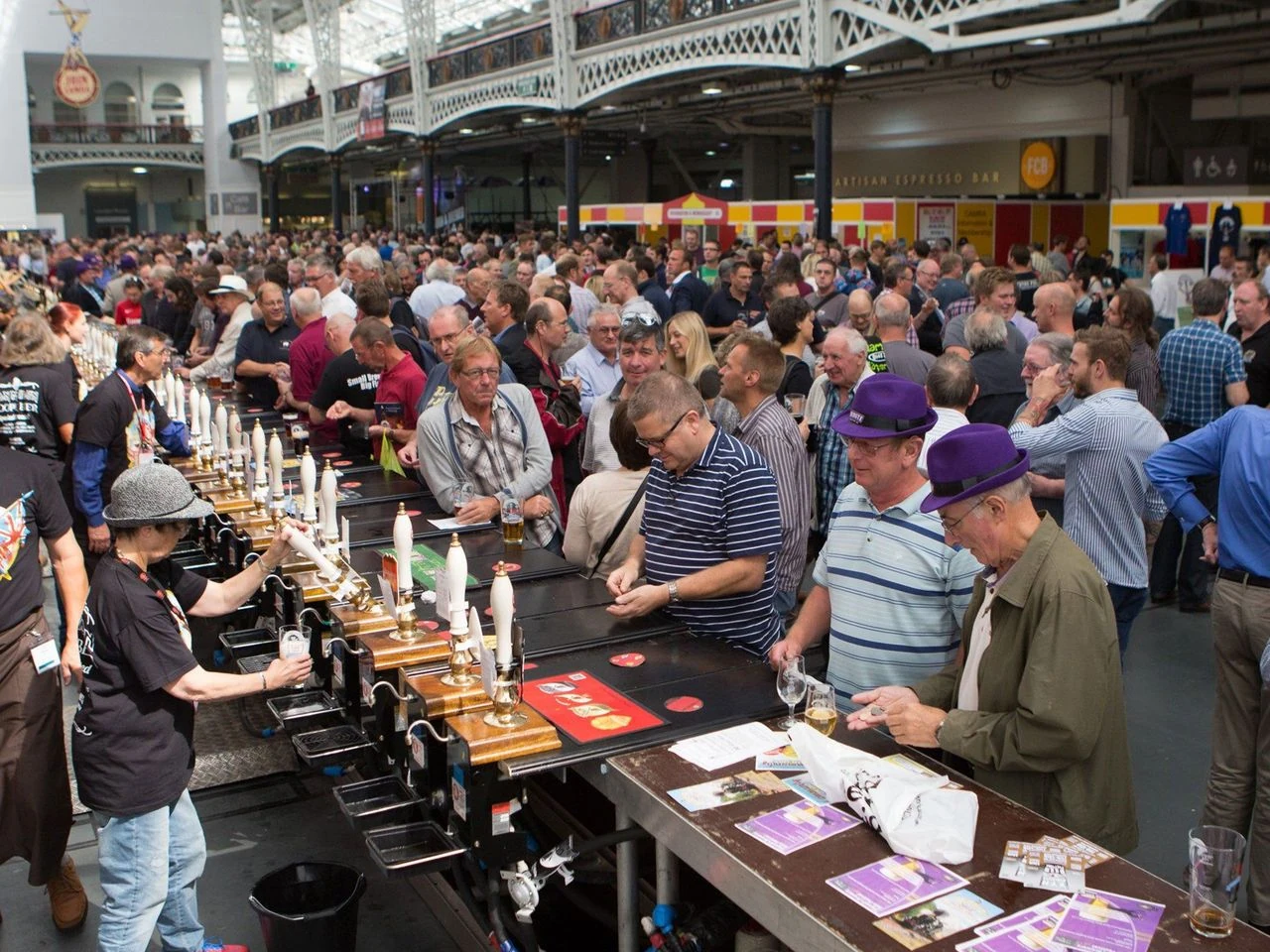
Olympia hosted the festival from 1992 to 2005. It moved to the larger Earls Court for 2006–11, then returned to Olympia in 2012. The move to Earls Court was associated with a rise in ticket sales: in 2006, more than 66,000 people attended and drank around 350,000 pints. The reported total for 2010 was 66,900 visitors, followed by 62,446 in 2011. The 2007 event was marked as the festival’s 30th anniversary.
There have been interruptions as well as moves. No event took place in 2020 or 2021 because of the COVID-19 pandemic. Olympia renovations and the lack of a suitable alternative venue led to the cancellation of the 2024 festival. In 2025, it was held at the National Exhibition Centre at Marston Green. The 2026 event was cancelled for financial reasons. These changes mean that descriptions of the festival as an annual event, or of Olympia as its current venue, need to be read in light of its actual recent history.
What visitors find
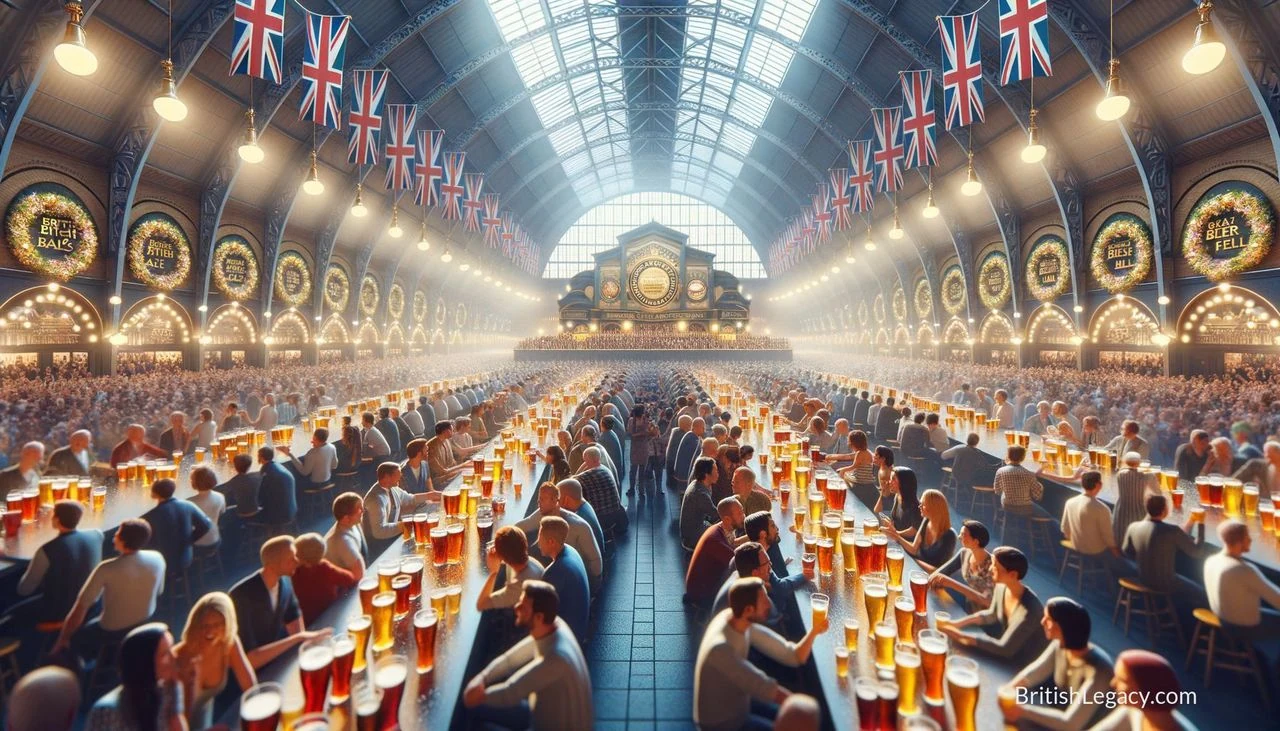
The festival is styled as the “biggest pub in the world”. It offers around 900 different beverages, including at least 450 beers from British breweries and around 200 foreign beers, with countries represented including Belgium, Germany and the United States. Traditional British cider and perry are also part of the selection. The mix places familiar styles alongside drinks from further afield, rather than limiting the event to one kind of beer or one part of the brewing trade.
At the centre of the event are cask ales and the Champion Beer of Britain awards. The awards are announced on the Tuesday afternoon, during a session reserved for the trade and press; members of the public are admitted from Tuesday evening. The festival generally runs from Tuesday to Saturday during the first full week of August, with afternoon and evening public sessions. The schedule gives the awards a prominent place while making the rest of the week available to visitors.
Beer is not the only draw. The festival includes live music, traditional pub games and food stands, alongside opportunities to meet other drinkers in a shared setting. This programme echoes the social life associated with pubs without reducing the event to a drinking list: visitors can move between drinks, food and entertainment, while the range makes room for different regional and international brewing traditions.
CAMRA and the people who run it
CAMRA organises the festival, which gives its work on real ale a public showcase. The festival’s wide selection places British brewery beers alongside foreign beers, cider and perry; its awards offer another way to bring attention to the beers presented there. The event is also staffed by volunteers: around 1,000 unpaid workers help run it. Their contribution is a practical part of how a festival of this size operates.
The gathering has also developed beyond its London origins. Although it has settled in London since 1991, its earlier stops in Leeds, Birmingham and Brighton show that the festival’s history is not tied to a single exhibition centre. The move from one venue to another has affected its scale and continuity, while the core format has continued to combine drinks, awards and entertainment. A winter sister festival, the Great British Beer Festival Winter, is held in February.
Why the Great British Beer Festival deserves a place in British Legacy
The Great British Beer Festival deserves a place in British Legacy because it makes a distinctive part of British drinking culture visible and accessible. Its programme centres on cask ales and the Champion Beer of Britain awards, while also including beers from British breweries, international selections, cider and perry. Rather than presenting brewing as a purely private craft, the festival brings producers, visitors and volunteers into the same public space. The scale is substantial: around 900 beverages are offered, and around 1,000 unpaid volunteers help operate the event.
Its history also illustrates how a cultural event can persist without a fixed home. From its 1975 Covent Garden forerunner and its first formally named festival at Alexandra Palace in 1977, the GBBF has moved among venues and cities, returned to London, and faced cancellations when circumstances made an event impossible. The 2025 move to the National Exhibition Centre and the cancellation of 2026 underline that continuity is not automatic. The festival’s significance lies not in claims that it is uniquely British or immune to change, but in its sustained public celebration of beer, cider and perry, its awards and its communal programme. That combination gives it a clear place in the story of Britain’s beer and pub culture.
Sources
Great British Beer Festival (revision 1342916317) · Great British Beer Festival
Adapted in part from Great British Beer Festival by Wikipedia contributors, under CC BY-SA 4.0. Text has been edited and combined with the existing article; this adapted text is shared under the same licence. Contributor history.