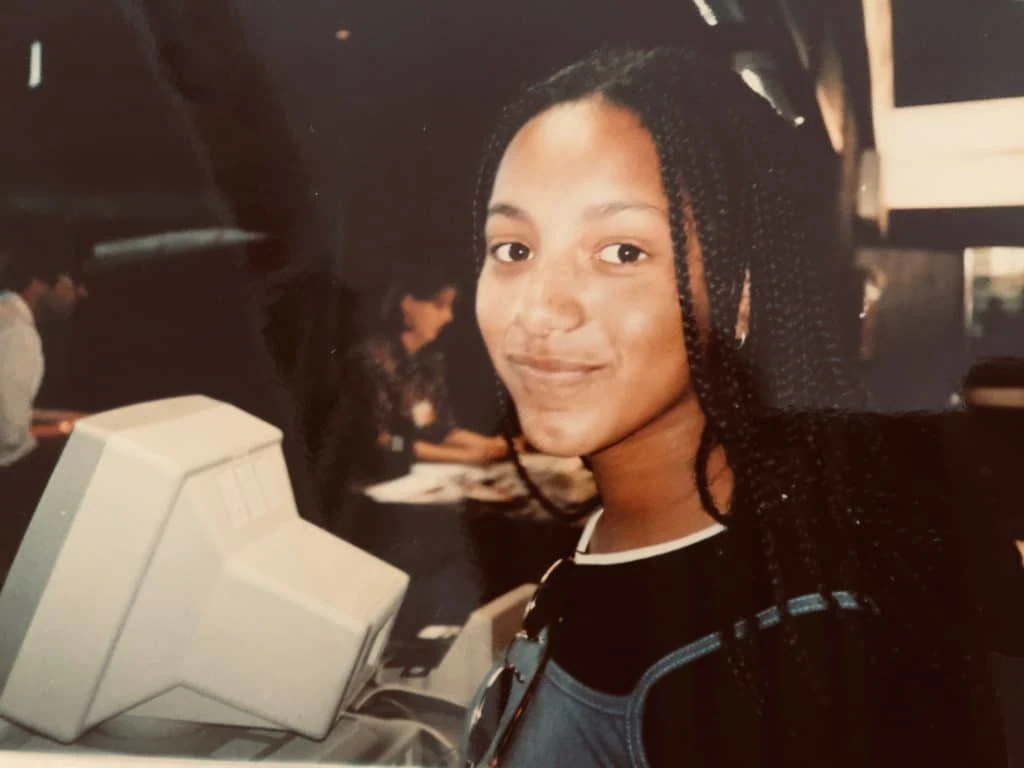
Afua Hirsch’s work asks Britain to examine the stories it tells about itself: who is represented in them, what history they leave out, and how those omissions shape the present. A journalist, writer and broadcaster, she has carried these questions between newspapers, television and books. Her career has moved from legal reporting and international journalism to documentaries and literary non-fiction, with a consistent interest in the relationship between public history and lived experience.
Her 2018 book, Brit(ish): On Race, Identity and Belonging, brought those concerns together in a work that combined memoir with discussion of Black history, culture and politics. Later projects took related questions to television, from the debate over British heroes to programmes about the transatlantic slave trade and contemporary African creativity. Hirsch’s contribution is not simply to raise difficult subjects; it is to make them available to broad audiences through different forms of reporting and storytelling. The supplied biographical record documents the career and work discussed here.
Family history and education
Hirsch was born in Stavanger, Norway, in 1981, to a British father, Peter Hirsch, and a Ghanaian mother, Mary Owusu-Hirsch. She grew up in Wimbledon, south-west London, and attended Wimbledon High School. Her family history crosses several national and historical contexts. Her paternal grandfather, Hans Hirsch, later known as John, was Jewish and fled Berlin in 1938. Her maternal grandfather was involved in establishing Ghana’s post-independence education system and later became a political exile.
These facts provide context for Hirsch’s attention to identity, inheritance and belonging, but they do not explain her work on their own. The questions she pursues are also shaped by professional experience: legal training, journalism and documentary work. Her biography is one strand in a wider investigation of how individuals encounter national histories and institutions.
At St Peter’s College, Oxford, she studied philosophy, politics and economics from 1999 to 2002, graduating with a Bachelor of Arts degree. She then took the Graduate Diploma in Law at BPP Law School, qualified as a barrister in 2006 and trained at Doughty Street Chambers. Her shift between law and journalism was not a simple departure from one subject to another. Legal practice and legal reporting both involve attention to evidence, competing accounts and the consequences of rules in people’s lives. Those concerns recur in her later treatment of citizenship, race and public memory.
Reporting across Britain and West Africa
Hirsch worked as a legal correspondent for The Guardian before becoming its West Africa correspondent, based in Accra, Ghana. She has also lived in Britain and Senegal. That reporting placed British questions within a wider frame, connecting national debate with histories and experiences beyond the United Kingdom. It also meant that her journalism moved between law, social affairs and international reporting rather than being confined to a single specialist beat.
From 2014 to 2017, Hirsch was Social Affairs and Education Editor at Sky News. The post brought her work into national television news and made social and educational questions part of her public brief. Her journalism has also appeared in The Observer, The Evening Standard, Vogue and Prospect. In 2019 she contributed “What Does It Mean to Be African?” to Margaret Busby’s anthology New Daughters of Africa. Across these outlets, her subject matter has included race, history and belonging, but also the institutions and public arguments through which these subjects are understood.
In 2017, a Guardian article by Hirsch questioned whether Nelson’s Column should remain in Trafalgar Square. The response to the article became part of a wider argument about statues and the interpretation of the past. The supplied biographical account records that, the following year, Hirsch said discussion of removing the column had distracted from her central point: Britain should look more carefully at its past in order to understand itself in the present. Introducing her documentary The Battle for Britain’s Heroes, she also rejected the suggestion that she was proposing to remove the monument by force. The episode illustrates a recurring feature of her public work: historical interpretation itself can become a contested issue.
Brit(ish) and the question of belonging
Published by Jonathan Cape in January 2018, Brit(ish): On Race, Identity and Belonging is Hirsch’s best-known book. Part memoir, it discusses Black history, culture and politics in the contexts of Britain, Senegal and Ghana. It became a Sunday Times bestseller. Hirsch received the Royal Society of Literature Jerwood Prize for Non-Fiction while writing it, in 2016. These details mark the book’s reception; its subject is the more lasting question of how identity and national belonging are formed.
The book links personal experience with wider histories rather than treating them as separate matters. Its combination of memoir and historical discussion gives readers a way to consider how accounts of Britain’s past affect contemporary understandings of race and identity. That approach makes the book more than a record of one person’s experience: it places individual perspective in conversation with public history and politics. Its title captures the tension at the centre of the subject—between an identity that can be claimed and the questions or conditions that may be attached to belonging.
Hirsch’s writing also extends beyond adult non-fiction. In 2019 she published Equal to Everything: Judge Brenda and the Supreme Court, a children’s book about Brenda Hale and the UK Supreme Court. In 2023 came Decolonising My Body: A Radical Exploration of Rituals and Beauty, which examines the relationship between identity, the body and wider society. The books differ in audience and focus, but both show her working with questions of representation and authority in forms other than newspaper commentary. One introduces a legal institution to younger readers; the other turns attention to how cultural ideas can shape physical experience.
Hirsch has also contributed to debates about how British history is told. In “The Racism That Killed George Floyd Was Built in Britain”, published in The Guardian in 2020, she addressed the relationship between racism and British history. In a 2017 Prospect article, “Britain: Rainbow Nation, Racist Background”, she placed contemporary accounts of national identity beside the history that informs them. Such titles indicate the range of her published interventions; the larger pattern is a refusal to treat the present as detached from the past.
Documentaries and historical argument
Television gave Hirsch another way to explore the same questions. In 2018, Channel 4 broadcast The Battle for Britain’s Heroes, a documentary examining the people Britain chooses to honour. Among the subjects Hirsch raised were aspects of Winston Churchill’s record, including his attitudes towards Indians and his advocacy of the use of tear gas against what he called “uncivilised tribes” in Mesopotamia after the First World War. The programme brought historical argument into a current public debate about monuments and national reputation.
The significance of such a programme lies in the questions it makes possible, not in a claim that history can be settled by a single broadcast. A monument or celebrated reputation is already an interpretation: a decision about what deserves public recognition. By looking at less familiar aspects of a historical figure’s record, the programme invited viewers to consider the terms on which that recognition rests. The controversy around Hirsch’s earlier writing on Nelson’s Column showed how readily a question about the past can be recast as a dispute about whether history should be discussed at all.
In 2020, Hirsch co-presented Enslaved, a six-part documentary series with Samuel L. Jackson. The programme explored aspects of the transatlantic slave trade, including links with Hirsch’s personal history. That combination of historical investigation and personal connection reflects an approach also present in Brit(ish): history is not only a record of distant events but a force that can shape family stories and contemporary life.
Also in 2020, Hirsch presented BBC Four’s African Renaissance: When Art Meets Power. She visited Ethiopia, Senegal and Kenya, meeting artists and musicians and recounting the histories of the countries. In June 2023, she presented the three-part BBC series Africa Rising with Afua Hirsch, about young creatives reinventing culture across Africa. These programmes differ from the work on British monuments, but share an interest in who gets to shape a story. They place artistic and cultural activity alongside history, rather than treating the continent only through the narrow frames of crisis or policy.
Hirsch has also appeared as a panellist on Sky News discussion programme The Pledge. In 2021, it was announced that her production company, Born in Me, had signed a deal with Fremantle. The company’s name refers to a quotation attributed to Kwame Nkrumah: “I am not African because I was born in Africa, but because Africa was born in me.” Together, the television work and production agreement show her activity extending from journalism and presenting towards the creation of programmes.
Books, institutions and recognition
Hirsch’s work has been recognised in literary and professional settings. She served on the panel of judges for the 2019 Booker Prize for Fiction. That year she was also included in the 2020 edition of the Powerlist, which recognises influential Britons of African or African-Caribbean heritage. In 2020, New African magazine named her among its top 100 most influential Africans; in the 2021 Powerlist she ranked ninth among influential people of African or African-Caribbean heritage in the United Kingdom. In 2024, she was elected a Fellow of the Royal Society of Literature.
Hirsch holds the Wallis Annenberg Chair in Journalism and Communication at the University of Southern California in Los Angeles. This appointment places her in a teaching role as well as the public work for which she is known. Her career therefore spans several ways of shaping discussion: reporting events, writing books, presenting documentaries and working within higher education. None of these roles requires readers to agree with every argument she makes. Their shared importance is that they give her a platform to investigate how history, identity and public institutions meet.
Why Afua Hirsch deserves a place in British Legacy
Afua Hirsch deserves a place in British Legacy because her work has made questions of race, history and belonging harder to dismiss as marginal to British life. Brit(ish) connected personal experience with Black history and public debate, giving readers a sustained account of how ideas about national identity are formed. Her journalism and television work have carried related questions into national news and popular documentary, including the debate about whom Britain honours and how the histories behind those honours should be understood. These are specific contributions to public culture: books to read, reporting to encounter and programmes that ask viewers to examine familiar narratives more closely.
Her legacy also lies in the range of audiences and formats she has reached. A children’s book about the Supreme Court, documentaries about the slave trade and African cultural life, and a book exploring identity and the body do not perform the same task. Together, however, they show a writer and broadcaster willing to make complex histories and institutions accessible without restricting the discussion to one medium. Her British connection is grounded in her upbringing in Wimbledon, her work for British newspapers and broadcasters, and her sustained engagement with Britain’s past and present. By drawing attention to what national stories include, omit or celebrate, Hirsch has helped make the public conversation more historically alert. That continuing conversation is a substantial British legacy.
Sources
Adapted in part from Afua Hirsch by Wikipedia contributors, under CC BY-SA 4.0. Text has been edited and combined with the existing article; this adapted text is shared under the same licence. Contributor history.