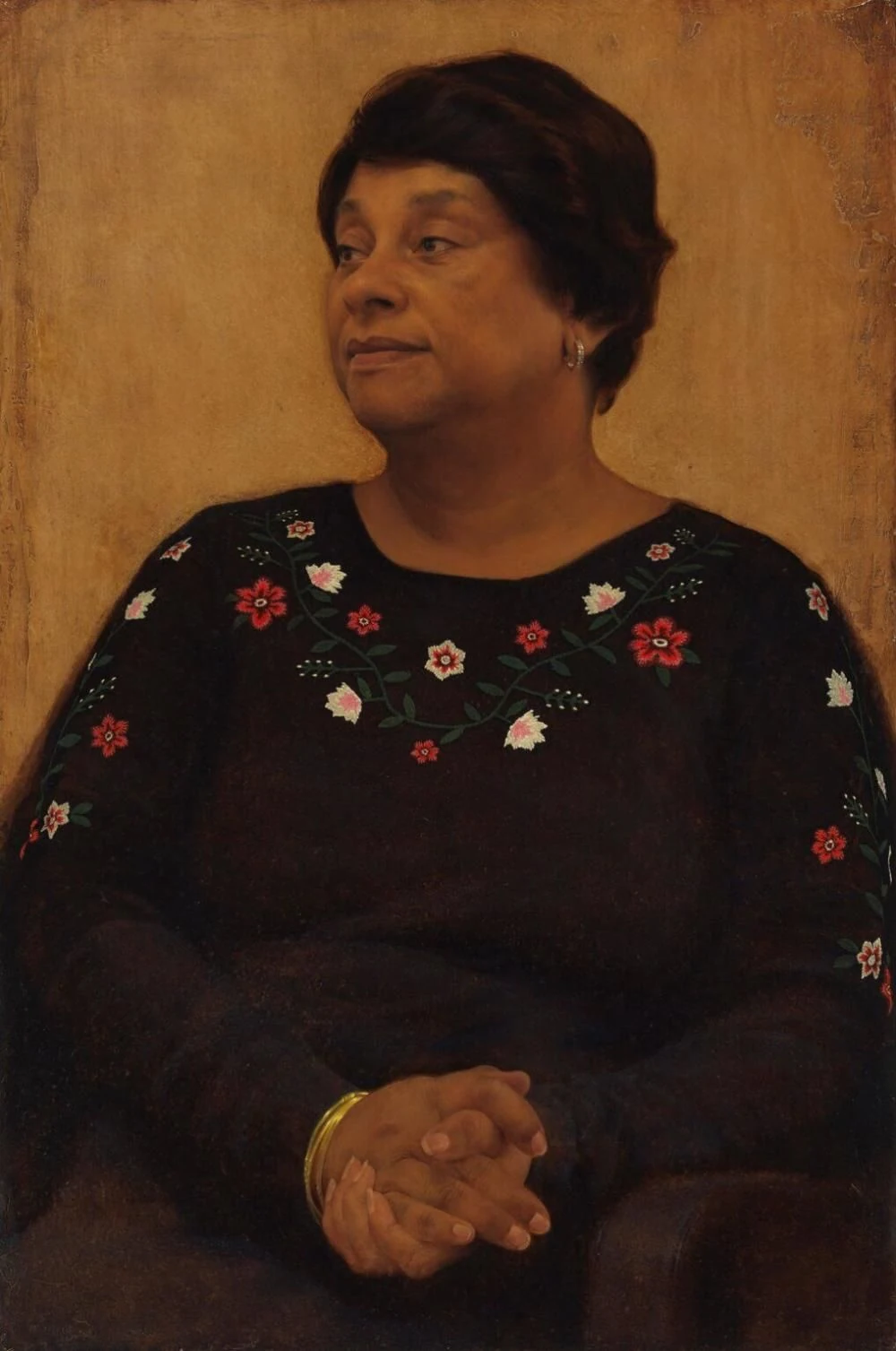
Doreen Lawrence became a public figure through a failure that should never have been hers to repair. After her son Stephen was murdered in a racist attack in south-east London in 1993, she and her family challenged the way the Metropolitan Police handled the investigation. Their campaign helped bring about a public inquiry that found the force institutionally racist, and kept the case in view after an early prosecution failed. Lawrence’s public life grew from that insistence on accountability. It also developed in another direction: towards charitable work, support for young people and ways of remembering Stephen through the future he had wanted to pursue.
Her story has a clear British setting and a wider personal geography. Born in Jamaica, Lawrence came to the United Kingdom as a child and made her life here. Her campaign forced a national conversation about policing, racism and the obligations of public institutions. The legacy attached to her name is not only a report or a legal change. It includes an architectural prize for younger practitioners, a national day of learning and reflection, and a place in parliamentary life.
From Clarendon to south-east London
Doreen Delceita Graham was born in Clarendon, Jamaica, on 24 October 1952. At nine, she emigrated to the United Kingdom. She completed her education in south-east London and later worked in a bank. In 1972 she married Neville Lawrence. They had three children, including Stephen, and divorced in 1999. These details establish the life that preceded the public campaign: family, work and education, rather than a career in politics or law.
At the University of Greenwich, Lawrence was studying for a Humanities degree when Stephen was killed. She completed the degree in 1995. This part of her chronology matters because her public role did not begin with an established platform or professional position as an activist. She was a student and a mother dealing with a sudden loss while seeking answers from institutions whose conduct she considered inadequate. Continuing her studies in those circumstances places education in the story not as a symbol supplied later, but as a real part of her life at the time.
Stephen was 18 and wanted to become an architect. On 22 April 1993, he was murdered in a racist attack in Eltham, south-east London. Doreen and Neville Lawrence challenged the professionalism of the police investigation, citing incompetence and racism as central failings. Their concern was not confined to whether those responsible for the murder would be identified and prosecuted. It extended to how a public service had responded to their son’s death and whether the family could trust that response.
The Lawrences’ challenge brought a further question into public view: what happens when the people seeking protection and justice believe the institutions responsible have compounded the original harm? Their campaign kept that question attached to the case. The inquiry that followed would examine the circumstances surrounding Stephen’s death and the work of the Metropolitan Police, rather than treating the failure as a matter of private grief alone.
The prosecution, the inquiry and the law
In 1994, Doreen and Neville Lawrence initiated a private prosecution against five suspects. It failed: the evidence was insufficient, and the suspects were acquitted. The law on double jeopardy then meant there was no prospect of prosecuting them again after acquittal. The result did not settle the family’s concerns. Instead, it underscored how final the failure could appear and intensified the pressure for a fuller examination of the case.
After years of campaigning, Home Secretary Jack Straw established a wide-ranging judicial inquiry in 1999. Chaired by Sir William Macpherson, it investigated the circumstances of Stephen’s death. Published on 24 February 1999, the inquiry’s report concluded that the Metropolitan Police was institutionally racist. This finding shifted the focus from the conduct of a few individuals to the possibility that an institution’s own practices and assumptions could produce racist outcomes. The phrase became a significant point of reference in British public debate because it named a problem at the level of an organisation.
The inquiry also recommended changes to the double-jeopardy law. The changes were passed in 2003 and came into effect in 2005. Following a review of forensic and other evidence that began in 2006, two men, Gary Dobson and David Norris, were re-arrested, tried and found guilty in 2011–12. Those convictions came many years after Stephen’s murder. They did not undo the earlier acquittals, the delay or the family’s experience of the investigation. They did demonstrate the practical importance of the change in law and of continuing to review evidence.
The sequence should be understood accurately. The inquiry did not itself convict the men; the later prosecution depended on a review of evidence and on the change to the law. Lawrence’s campaign was part of the long public effort that kept the case alive and secured an inquiry into institutional conduct. The chain from private prosecution to inquiry, legal reform and later convictions shows how a case can alter both debate and procedure, while also making clear that justice can take years and that institutional change is not a substitute for accountability in an individual case.
The report’s finding mattered beyond the immediate investigation. By identifying institutional racism within the Metropolitan Police, it challenged a narrower account in which racism could be addressed only by finding individual prejudice. The inquiry put an institution’s actions and responsibilities under scrutiny. For Lawrence, the work of seeking justice therefore had consequences beyond her own family: it helped make the conduct of public institutions a question that could be examined openly and contested in national life.
Keeping Stephen’s ambitions in view
Lawrence and Neville helped found the Stephen Lawrence Charitable Trust in 1998 to promote a positive community legacy in Stephen’s name. The trust represented a different kind of work from the campaign for an inquiry. It connected remembrance to support and opportunity for other people, rather than allowing Stephen to be remembered only through the circumstances of his death. The supplied evidence establishes that purpose, without requiring claims about particular programmes or results that are not documented in the article material.
Architecture provides the most direct link between Stephen’s own ambition and the work carried on in his name. In 1998, Lawrence worked with the Royal Institute of British Architects and the Marco Goldschmied Foundation to establish the Stephen Lawrence Prize. The annual prize and bursary recognise younger architects. Its subject is not simply the loss of a young man who wanted to enter the profession; it is also the work of people beginning careers in that field. The award gives the connection a practical form by drawing attention to younger practitioners and their projects.
The prize’s place in the wider story is unusually tangible. Stephen’s interest in architecture is not a decorative biographical detail: it determines the field in which emerging talent is recognised. The award continues his association with the built environment while giving attention to younger architects. Lawrence’s contribution to its establishment helped make that relationship an enduring public commitment, rather than a single act of commemoration. The work is distinct from the campaign for justice, but neither strand is incidental to her story.
Stephen Lawrence Day extends remembrance into schools and communities. The first national day was marked on 22 April 2019, the anniversary of Stephen’s murder. Educational resources provide material for classroom use. A recurring national day creates an occasion for schools and communities to consider the case and its wider themes, including fairness, racism and aspiration. It is not the same as a legal inquiry or an architectural award; its contribution is educational and commemorative. Together, the trust, prize and day show several ways in which a family’s response to loss can support work for people who come after them.
The distinction between remembrance and opportunity is important. The trust’s stated aim is a positive community legacy; the prize recognises younger architects; and the day has classroom resources. These are specific activities, not interchangeable symbols. Each keeps Stephen’s name connected to a different part of public life: community work, architecture or education. Lawrence’s role in supporting this range of initiatives has made memory an ongoing practice rather than an annual expression of sorrow alone.
Campaigner, peer and public figure
In 2003, Lawrence was appointed an Officer of the Order of the British Empire for services to community relations. In 2013, she was created a life peer as Baroness Lawrence of Clarendon. The place in her title is Clarendon in Jamaica, where she was born. She sits on the Labour benches in the House of Lords as a working peer. The peerage marked a new stage in her public life, but it followed years of campaigning rather than initiating her influence.
Lawrence’s public work also reached into education and party politics. She served as Chancellor of De Montfort University from 2016 to 2020. In April 2020 she was appointed race relations adviser to the Labour Party. These roles sit alongside, rather than replace, the campaign that first brought her to national attention. They show that her public activity has extended across civic, educational and political settings, while the Stephen Lawrence case remains central to understanding why she became a public figure.
Her presence in British culture has developed in parallel with those public roles. Chris Ofili’s 1998 painting No Woman No Cry is a portrait of Lawrence; images of Stephen appear in its tears. The painting gives visual form to the relationship between a mother’s grief and her son’s memory. In 1999, Marianne Jean-Baptiste portrayed Lawrence in the ITV docudrama The Murder of Stephen Lawrence. These works are not substitutes for the case’s legal history or Lawrence’s campaigning. They are evidence that the family’s story entered the country’s cultural representation as well as its political debate.
Other moments record the public recognition she received. Lawrence took part in the opening ceremony of the 2012 Summer Olympics, carrying the Olympic flag with seven others. That year she received a Lifetime Achievement Award at the Pride of Britain Awards. In 2014, BBC Radio 4’s Woman’s Hour Power List named her Britain’s most influential woman. She also received the Grassroot Diplomat Initiative Award in 2014 for her work with the Stephen Lawrence Charitable Trust. These honours are part of the chronology, but the substance of her contribution lies in the work behind them: pursuing accountability and connecting Stephen’s name to continuing initiatives.
The public record also places Lawrence’s career across several institutions without making those institutions the source of her authority. The inquiry dealt with police practice; the prize is connected to the Royal Institute of British Architects; the day is marked nationally and supported by educational material; and the House of Lords gave her a parliamentary role. This range makes it possible to see how one campaign can lead to work in different settings. It also helps distinguish the documented outcomes from any broad claim that a single person alone transformed British society.
Why Doreen Lawrence deserves a place in British Legacy
Doreen Lawrence deserves a place in British Legacy because her campaign helped force British institutions to answer questions they might otherwise have left unresolved. After Stephen’s murder, she and Neville Lawrence challenged the police investigation and pursued a private prosecution. Its failure did not end their efforts. The subsequent Macpherson Inquiry found the Metropolitan Police institutionally racist, making the conduct of an institution central to a national discussion about racism. The inquiry’s recommendations contributed to a legal change that later helped make a retrial possible. The convictions of Gary Dobson and David Norris followed a separate review of evidence, but the chronology shows why sustained scrutiny and changes in law mattered.
Her legacy is equally concrete in the work built around Stephen’s interests and memory. The Stephen Lawrence Charitable Trust gave remembrance a community purpose. The annual Stephen Lawrence Prize and bursary recognise younger architects in the field Stephen had hoped to enter. Stephen Lawrence Day and its classroom resources give schools and communities a recurring opportunity to engage with the case and its themes. These initiatives do not erase the original injustice or claim to repair it. They create forms of support, recognition and learning that can be used by people beyond the Lawrence family.
Lawrence’s British connection is grounded in lived history: born in Jamaica, she came to the United Kingdom at nine, raised her family here and challenged the conduct of British public institutions. Her life also links the Caribbean and Britain in a public title that retains the name of her birthplace. The national significance of her work lies not in a generic claim about identity, but in the specific changes and initiatives attached to her campaign: a public inquiry, a debate about institutional racism, a change in the law, and continuing educational and architectural work. That combination of accountability and creation is why her contribution belongs in the country’s record.
Sources
Adapted in part from Doreen Lawrence by Wikipedia contributors, under CC BY-SA 4.0. Text has been edited and combined with the existing article; this adapted text is shared under the same licence. Contributor history.