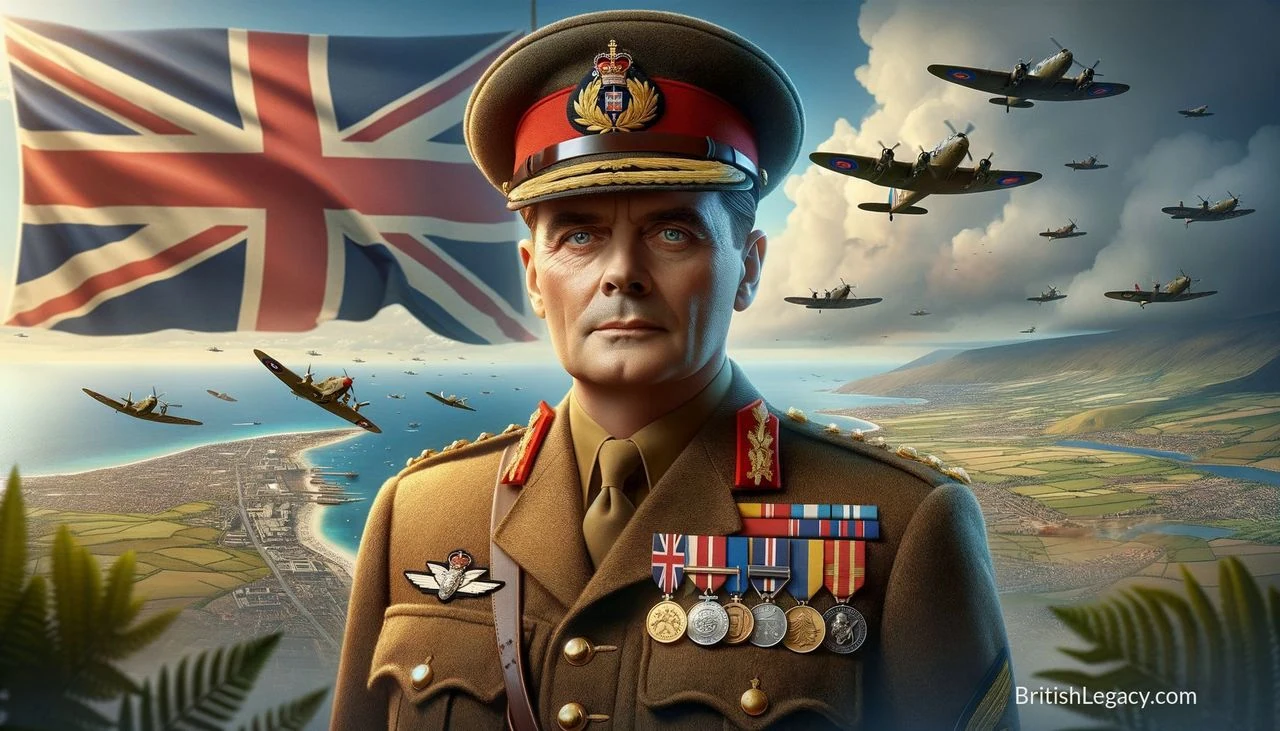
Bernard Cyril Freyberg’s military career connected New Zealand and Britain across two world wars. Born in New Zealand, he travelled to Britain in 1914 and served in the Royal Naval Division. He won the Victoria Cross during the First World War and, in the Second, commanded the 2nd New Zealand Expeditionary Force and Allied forces defending Crete. His later appointment as Governor-General of New Zealand extended that public service beyond the battlefield.
From Richmond to the First World War
Freyberg was born in Richmond, New Zealand, on 21 March 1889. He was educated in Wellington and studied dentistry before turning to military service. In 1914 he travelled to Britain and was commissioned into the Royal Naval Division.
His wartime record brought him the Victoria Cross for valour at the Battle of the Somme in 1916. He led attacks in dangerous conditions, including advances from the trenches. The award established his reputation as a soldier willing to lead from the front; his service in the First World War formed the first major chapter of a career that would later take him to command in the Pacific and Mediterranean theatres.
Command in the Second World War
During the Second World War, Freyberg was appointed commander of the 2nd New Zealand Expeditionary Force. His best-known command was the Allied defence of Crete in May 1941. The island was attacked by German paratroopers in an assault described in the original account as the first predominantly airborne invasion in military history.
Allied forces faced a formidable German attack and, despite their resistance, were ultimately evacuated from the island. Freyberg’s command of the defence placed him at the centre of the campaign. The battle’s outcome was a retreat, not a victory, but the fighting marked an important episode in his wartime leadership and in the history of New Zealand forces serving alongside the Allies.
Crete became the defining episode in the account of Freyberg’s Second World War service. It also made clear the limits of his command: determined resistance could not prevent the Allied evacuation. The campaign should be remembered without turning that outcome into a claim of an uncomplicated triumph.
Governor-General and later years
After the war, Freyberg continued his public service in New Zealand. He was appointed Governor-General in 1946, a role that followed his military command and carried his career into civilian public life. The position connected his service in the British and New Zealand worlds, though his principal identity and service were closely tied to New Zealand.
Freyberg died on 4 July 1963. His career ranged from the trenches of the First World War to the defence of Crete and, after the fighting, the office of Governor-General. Across those chapters, he served in British and Allied military structures while retaining a central place in New Zealand’s public history.
Why Bernard Freyberg deserves a place in British Legacy
Freyberg’s place in British Legacy rests on a specific connection: a New Zealand-born officer who travelled to Britain in 1914, served in the Royal Naval Division and received the Victoria Cross for his actions in the First World War. His story illustrates how military service linked Britain with New Zealand, not through an abstract claim about shared heritage but through a career that moved between the two countries and their forces.
His command at Crete adds a second dimension. Freyberg led Allied forces in a major campaign whose defenders ultimately had to withdraw; remembering that outcome alongside the resistance gives a fuller account than treating the battle as a simple triumph. After the war, his appointment as Governor-General of New Zealand in 1946 carried his public service into civilian life. Together, these documented roles make his biography relevant to a British legacy: it shows the reach of British military institutions and the contribution of a New Zealand commander within them, while recognising the distinct New Zealand setting of much of his life and service.