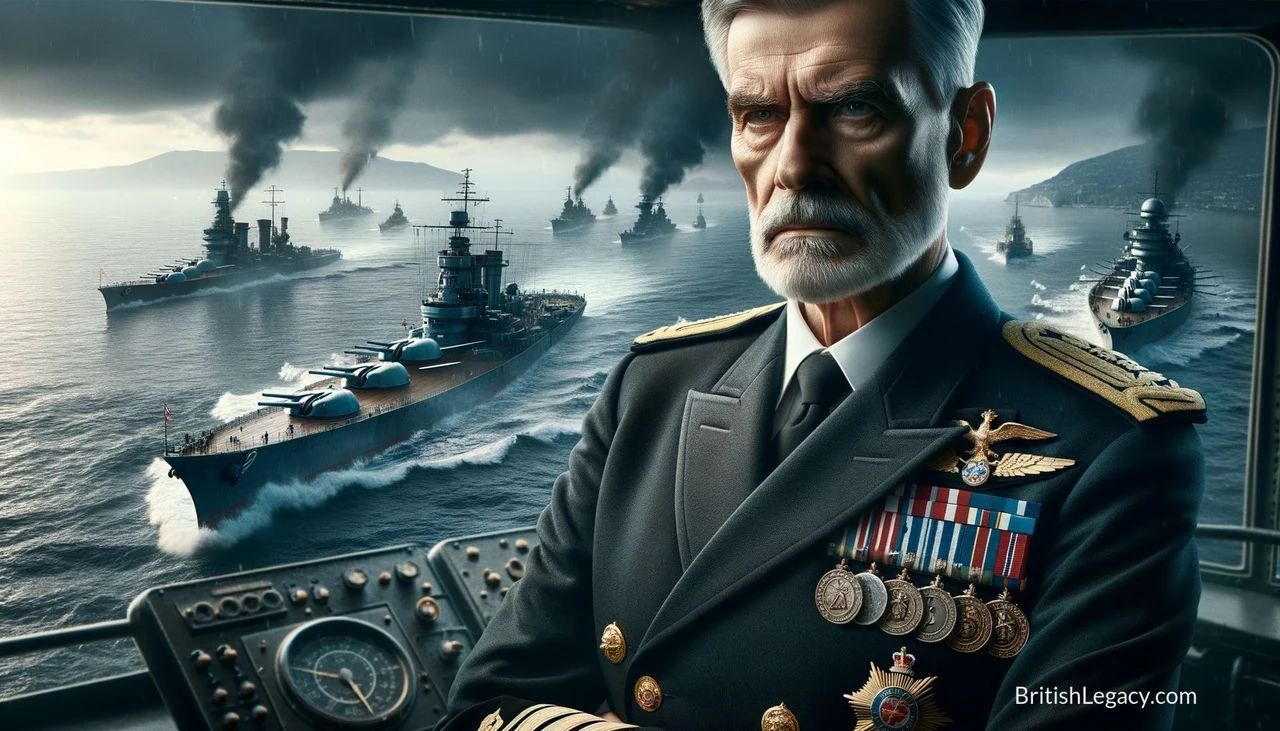
Andrew Browne Cunningham entered the Royal Navy in 1897, aged 14. Four decades later, as Commander-in-Chief of the Mediterranean Fleet, he directed British naval forces in a theatre where control of sea routes and confrontations with the Italian fleet were central concerns. Two engagements stand out in the account of his wartime command: the air raid on Taranto in 1940 and the Battle of Cape Matapan in 1941. In 1943, he became First Sea Lord.
From naval entry to Mediterranean command
Cunningham was born in Rathmines, Ireland, on 7 January 1883. His naval career began when he joined the Royal Navy in 1897. The account of his pre-war service describes progression through the ranks and a range of naval roles, without naming particular appointments. By the outbreak of the Second World War, he had built a career that led to senior command.
He served as Commander-in-Chief of the Mediterranean Fleet from 1939 to 1942. The Mediterranean was an important arena for naval operations and British supply routes. Cunningham’s responsibilities included confronting Axis naval forces in that region. The surviving details here focus on two operations, rather than providing a full account of his fleet command or the wider campaign.
Taranto and Cape Matapan
On the night of 11 November 1940, aircraft from HMS Illustrious attacked the Italian fleet at Taranto. Cunningham authorised the use of torpedo bombers for the raid. The account describes the attack as a significant blow to Italian naval capability. It also calls Taranto the first all-aircraft naval attack against a major fleet and says it served as a blueprint for the later Japanese attack on Pearl Harbor; those broader historical claims are not needed to understand the operation’s place in Cunningham’s record.
In March 1941, British forces under Cunningham fought the Battle of Cape Matapan. The account records the loss of three Italian heavy cruisers and two destroyers, with no British loss of a major ship. It presents the engagement as a major defeat for the Italian fleet. Together, Taranto and Matapan show two different aspects of the Mediterranean command: an attack launched from the air and a fleet engagement with substantial losses to the opposing side.
First Sea Lord
In 1943, Cunningham became First Sea Lord, the Navy’s senior professional post. His appointment followed his Mediterranean command, but the details available here do not describe his work in the office or specify his post-war duties. He died in 1963. The outline of his career therefore runs from early entry into the Royal Navy, through wartime fleet command, to its highest professional leadership role.
Why Andrew Cunningham deserves a place in British Legacy
Cunningham’s British connection is grounded in his long service in the Royal Navy and his leadership of the Mediterranean Fleet during the Second World War. At Taranto, he authorised an air attack on the Italian fleet; at Cape Matapan, British forces under his command inflicted heavy losses on Italian warships. These operations give specific substance to his association with the Mediterranean campaign, beyond the general language of naval distinction.
His 1943 appointment as First Sea Lord carried his career from command at sea to leadership of the Royal Navy. The details of his life and service presented here are limited, so his legacy is best described through those documented positions and operations rather than claims about personal character or worldwide influence on naval doctrine. Cunningham’s story belongs in British Legacy because it records a consequential British naval career: one that began when he was a teenager, reached senior wartime command in the Mediterranean, and culminated in the Navy’s highest professional office.