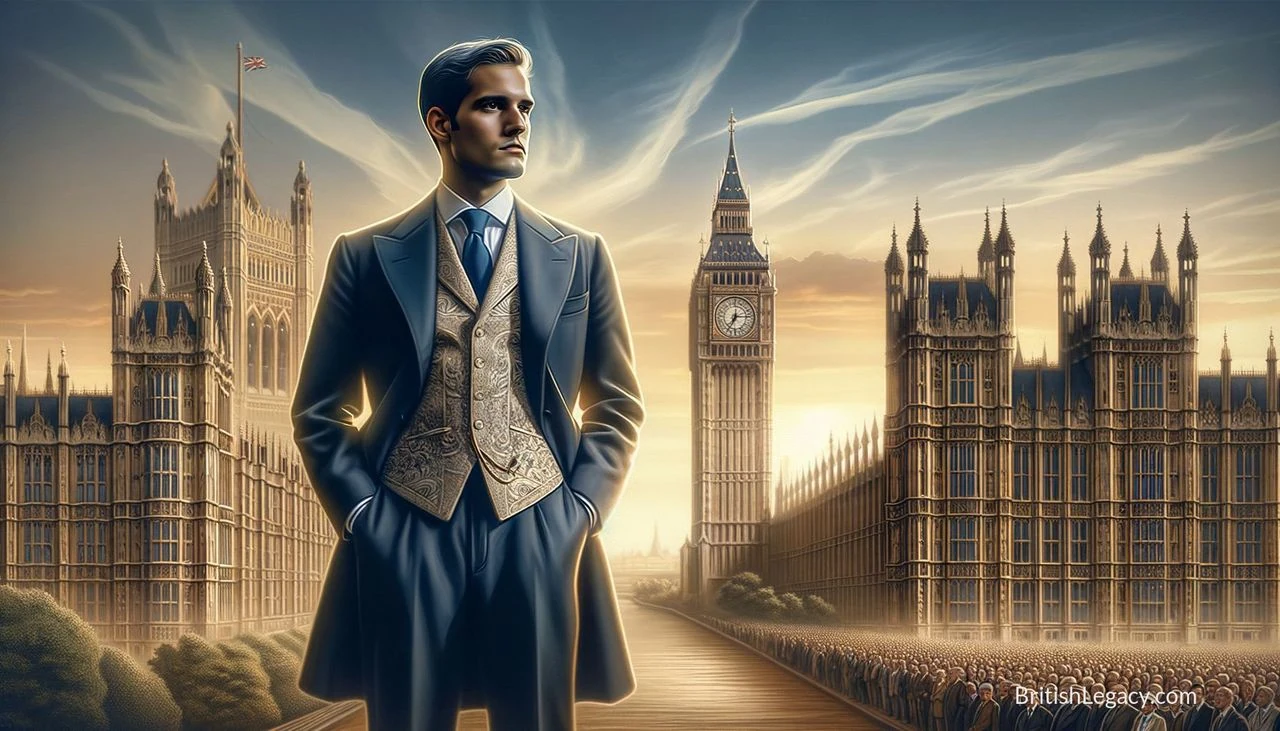
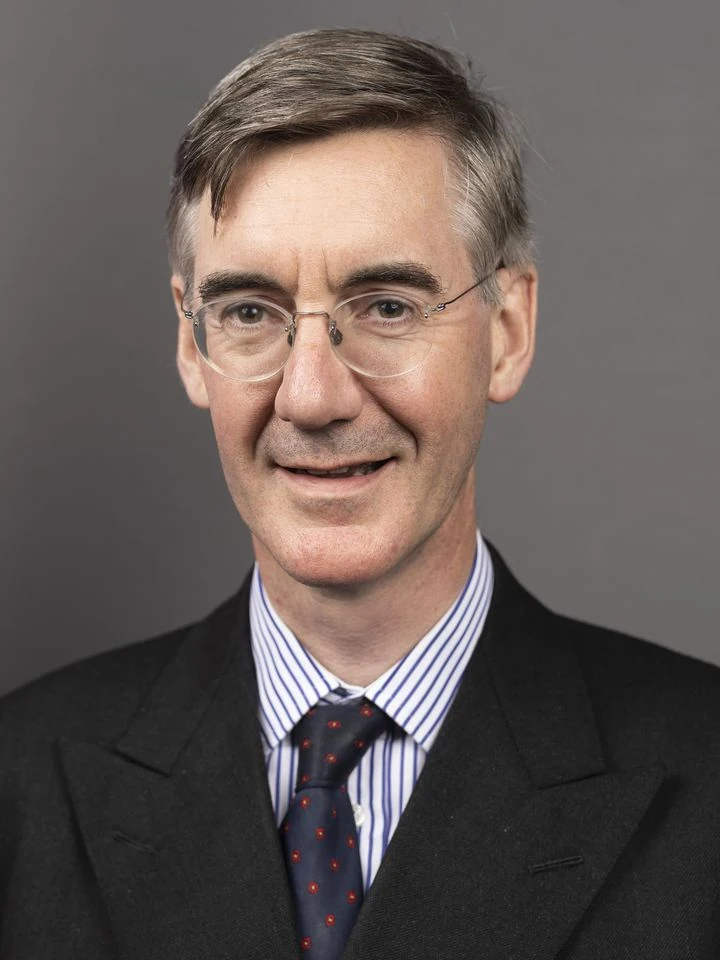
Jacob Rees-Mogg’s political career joined a recognisable public image to a consequential period in British politics. Elected to Parliament for North East Somerset in 2010, he became a leading Conservative advocate for leaving the European Union, chaired the European Research Group and later held senior government posts. He lost his seat at the 2024 general election. His record is not simply one of a traditionalist voice: it also reflects the conflicts within the Conservative Party over Europe, public policy and political leadership.
From Somerset to the City
Rees-Mogg was born in Hammersmith, London, on 24 May 1969. His father, William Rees-Mogg, edited The Times and later became a life peer. The family lived in Somerset, where Rees-Mogg attended Catholic services, and in London, where he went to Westminster Under School. He continued his education at Eton College and studied history at Trinity College, Oxford, graduating in 1991. At Oxford he became president of the university’s Conservative Association and took part in debates at the Oxford Union.
After university he worked in investment management, first in London and then in Hong Kong, where he joined Lloyd George Management in 1993. He returned to London and worked on emerging-markets funds. In 2007 he left the firm with colleagues to establish Somerset Capital Management, a fund-management business. Following his election to Parliament, he stepped down as its chief executive, though he remained a partner. He resigned from that part-time role in 2019 when appointed Leader of the House of Commons.
His political career began before his election to Westminster. Rees-Mogg contested Central Fife for the Conservatives in 1997 and The Wrekin in 2001, losing both contests. He was elected to represent North East Somerset in 2010, winning the newly established constituency with a majority of 4,914. He was returned in 2015, 2017 and 2019. The constituency was abolished before the 2024 election; standing in North East Somerset and Hanham, he lost to Labour’s Dan Norris.
A distinctive parliamentary voice
Rees-Mogg’s style made him conspicuous in the Commons. His speeches could be humorous and deliberately digressive; he used long contributions to try to prevent legislation progressing, a parliamentary tactic known as filibustering. In debates on proposed bills concerning livestock and daylight saving, he ranged from Somerset eggs and a fictional pig to the possibility of giving Somerset its own time zone. In 2012 he used the word “floccinaucinihilipilification” in a Commons debate, drawing attention to its unusual length.
He was also a notably rebellious Conservative during David Cameron’s premiership, voting against the government whip on several occasions. His politics combined support for market economics with a willingness to argue for a role for government. He supported academy-based education and zero-hours contracts, and spoke in favour of food banks’ charitable work. On social questions, he has been associated with socially conservative positions: as a traditionalist Catholic, he has opposed abortion and same-sex marriage. He has also opposed capital punishment.
Those positions and his public manner helped produce a lasting nickname: the “Honourable Member for the 18th century”. The label captured his consciously traditional image, but also made him a polarising figure. His supporters have valued his commitment to principle and his facility in debate; critics have challenged both his political views and the distance between his privileged background and the lives of many voters. The nickname, like his political record, is best understood as part of a public argument rather than a neutral description.
Brexit and the road to government
Rees-Mogg’s position on Europe developed over time. In 2012 he said he wanted a fundamental renegotiation of the UK’s terms of membership rather than withdrawal. He later became a prominent campaigner for leaving the European Union in the 2016 referendum. As chair of the European Research Group from 2018 to 2019, he led a group of Conservative MPs who pressed for a more decisive break with the EU. He opposed Theresa May’s proposed withdrawal agreement and criticised the Chequers proposals, while backing a “Canada-plus” arrangement as a possible alternative.
His campaign for Brexit was part of a wider Conservative dispute about sovereignty, the terms of departure and the party’s leadership. He submitted a letter of no confidence in May in November 2018 and continued to call for her resignation after she survived a leadership vote. He later endorsed Boris Johnson for Conservative leader. In 2019 Johnson appointed him Leader of the House of Commons and Lord President of the Council, his first government role. Rees-Mogg held those offices until February 2022.
He then became Minister of State for Brexit Opportunities and Government Efficiency. In September 2022, Liz Truss appointed him Secretary of State for Business, Energy and Industrial Strategy. He left the front bench when Rishi Sunak became prime minister the following month. These short-lived ministerial appointments followed years in which Brexit had been his defining public cause; they also placed him in government during a period of rapid changes in Conservative leadership.
Broadcasting and public life
Alongside Parliament and business, Rees-Mogg built a profile in broadcasting. He presented programmes on LBC, including a Sunday show, and began presenting his own programme on GB News in 2023. His media work extended his political presence beyond the Commons, where his interventions and manner had already attracted sustained attention.
He has been a member of the Conservative Party’s Cornerstone Group and is a monarchist. His religious outlook is Catholic, rather than an expression of advocacy for the Church of England. He married Helena de Chair in 2007; they have six children. In 2024, after losing his parliamentary seat, he became the subject of the reality television series Meet the Rees-Moggs. That later public role sits alongside, rather than replacing, his record as a politician and former cabinet minister.
Why Jacob Rees-Mogg deserves a place in British Legacy
Jacob Rees-Mogg belongs in a record of modern British public life because his career illuminates a major political change: the UK’s departure from the European Union and the contest over how that departure should be carried out. As a campaigner and chair of the European Research Group, he helped give organised parliamentary weight to demands for a more decisive break. His disagreements with Theresa May’s approach, his support for alternative arrangements and his later appointment to ministerial roles show how an argument about Britain’s place in Europe moved from referendum campaigning into party management and government.
His significance also lies in the way he made political identity part of public debate. His traditionalist manner, Catholic faith, distinctive Commons speeches and broadcasting work made him recognisable beyond his constituency. That visibility did not make him universally admired: his views drew criticism as well as support, and his 2024 defeat marks a clear end to his time as an MP. A balanced British legacy account should preserve both sides of that record. Rees-Mogg was neither simply a symbol of inherited tradition nor only a Brexit campaigner; he was a politician whose influence and controversies reveal the arguments that shaped recent Conservative politics and the country’s relationship with Europe.
Sources
Jacob Rees-Mogg — Wikipedia revision · Jacob Rees-Mogg — Wikipedia
Adapted in part from Jacob Rees-Mogg by Wikipedia contributors, under CC BY-SA 4.0. Text has been edited and combined with the existing article; this adapted text is shared under the same licence. Contributor history.