
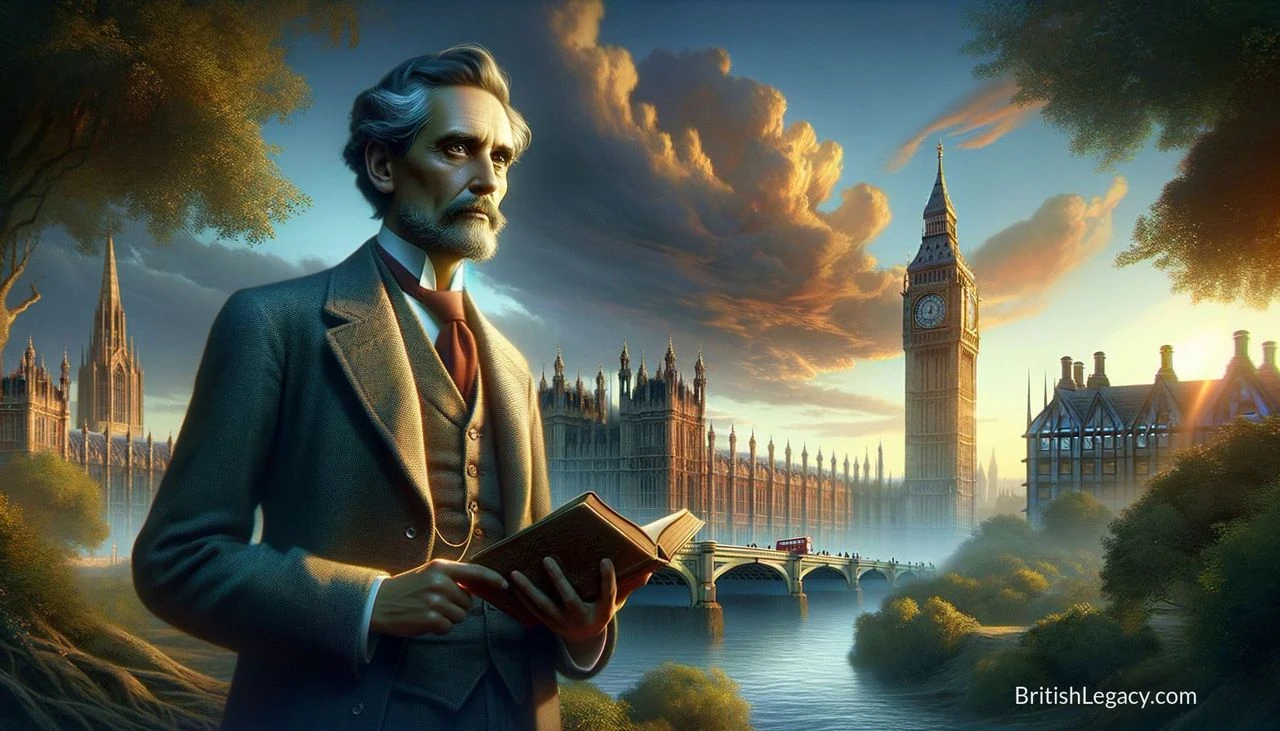
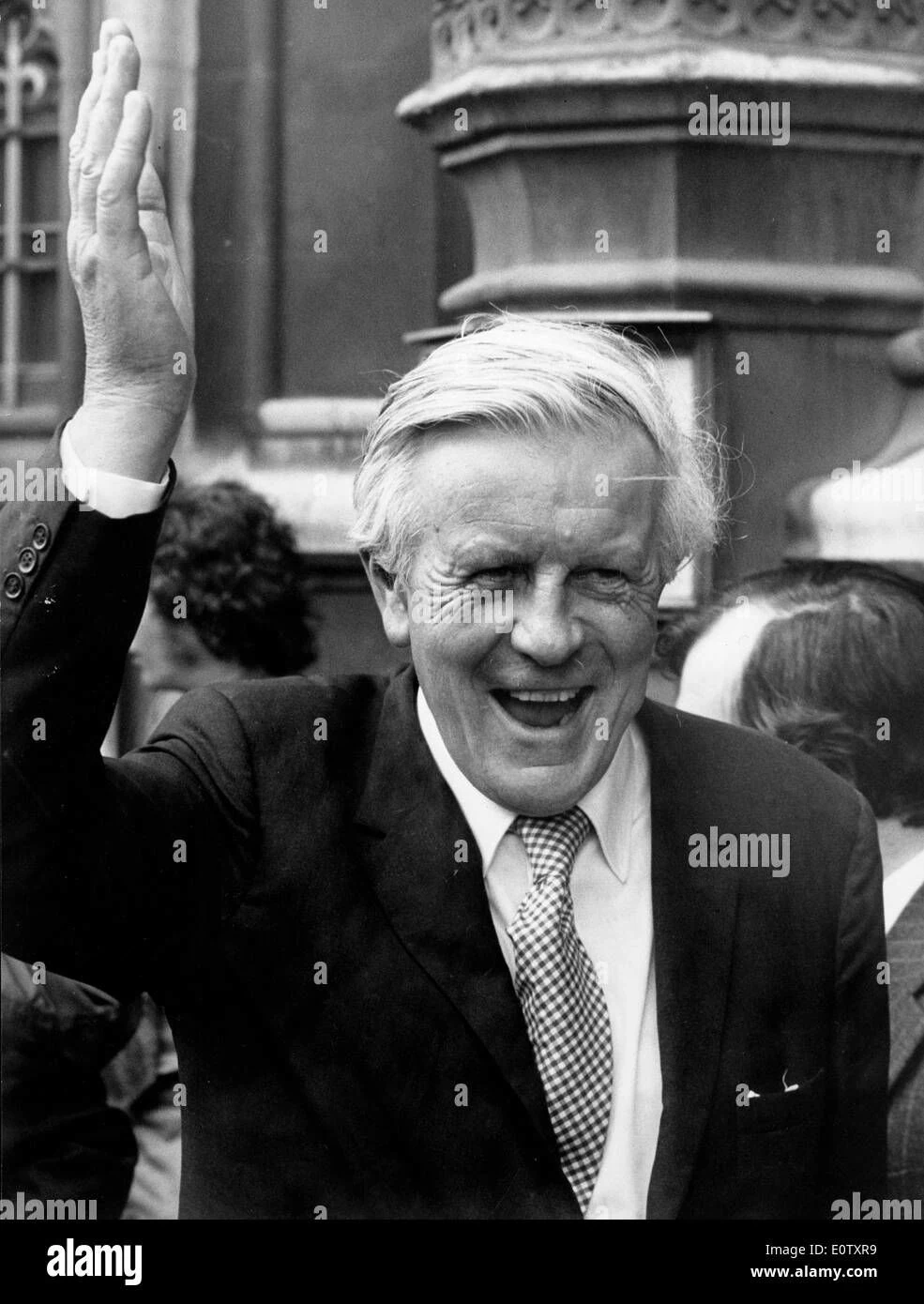
When Jo Grimond took charge of the Liberal Party in 1956, it was a small force in national politics. By the time he stepped down in 1967, it had doubled its Commons seats and won a series of striking by-elections. Grimond’s achievement was not simply to lead a recovery at the ballot box: through his writing and advocacy, he made liberalism a more coherent modern political project, while representing the remote Scottish constituency of Orkney and Shetland for more than three decades.
From St Andrews to Orkney and Shetland
Joseph Grimond was born in St Andrews, Fife, on 29 July 1913. His father, Joseph Bowman Grimond, was a jute manufacturer; his mother was Helen Lydia Richardson. He was educated at Eton and Balliol College, Oxford, where he took a first-class degree in Politics, Philosophy and Economics. He later trained as a barrister, joining the Middle Temple.
During the Second World War Grimond served in the Army and reached the rank of major. After the war, he worked as secretary of the National Trust for Scotland from 1947 to 1949. He then entered parliamentary politics, standing for the Liberals in Orkney and Shetland. He narrowly missed winning the constituency in 1945, but secured it at the 1950 general election. He represented it until retiring from the Commons in 1983, regularly receiving more than 60 per cent of the vote.
Grimond’s connection to the islands was more than a parliamentary foothold. He remained devoted to his former constituency after leaving the Commons and was buried in Finstown on Orkney. His long service there gave his national political career a distinctive local anchor.
Making the Liberal case
Before becoming party leader, Grimond served as Liberal chief whip from 1950 to 1956. He succeeded Clement Davies as leader on 5 November 1956, at a time when the party had recently won only 2.7 per cent of the vote in the 1955 general election. Grimond helped turn that fragile position into a revival. The party doubled its number of seats during his leadership, which lasted until January 1967.
By-elections gave the recovery its clearest milestones. The Liberals won Torrington in 1958, their first by-election gain for 29 years, followed by Orpington in 1962 and Roxburgh, Selkirk and Peebles in 1965. In 1961–62, they came close to taking several other seats from both Conservatives and Labour. These contests made the Liberals visible again as a national political force, rather than merely a remnant of an older party system.
Grimond argued for a modern liberal politics that could combine individual liberty with action on social and economic questions. His book The Liberal Future, published in 1959, was credited with reinvigorating radical liberalism as a coherent modern ideology. He followed it with The Liberal Challenge in 1963. His political outlook included support for Scottish home rule and for the abolition of Britain’s nuclear arsenal, a policy the party adopted during his leadership but which was not achieved.
He also looked beyond Westminster. Grimond was a supporter of the European project, and the case for international co-operation formed part of his political outlook. His approach sought to distinguish the Liberals from the established Conservative and Labour alternatives, giving the party an argument about the country’s future as well as a route to electoral recovery.
Leader, writer and public figure
Grimond’s leadership helped attract a younger generation of politicians, including John Pardoe and future Liberal leaders David Steel, Paddy Ashdown and Menzies Campbell. In 1967, after leading the party through three general elections, he made way for Jeremy Thorpe. His departure was a planned handover to a younger leader, not an end to his public service.
When Thorpe resigned in 1976, Grimond returned as interim leader, holding the post from 10 May until 7 July, when David Steel succeeded him. He had also served as rector of the universities of Edinburgh and Aberdeen, and was elected chancellor of the University of Kent at Canterbury in 1970. Alongside his political books, his publications included The Common Welfare, Memoirs and A Personal Manifesto.
Grimond married Liberal politician Laura Bonham Carter in 1938, and they had four children. After retiring from the Commons, he entered the House of Lords as Baron Grimond of Firth in the County of Orkney, taking his seat in 1983. He died in Glasgow on 24 October 1993, aged 80.
Why Jo Grimond deserves a place in British Legacy
Jo Grimond deserves a place in British Legacy because he helped restore a political tradition when its survival was uncertain. His leadership turned a party with a very small share of the national vote into a more credible challenger, with notable by-election victories and a growing presence in the Commons. That change mattered beyond the immediate seat totals: it gave voters a more distinct liberal option and encouraged younger politicians who would carry the party forward.
His contribution also lay in making the ideas behind that option clearer. Through books such as The Liberal Future and The Liberal Challenge, and through positions including Scottish home rule and nuclear disarmament, Grimond set out a recognisable programme rather than relying on nostalgia for the party’s past. His long representation of Orkney and Shetland connected this national project to sustained service in a far-northern constituency. He remained attached to the islands after leaving Parliament and was buried on Orkney. Grimond’s British legacy is therefore both political and geographical: he helped renew liberal politics at Westminster while keeping a lasting bond with the community that sent him there.
Sources
Adapted in part from Jo Grimond by Wikipedia contributors, under CC BY-SA 4.0. Text has been edited and combined with the existing article; this adapted text is shared under the same licence. Contributor history.
_(2).jpg)