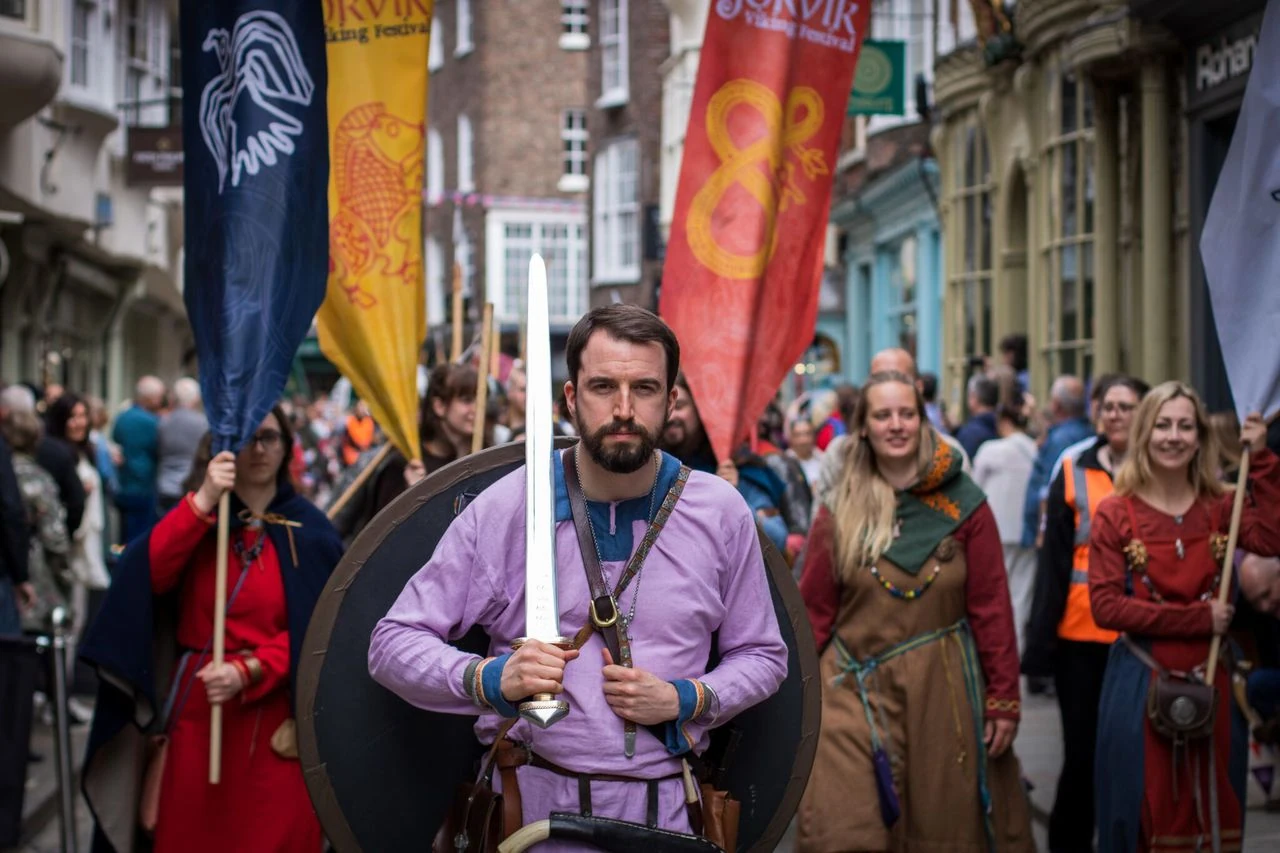
York’s Viking past is the starting point for the Jorvik Viking Festival, an annual programme of re-enactments, talks and family activities. Named for the city’s Viking-era name, the festival brings historical themes into public view through performances and hands-on activities, inviting residents and visitors to encounter more than the familiar image of Vikings as raiders.
York and the name Jorvik
During the Viking Age, York was known as Jorvik. The existing account places the period of Viking activity in the city between 866 and 1066, describing York as a centre of commerce, culture and governance. The festival takes its name from that earlier city and uses York’s connection to the Norse world as the organising idea for its programme.
That link gives the event a local focus while opening onto a wider history. Its subject is not simply a distant Scandinavian past: it is also the history associated with a city in Britain and with the influence of Viking activity on parts of the British Isles. The festival presents this past for contemporary audiences through a mixture of entertainment and learning, rather than treating heritage as something confined to books or museum displays.
Re-enactments, talks and activities
Battle re-enactments are among the festival’s prominent attractions. Staged skirmishes put armed performance at the centre of the event, while also offering a way to represent the organisation and strategy associated with conflict. The spectacle is one part of a programme that also seeks to show Viking life beyond warfare.
Talks and lectures address subjects including Viking art, boat-building, social structures and mythology. By ranging across these themes, the programme can introduce audiences to different aspects of the period and complicate the simplified picture of Vikings as only raiders. It places practical skills, cultural expression and social life alongside the better-known imagery of battle.
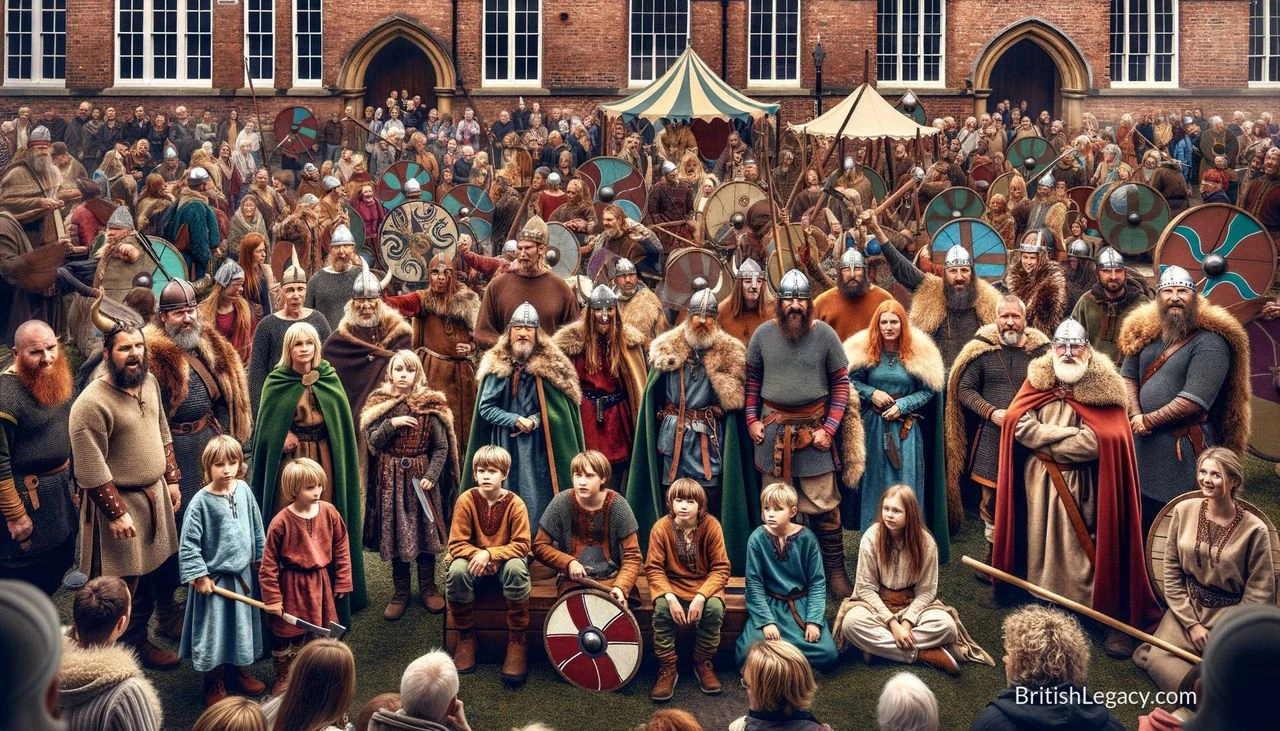
Family activities give younger visitors a more participatory route into the subject. The festival account describes children learning crafts, having their faces painted with Viking designs and taking part in treasure hunts. These activities are presented as both entertainment and a means of encouraging interest in history. Together with the talks and re-enactments, they give the event several ways to engage visitors with its theme, whether through listening, watching or taking part.
A festival with a local and international audience
The event is described as drawing visitors from around the UK and abroad, including people from Scandinavia who identify as descendants of Vikings. That international interest sits alongside its role in York: the festival offers a shared occasion for residents and visitors to consider the city’s past, while connecting local heritage with a history that reaches beyond the region.
Markets are another part of the festival as described in the existing account. Stalls selling food, handcrafted goods and memorabilia give local businesses and craftspeople a place within the event. They add a commercial and practical dimension to a programme otherwise centred on performance and education, and allow visitors to encounter contemporary makers as well as historical themes.
The account also describes a parade and a boat-burning ceremony as part of the closing events, associating the latter with Viking burial traditions. These striking elements bring the programme to a public conclusion. Their value as festival theatre is distinct from the historical subject they evoke: together with the talks and activities, they make the event a varied presentation of Norse heritage rather than a single re-enactment.
Why Jorvik Viking Festival deserves a place in British Legacy
Jorvik Viking Festival deserves a place in British Legacy because it brings a specific part of Britain’s history into a contemporary city setting. Its subject is York’s association with Jorvik and the period of Viking activity linked to the city. Re-enactments may draw the crowds, but the wider programme also makes room for art, boat-building, social structures and mythology. That range matters: it encourages audiences to encounter Viking history as more than a story of raids and battles.
The festival also connects heritage with public participation. Talks offer a route through historical themes; family activities invite children to learn crafts and take part; markets give local businesses and makers a place in the event. Its audience, described as including visitors from across Britain and Scandinavia, links York’s local history to a wider interest in Norse heritage. The festival’s contribution is not to replace historical study, but to make the subject accessible through shared activities and performances. In doing so, it gives York’s Viking past a continuing presence in the city’s cultural life and provides a public setting in which people can explore the many dimensions of that past.