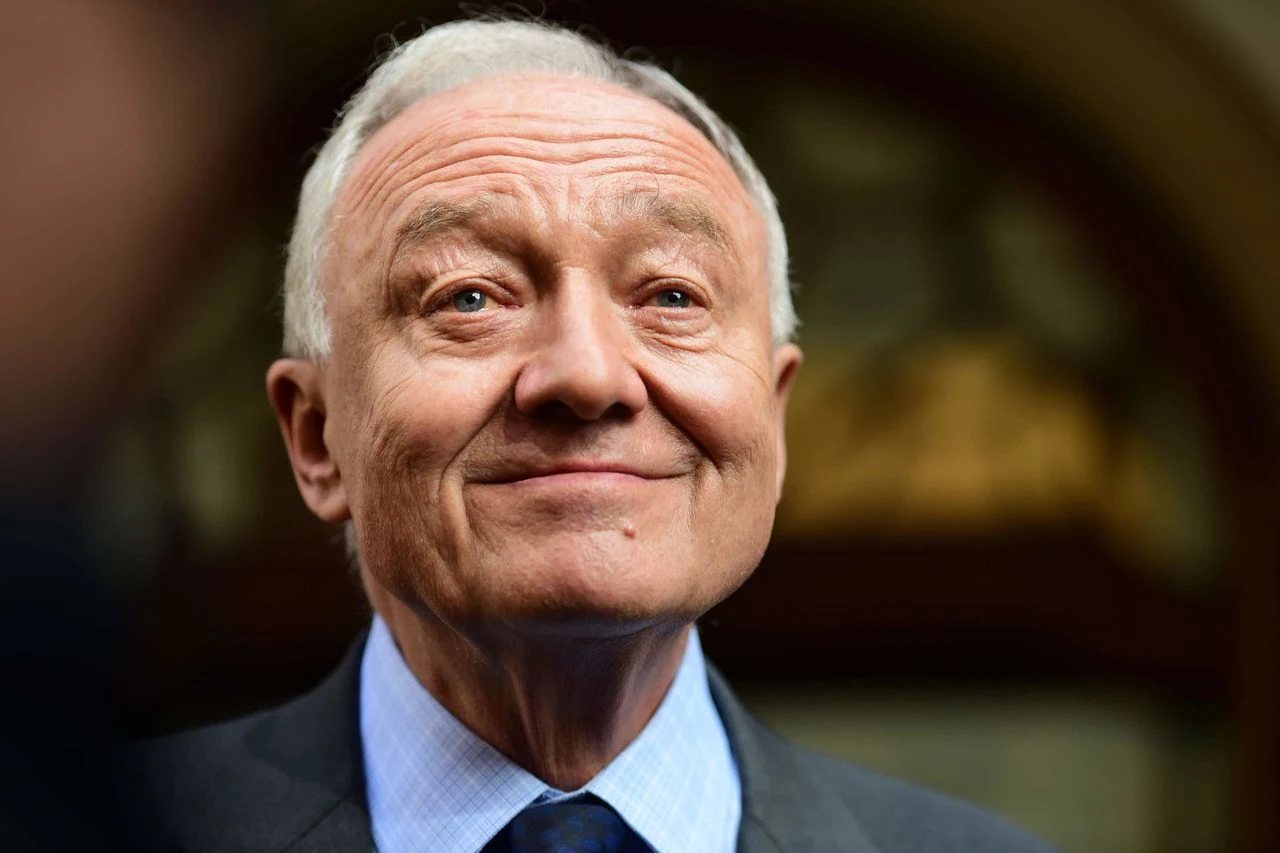
Ken Livingstone’s political career was built around London: who should govern it, how its residents should move around it, and whose interests its institutions should represent. As leader of the Greater London Council (GLC) and later the capital’s first directly elected mayor, he pursued policies that provoked fierce opposition as well as lasting debate. The congestion charge became the most visible emblem of his mayoralty, but his record also included attempts to widen access to public services, a successful Olympic bid and controversies that followed him long after he left office.
A London politician from the left
Born Kenneth Robert Livingstone in Lambeth on 17 June 1945, he grew up in a working-class family in south London. After leaving school, he worked from 1962 to 1970 as a technician at the Chester Beatty cancer research laboratory in Fulham. There he helped establish a trade-union branch to oppose redundancies. He joined the Labour Party in 1968 and became active in local politics, including on Lambeth Council, where he was elected in 1971.
Livingstone entered the GLC in 1973 as councillor for Norwood. He later represented Hackney North and Stoke Newington, then Paddington. In 1981, Labour won control of the council and Livingstone replaced Andrew McIntosh as leader shortly after the election. The change put a conspicuously left-wing politician at the head of London government and made him a frequent target of national press criticism. The nickname “Red Ken” reflected his socialist politics, but his GLC administration’s record was not confined to its clashes with the Conservative government.
One of its most ambitious transport promises, Fares Fair, cut London Transport fares by 32 per cent in 1981. The policy was challenged by Bromley Council and ultimately ruled unlawful by the House of Lords. A later, smaller fare reduction was found legal and implemented in 1983. The episode exposed a recurring feature of Livingstone’s politics: large public ambitions could run up against the legal and financial limits of local government.
His administration also backed measures intended to give a broader range of Londoners a voice in public life. It created committees concerned with ethnic minorities, policing, gay and lesbian issues, and women, and increased grants to voluntary organisations. These policies attracted sustained criticism from political opponents and sections of the press. The GLC also took positions on nuclear disarmament and unemployment, while Livingstone’s public statements on Northern Ireland and Irish republicanism brought further controversy. The council was abolished on 31 March 1986. The government’s decision followed sustained conflict over the GLC’s role and spending; it should not be reduced to a single motive.
From Parliament to the mayoralty
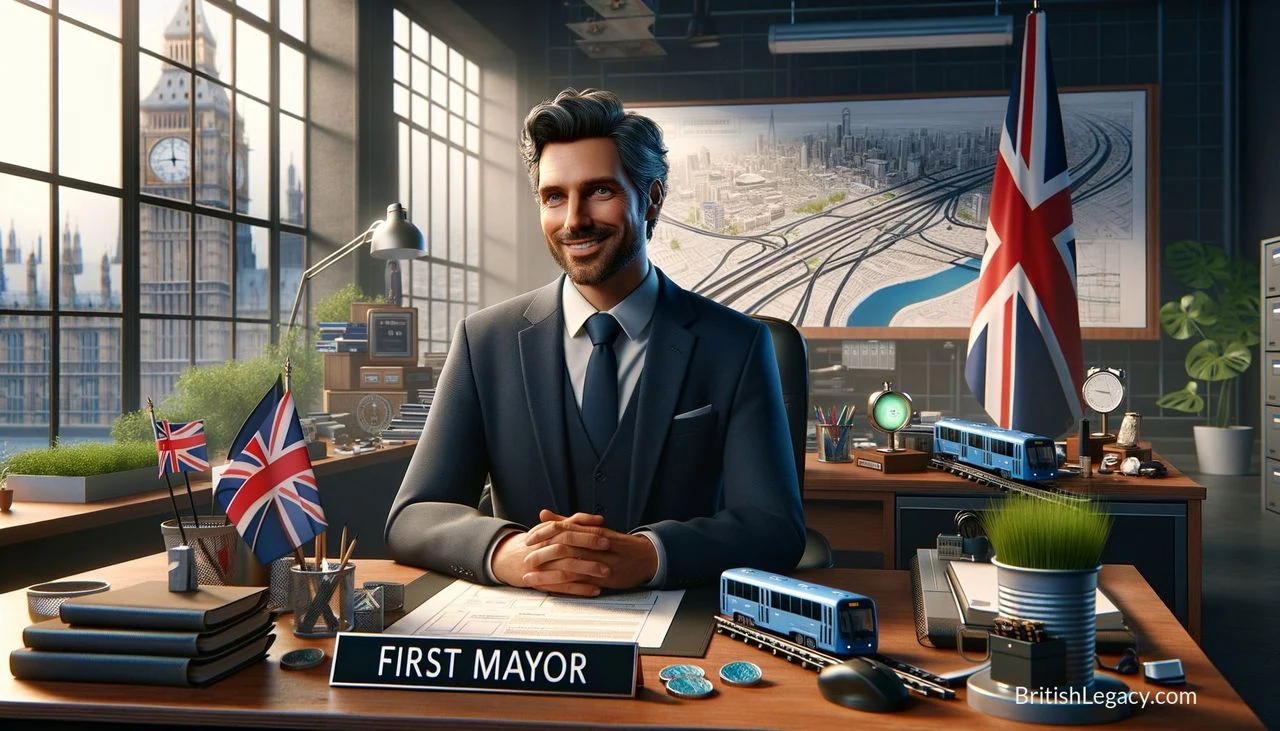
Livingstone entered the House of Commons in 1987 as Labour MP for Brent East, holding the seat until 2001. He remained on the party’s left and criticised its move towards the political centre under Tony Blair. When London’s first mayoral election approached, he sought Labour’s nomination but lost to Frank Dobson. Livingstone then stood as an independent, was expelled from Labour and won the election on 4 May 2000. Londoners had voted in a 1998 referendum for a directly elected mayor and assembly; Livingstone became the first holder of the new office.
His first administration had to establish the mayoral system while taking responsibility for major city-wide bodies, including Transport for London. Livingstone opposed the government’s public–private partnership for London Underground, arguing that dividing responsibility among companies would harm integrated maintenance and safety. His challenge to the scheme failed, and the infrastructure contracts went ahead. He also backed the introduction of the Oyster card in 2003, which gave passengers an electronic means of paying for public transport.
The congestion charge, introduced in February 2003, was the policy that most clearly tested his willingness to spend political capital. Drivers entering central London were charged in an effort to reduce traffic and congestion. Businesses and other opponents objected, but the scheme proceeded. Transport for London reported a 20 per cent reduction in congestion by 2007, alongside improved bus services. The measure made road pricing a prominent part of London’s transport policy, though claims that it became a model adopted around the world go beyond what the available evidence establishes.
Bus policy also changed. Livingstone’s administration introduced articulated buses, commonly called “bendy buses”, while moving away from the high-floor Routemaster fleet. The latter was considered hazardous and inaccessible to wheelchair users; the bendy buses carried more passengers but were criticised over safety, particularly for cyclists. By early 2006, all London bus routes used low-floor vehicles. These choices illustrate the practical trade-offs behind transport reform: capacity and accessibility mattered, but so did how a new system worked for people using the streets.
Environment, public space and the Olympics
Livingstone made environmental policy part of the mayoral agenda, including through energy partnerships and a commitment to reduce London’s carbon dioxide emissions. He pedestrianised the north side of Trafalgar Square, creating space for a café, public toilets and a lift for disabled visitors. He also promoted cycling and, in his 2008 re-election campaign, proposed a cycle-hire scheme based on Paris’s Vélib’ system. These initiatives sat alongside controversial decisions, such as his support for new skyscrapers, which he saw as a response to demand for office space and which critics believed threatened historic views.
He supported bringing the 2012 Olympic Games to London, arguing that the event should help regenerate the East End. London won the bid in 2005. The following day, suicide bombings on the city’s transport network killed 52 civilians. Livingstone returned from Singapore, where the bid had been announced, and condemned the attacks. He also sought to prevent a backlash against London’s Muslim communities. His response was widely praised, including by political opponents, although his statements on international politics continued to divide opinion.
Livingstone won re-election as Labour’s candidate in 2004, after the party readmitted him. He lost the 2008 mayoral election to Conservative Boris Johnson, then lost to Johnson again in 2012. In the second contest, accusations concerning his remarks about Jewish voters became part of the campaign; Livingstone denied that he had made the comments attributed to him and apologised. After the result, he said he was retiring from politics, though he continued to take part in political debate.
Controversy beyond City Hall
Livingstone’s willingness to provoke became a defining part of his public life, but it also had serious consequences. In 2005, he compared an Evening Standard journalist to a German war criminal and a concentration-camp guard. The Standards Board for England found that he had brought his office into disrepute and suspended him for a month; the High Court overturned the suspension in 2006. Livingstone later made a general apology for causing offence to Jewish people, while continuing to reject the charge that he was antisemitic.
He was suspended from Labour in 2016 after comments about Adolf Hitler and Zionism. Labour disciplinary proceedings found that he had brought the party into disrepute, and his suspension was extended. In 2018 he resigned from the party, saying that the dispute had become a distraction. In 2020, the Equality and Human Rights Commission concluded that his comments relating to Labour MP Naz Shah constituted unlawful harassment under the Equality Act 2010 and that Labour was legally responsible for that harassment. That finding forms an important part of the record of his later political life and should not be obscured by his earlier work in City Hall.
After leaving elected office, Livingstone remained a public commentator and a supporter of the Labour left. In 2022 he said he intended to join the Green Party of England and Wales, but his membership application was rejected. By 2023 he had retired from public life following a diagnosis of Alzheimer’s disease.
Why Ken Livingstone deserves a place in British Legacy
Livingstone’s place in British political history rests most securely on the changes he pursued in London government and transport. As the first mayor, he helped establish what the new office could do in practice: set a city-wide direction, oversee transport and make visible choices about the use of public space. The congestion charge was a particularly consequential test. It applied a direct cost to driving into central London in pursuit of lower congestion, and the reported reduction in congestion gave the policy a measurable result. Oyster, the bus changes and the pedestrianisation of Trafalgar Square show how the mayoralty could affect ordinary journeys and shared places as well as long-term planning.
His record also matters because it joined urban administration to questions of representation. As GLC leader, Livingstone backed committees and grants intended to bring women, minority communities and LGBT groups into local public life. His support for an Olympic bid tied a global event to regeneration in the East End, while his response to the 2005 bombings demonstrated the responsibilities of a mayor during a crisis. None of this makes his legacy uncomplicated: his confrontational style, political judgements and later findings over offensive comments belong to the same public record. Remembering both achievement and failure gives British Legacy a more useful account of democratic leadership—one grounded in the effects of policy, the limits of power and the consequences of words.
Sources
Ken Livingstone — revision 1379271574 · Ken Livingstone
Adapted in part from Ken Livingstone by Wikipedia contributors, under CC BY-SA 4.0. Text has been edited and combined with the existing article; this adapted text is shared under the same licence. Contributor history.