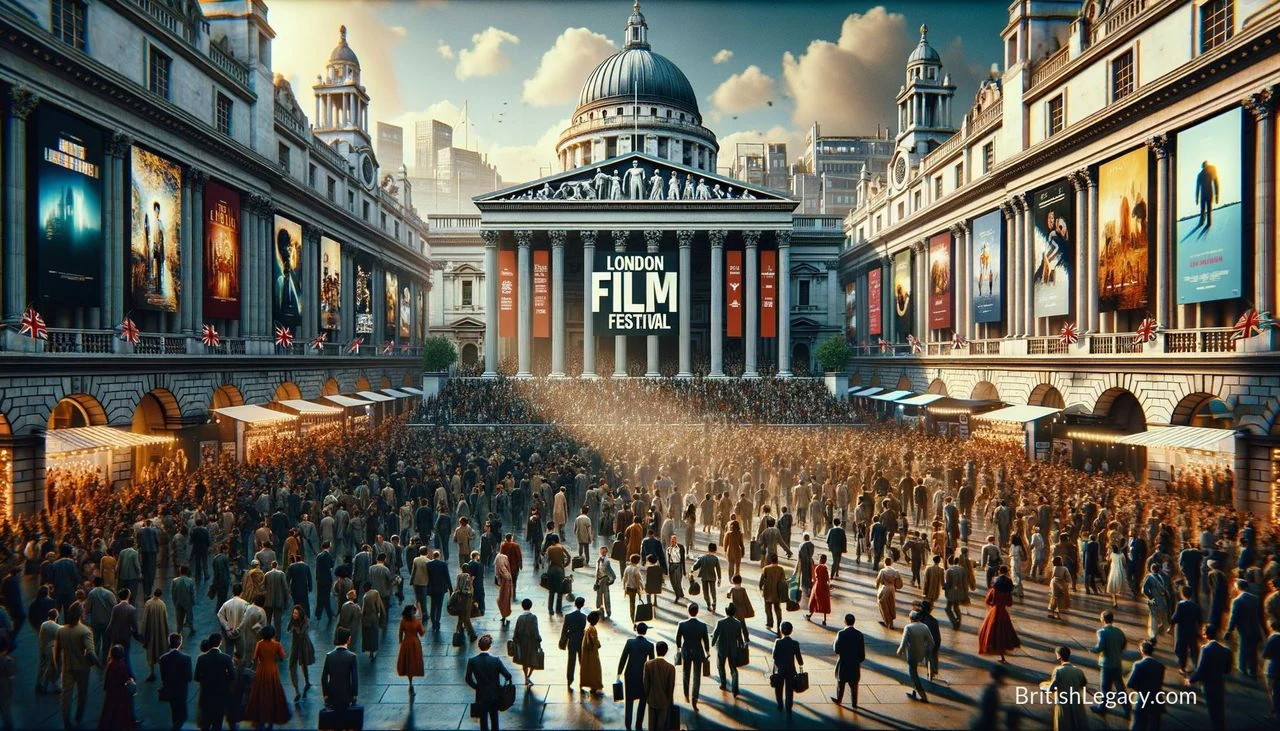
Since 1957, the London Film Festival has brought films from around the world to audiences in the British capital. Organised by the British Film Institute (BFI), the annual event combines screenings with premieres, filmmaker appearances and opportunities to discuss cinema. Its programme ranges from features to shorts and documentaries, giving London audiences a chance to encounter work from a wide range of countries and genres.
A festival built around international cinema
The festival began with a specific purpose: to screen films that had won attention at international festivals but had not been shown in British cinemas. Its first edition lasted just over a week and included a small number of films. The event has since grown to run for nearly two weeks, with hundreds of films in its programme.
Alongside its breadth of screenings, the festival has used themed sections to organise parts of its programme. The source account names ‘Love’, ‘Debate’, ‘Dare’ and ‘Laugh’ as examples. Premieres and gala screenings are also part of the event, bringing filmmakers and other film-industry figures before audiences. Together, these elements make the festival both a showcase for international work and a public meeting point for people interested in cinema.
New voices and public discussion
The festival’s programme has included competitions and awards intended to draw attention to emerging filmmakers. The First Feature Competition and short-film awards are identified as routes for new work to reach an audience. They sit alongside screenings of films by established directors, making room in the programme for both recognised names and filmmakers at earlier stages of their careers.
Events around the films extend the experience beyond the screen. The festival has hosted panel discussions, question-and-answer sessions with filmmakers and workshops. These formats give audiences opportunities to hear how films were made and to discuss their subjects. They also help connect the festival’s international programme with the cultural life of London, without requiring the films themselves to share a single style or point of view.
A London event with a wider cultural reach
The LFF’s British connection is rooted in its London setting and the BFI’s role as organiser. Its programme brings international cinema into that setting, while its screenings and related events create opportunities for audiences to encounter films that might otherwise be less visible in British cinemas. The festival’s cultural value lies not simply in the number of films it presents, but in the combination of access, variety and discussion.
The source account identifies Leicester Square and the Southbank as areas associated with screenings and events. It also describes visitor spending as an economic benefit, but provides no figures or supporting detail, so the scale of that effect cannot be established here. The festival’s public-facing programme—screenings, conversations and workshops—offers a more direct illustration of its place in the city: it brings filmmakers and viewers together around works made in different parts of the world.
Why the London Film Festival deserves a place in British Legacy
The London Film Festival merits a place in British Legacy because it gives international cinema a recurring public platform in the UK. Founded in 1957 to show films acclaimed abroad but not yet screened in British cinemas, it addresses a clear cultural purpose: widening what audiences in London can see. Its development from a short event with a small programme into a festival lasting nearly two weeks, with hundreds of films, shows how that purpose has been sustained at greater scale.
Its contribution is also practical and communal. Competitions and short-film awards make space for emerging filmmakers, while premieres, panels and question-and-answer sessions bring audiences into contact with the people and ideas behind the work. Organised by the BFI and rooted in London, the festival links Britain’s cultural life with film from across the world. That combination—international reach, opportunities for new voices and shared public discussion—is a specific and enduring reason to remember it.