Manchester Pride brings LGBTQ+ celebration into the streets and venues of Manchester, combining a public parade with events including performances, club nights, workshops and community-led activities. Its story, as described in the existing account, begins with small gatherings in the late 1980s and develops into a festival recognised by the early 2000s. That progression gives the event a particular place in the city: it is both a celebration of LGBTQ+ culture and a visible expression of community.
From gatherings to a city festival
The festival’s origins are traced to the late 1980s, when members of Manchester’s LGBTQ+ community began gathering in response to prejudice and discrimination. Early events were small and grassroots, centred around Canal Street, an area now associated with the city’s Gay Village. The account places these gatherings within a wider period of activism and change, but the local detail matters: Manchester Pride grew from a community making itself visible in the city, rather than from a single large event established at the outset.
By the early 2000s, Manchester Pride had become a widely recognised event, attracting participants from elsewhere in the UK and beyond. The festival’s growth accompanied changes in LGBTQ+ rights and culture. Its development is therefore not simply a story of increasing scale. A gathering that offered a place for community and visibility became a larger public occasion, while retaining a connection to the people and culture it celebrates.
A parade and a programme of events
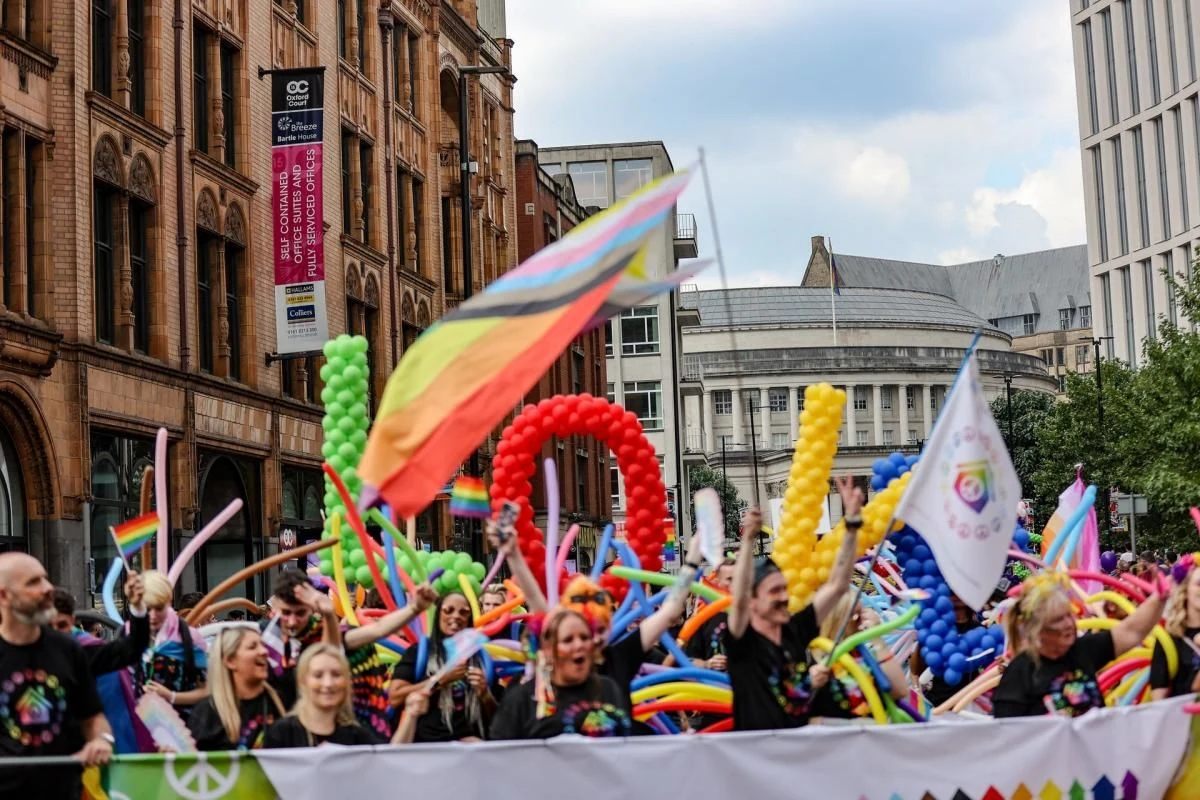
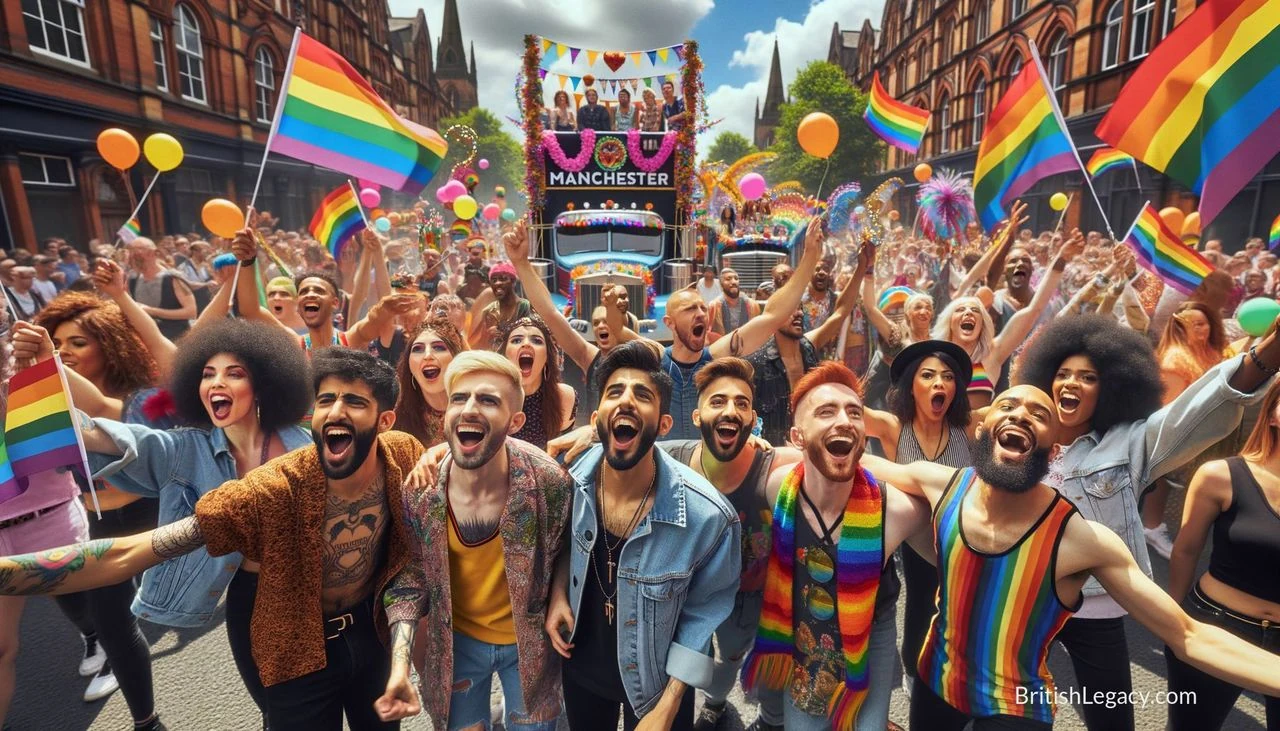
The parade is a focal point of the festival. Community groups, organisations and allies take part in a procession through the city, with floats, costumes and rainbow flags. It makes LGBTQ+ identity publicly visible and, as the event’s existing account stresses, also recalls that acceptance and equality remain ongoing concerns. Celebration and protest need not be separate: a parade can express joy while asserting the right of its participants to be seen.
The wider programme extends across several days. It has included artistic performances, speeches, club nights, educational workshops and community-led initiatives. Music is a prominent part of the festivities, and Ariana Grande and Years & Years are named among past headliners. This mixture brings different forms of participation together: visitors may come for the parade or performances, while workshops and community activities offer other ways to engage with the issues and people at the heart of the festival.
The combination matters to the character of Manchester Pride. The streets provide a public stage, while performances and gatherings create opportunities to share LGBTQ+ culture. The event’s stated aims include supporting and empowering LGBTQ+ people, celebrating their contributions and challenging inequality. Its programme gives those aims a presence in the life of the city, rather than leaving them as abstract statements.
Community, support and reach
Manchester Pride also has a charitable dimension. The existing account describes it as raising funds for charities and projects that benefit LGBTQ+ people, though it gives no figures or named beneficiaries. Its broader contribution is described in cultural terms: creating a platform for stories and conversation, and presenting LGBTQ+ culture to a wider audience. These claims are best understood through the activities identified—the parade, performances, workshops and community initiatives—rather than as proof that one festival can by itself resolve discrimination.
Although rooted in Manchester, the event attracts participants from across the UK and beyond. Its local origins remain important even as its audience reaches further: the festival places LGBTQ+ community life in a distinctly Manchester setting, with Canal Street among the locations associated with its early gatherings. The event’s international profile is part of that outward reach, but its strongest significance lies in the relationship between the city and the communities who organise, attend and take part.
Why Manchester Pride deserves a place in British Legacy
Manchester Pride deserves a place in British Legacy because its history connects a local community’s visibility with a continuing public celebration of LGBTQ+ life. The account traces its beginnings to small gatherings in the late 1980s and its emergence as a widely recognised event by the early 2000s. That development gives the festival meaning beyond its size: it shows how community activity can create a recurring public occasion in which people gather, express identity and make their presence part of the city’s shared life.
Its parade, performances, workshops and community-led events bring that purpose into practice. They offer different ways to encounter LGBTQ+ culture, while the festival’s stated support for charities and projects extends its work beyond the celebration itself. Manchester Pride’s British significance is not a claim that the country has completed its journey towards equality. Rather, the festival offers a Manchester-rooted example of how celebration can sit alongside advocacy and public visibility. Its legacy lies in maintaining space for LGBTQ+ people and culture within the city’s civic and cultural calendar, and in inviting participants from beyond Manchester to share in that occasion.