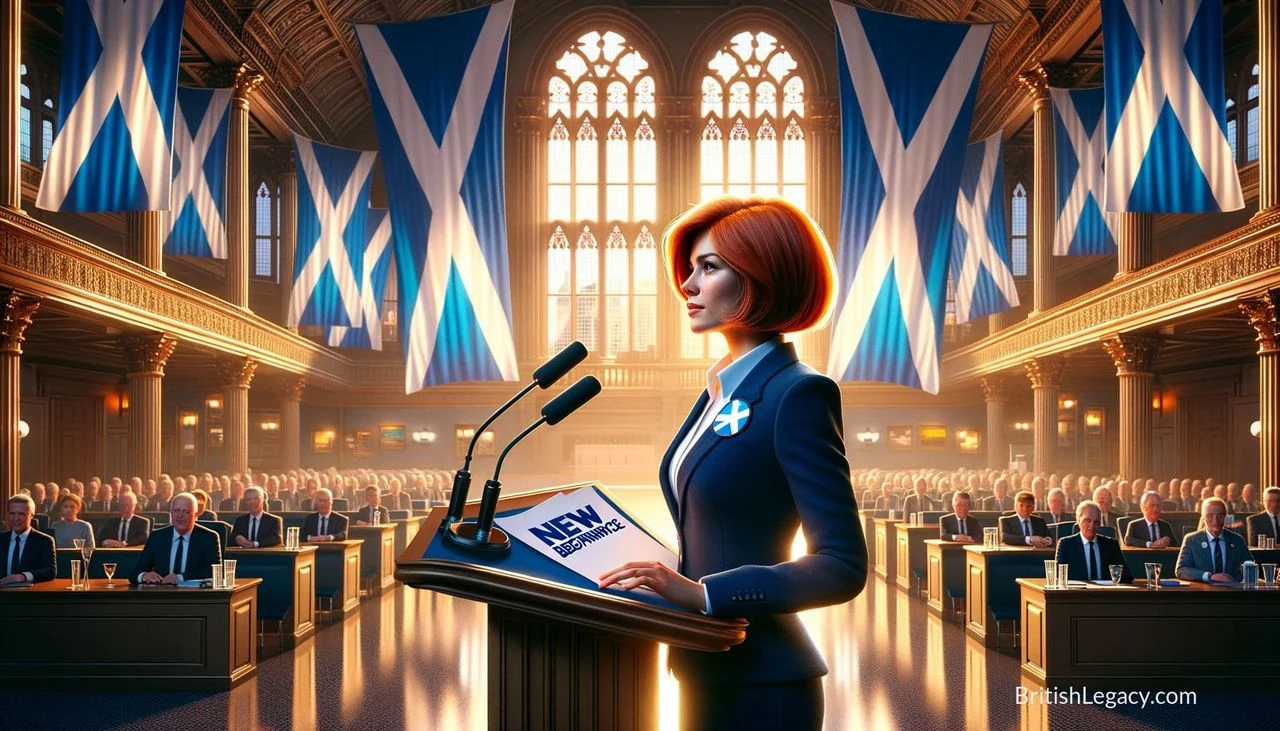
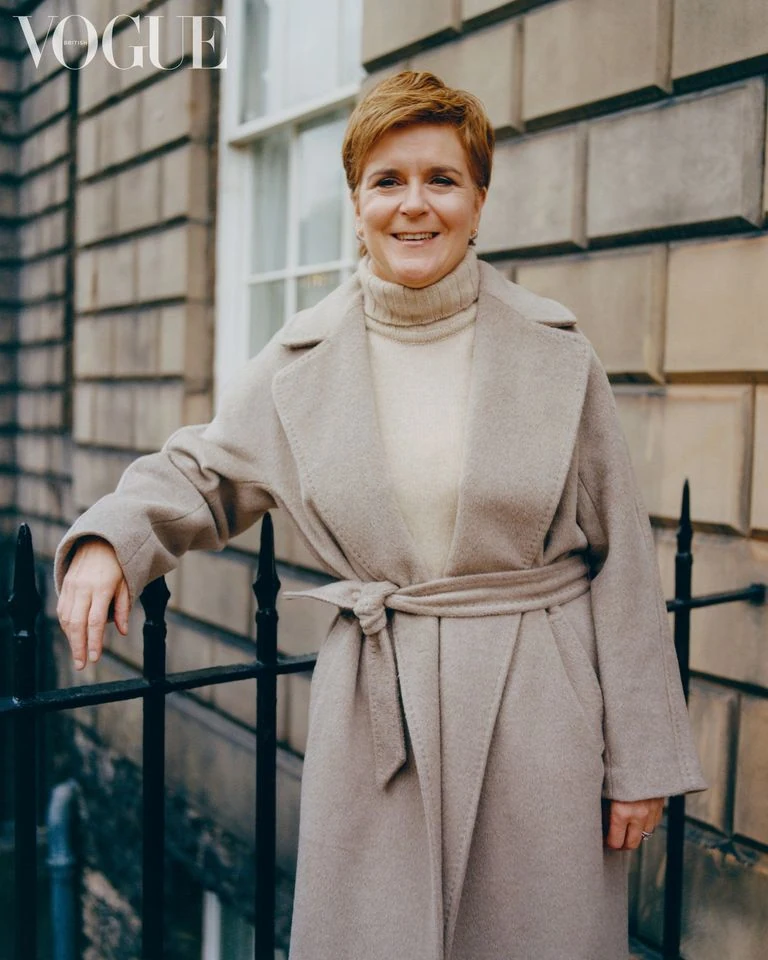
Nicola Sturgeon’s rise from a teenage member of the Scottish National Party to Scotland’s first woman First Minister made her one of the most consequential politicians of the devolution era. In office from 2014 to 2023, she led the Scottish Government through a referendum defeat, Brexit and the Covid-19 pandemic, while continuing to press for Scottish independence. Her record combines electoral success and a lasting constitutional argument with difficult scrutiny of government decisions and political judgement.
From Ayrshire to the Scottish Parliament
Nicola Ferguson Sturgeon was born in Irvine, Ayrshire, on 19 July 1970. She grew up in Prestwick and Dreghorn and studied law at the University of Glasgow, graduating in 1992 before completing a Diploma in Legal Practice. After legal training and work as a solicitor in Glasgow, she entered the Scottish Parliament at its first election in 1999. Elected as a regional MSP for Glasgow, she became a prominent opposition politician as the SNP’s responsibilities and profile grew.
Sturgeon joined the SNP in 1986, aged 16. Her early political work included campaigning against nuclear weapons and involvement in the party’s youth organisation. She stood unsuccessfully for Westminster in 1992 and 1997 before winning election to Holyrood. In the Scottish Parliament she took on opposition roles in education, health and justice. In 2004 she entered the SNP leadership contest, then withdrew to support Alex Salmond and stood as his deputy. Elected depute leader that September, she led the party in the Scottish Parliament while Salmond remained at Westminster.
The SNP became the largest party at the 2007 Scottish Parliament election, but did not win an overall majority. Salmond formed a minority government and appointed Sturgeon Deputy First Minister and Cabinet Secretary for Health and Wellbeing. She held the health portfolio until 2012. Her work included the Scottish Government’s health programme and the removal of NHS prescription charges. She also dealt with the 2009 H1N1 swine flu pandemic and supported legislation introducing minimum alcohol pricing, passed by the Scottish Parliament in 2012.
The referendum and a change of leadership
After the SNP won an overall majority in 2011, Sturgeon became Cabinet Secretary for Infrastructure, Capital Investment and Cities, with responsibility for the government’s legislative work on an independence referendum. She was a prominent advocate for independence, helping to present the Scottish Government’s case in the 2014 campaign. The referendum’s result was clear: 55.3 per cent voted against independence and 44.7 per cent for it. Salmond resigned as First Minister and SNP leader after the defeat.
Sturgeon succeeded him, becoming SNP leader in November 2014 and First Minister on 20 November. She was the first woman to hold either position. Her appointment followed a surge in SNP membership and a period in which the referendum had put Scotland’s constitutional future at the centre of UK politics. She argued that the question of independence remained open, particularly after Scotland voted to remain in the European Union in 2016 while the UK-wide result favoured leaving.
Under Sturgeon, the SNP won 56 of Scotland’s 59 Westminster seats in the 2015 general election. The party remained in government after the 2016 Scottish Parliament election, this time as a minority administration. In 2021 it won 64 of 129 seats, again falling short of an overall majority. Sturgeon formed a power-sharing agreement with the Scottish Greens. Her governments sought a second independence referendum, but successive UK governments refused to authorise one. The UK Supreme Court later ruled that the Scottish Parliament could not legislate for such a referendum without Westminster’s consent.
Government under pressure
Sturgeon’s time in office involved more than the constitutional question. As First Minister she led the Scottish Government’s response to Covid-19, including restrictions intended to limit transmission and the rollout of vaccination. Her regular public briefings made her a highly visible voice during the crisis. But the response also drew scrutiny. In 2021, Audit Scotland reported that preparations had been inadequate in important respects, despite the work to prevent hospitals being overwhelmed. Sturgeon acknowledged that there were lessons to learn. Looking back, she said Scotland should have entered lockdown earlier.
Other domestic issues tested her government. Sturgeon called drug deaths a national crisis and said the government had taken its eye off the ball. Audit Scotland found limited progress towards closing the poverty-related attainment gap in schools. The government also faced criticism over delays and cost increases in the construction of two ferries for Scotland’s island routes. Sturgeon expressed regret about the difficulties islanders faced and about failures in the project. These problems form part of the record of her administration, alongside policies and decisions that received less attention.
Debate over gender recognition reform became another major challenge. The Scottish Parliament passed a reform bill in December 2022, but the UK Government intervened to prevent it receiving Royal Assent. The issue divided opinion inside and outside the SNP. Sturgeon’s leadership was also tested by a Scottish Government inquiry into its handling of harassment complaints against Alex Salmond. She referred herself to an independent ethics investigation and gave evidence to a parliamentary inquiry. The episode intensified scrutiny of her judgement and of the relationship between the party and the government.
Resignation and the record of her leadership
Sturgeon resigned as First Minister and SNP leader in February 2023, saying that the demands of the role took their toll. Humza Yousaf succeeded her the following month. Sturgeon remained an MSP for Glasgow Southside after leaving government. In June 2023, Police Scotland arrested her as part of its investigation into SNP finances; she was released without charge. In 2025, police confirmed that their investigation into her had concluded and that she would face no charges. Her husband, Peter Murrell, later pleaded guilty to embezzlement. Sturgeon said she had no knowledge of his use of party funds. These events added to the scrutiny of her political legacy, but do not alter the fact that she was not prosecuted.
Sturgeon’s leadership is difficult to reduce to a single verdict. She led the SNP through sustained electoral success and helped keep independence at the centre of Scotland’s political debate, even after the 2014 vote and the failure to secure another referendum. At the same time, the Covid response, the ferries, the drugs crisis and disputes over gender reform exposed shortcomings and divisions. Her resignation ended an unusually long period at the head of Scottish government, leaving questions about both the achievements and the costs of her approach.
Why Nicola Sturgeon deserves a place in British Legacy
Nicola Sturgeon deserves a place in British Legacy because her career illustrates how Scotland’s institutions and political choices shape the wider United Kingdom. As Scotland’s first woman First Minister, she led the devolved government for eight years and became one of the most recognisable political leaders in Britain. Her administration dealt with health, infrastructure and education while also confronting major events whose consequences crossed national borders, including Brexit and the Covid-19 pandemic. The decisions made in Edinburgh under her leadership were part of the lived experience of people across Scotland, and formed an important chapter in the recent history of devolution.
Her most lasting political impact may be the way she sustained the independence question after the 2014 referendum. She argued that Scotland should be able to choose its constitutional future, while the result of the referendum and the later refusal to authorise another vote showed the limits and contested nature of that claim within the United Kingdom. This tension is central to understanding modern British politics: national identity, democratic mandates and the distribution of power are not settled once and for all. Sturgeon’s record also warrants a balanced account. Electoral victories and political skill sit alongside serious disputes and policy failures. Remembering both makes her story more useful, not less significant, to a British legacy that includes the development, strains and unresolved questions of devolution.
Sources
Adapted in part from Nicola Sturgeon by Wikipedia contributors, under CC BY-SA 4.0. Text has been edited and combined with the existing article; this adapted text is shared under the same licence. Contributor history.