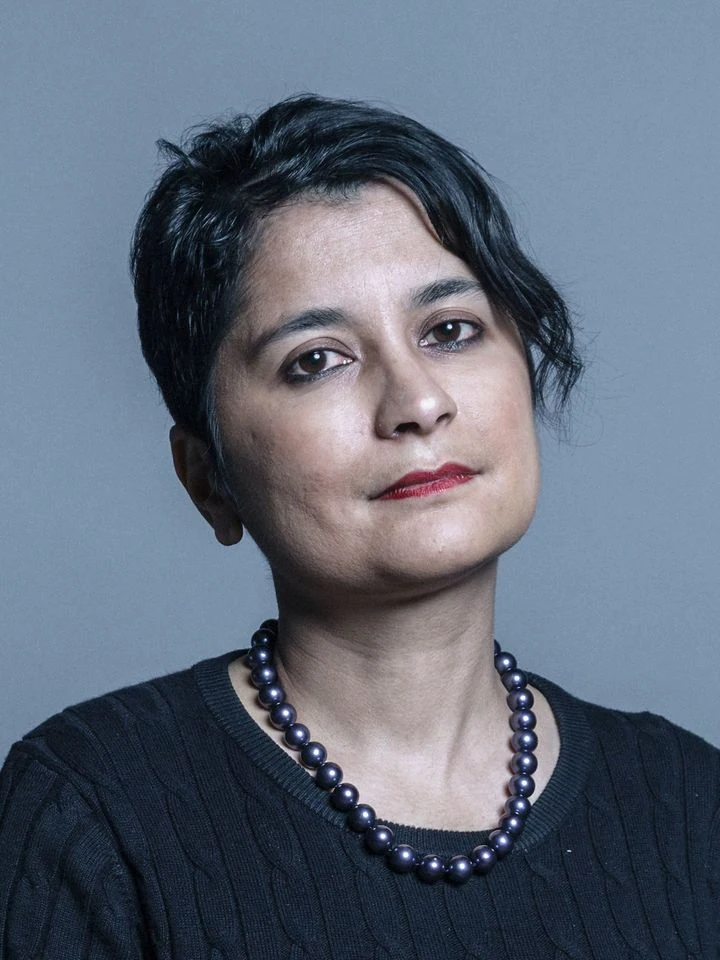
On 10 September 2001, Shami Chakrabarti joined Liberty as an in-house lawyer. The following day, the attacks in the United States changed the political climate around security. In Britain, questions about detention, surveillance and the limits of state power soon became central to public debate. Chakrabarti spent the next 15 years at Liberty arguing that a democracy could confront violence without abandoning the rights and legal restraints that protect its citizens.
Her influence rested partly on a rare double perspective. Before joining the civil-liberties organisation, she had studied law, qualified as a barrister and worked for the Home Office. She therefore knew the language of rights and had experience of government from within. As Liberty’s director, she became a prominent advocate for civil liberties, translating legal and constitutional arguments into terms that could be heard beyond Parliament and the courts.
From Kenton to the Bar
Born in Kenton, in the London Borough of Harrow, on 16 June 1969, Chakrabarti attended Bentley Wood High School and Harrow Weald Sixth Form College. She studied law at the London School of Economics, graduating with an LLB in 1991. While at the LSE, she worked as a research assistant to Leonard Leigh, whose work concerned the British approach to terrorism and extradition.
In 1994, Chakrabarti was called to the Bar by the Middle Temple. She began working as a barrister for the Home Office in 1996, later serving as in-house legal counsel. The experience gave her a view of how government departments approach legal powers and public responsibilities. It also formed part of the background to her subsequent criticism of measures she considered excessive: she was not approaching the workings of government solely from the outside.
That background is important to the way her public career developed. Civil liberties can sound abstract when expressed only as legal doctrine. The issues become more immediate when they concern how long a person may be detained before charge, what safeguards should accompany a search, or what government may collect and retain about the public. Chakrabarti became known for bringing such questions into ordinary political discussion rather than leaving them to specialists.
Liberty in a changed political climate
Chakrabarti joined Liberty, formerly the National Council for Civil Liberties, in September 2001. She became its director in 2003 and held the post until 2016. The organisation already had a history of civil-liberties campaigning; under her leadership, it became a particularly visible voice in disputes over counter-terrorism policy and the reach of government power.
The period after the September 2001 attacks brought new pressure to expand security powers. Liberty opposed measures it regarded as excessive, including legislation introduced in response to terrorism. Chakrabarti frequently contributed to radio, television and newspapers, giving the organisation a public platform and making rights questions part of current affairs. Her work was not simply opposition to government action. It asked what powers would mean for the people subject to them, and whether their use could be justified and properly controlled.
In 2005, following the London bombings in July, the Government proposed allowing the detention of terrorism suspects for up to 90 days before charge. Parliament rejected the proposal. Chakrabarti was one of the campaigners who opposed it, and Liberty under her direction was among the public voices arguing against such a substantial extension. The outcome was not the work of one person or one organisation. It nevertheless marked a significant parliamentary refusal to grant the Government the power it had requested, and placed the balance between security and liberty squarely in public view.
Chakrabarti also opposed identity cards and the expansion of state surveillance. These issues reached beyond exceptional security emergencies: they concerned the ordinary terms on which people interacted with the state and the amount of personal information government could hold. Liberty campaigned against the identity-card scheme, which was scrapped in 2010 after years of opposition from the organisation and others. Her argument was not that government should have no role in security or that technology was inherently suspect. It was that systems built for administrative convenience or control could have lasting consequences for privacy and citizenship.
Liberty was also involved in the case of Gillan and Quinton. In 2010, the European Court of Human Rights ruled that stop-and-search powers under section 44 of the Terrorism Act 2000 violated the right to respect for private life. The case brought the consequences of broad preventive powers into focus. It demonstrated the importance of safeguards when police can stop and search without reasonable suspicion, and of legal scrutiny when powers intended for public protection intrude on individual rights.
Across these campaigns, Chakrabarti challenged the idea that security and liberty had to be treated as opposing choices. Her approach emphasised that legality, proportionality and accountability belong within serious security policy. A measure adopted in the name of an emergency can shape the everyday relationship between citizen and state; its effects do not necessarily disappear when the immediate crisis passes. Her work kept that longer constitutional question in view.
Public responsibilities beyond Liberty
Chakrabarti’s public role extended beyond the organisation she led. She was appointed a Commander of the Order of the British Empire in the 2007 Queen’s Birthday Honours for services to human rights. In 2011, she was named as a panel member of the Leveson Inquiry, established after the phone-hacking scandal to examine press culture, practices and ethics.
The inquiry brought together questions that had long featured in her work: privacy, accountability and the rule of law. Chakrabarti welcomed the principal recommendation for a more robust and independent press self-regulator, while saying Liberty could not support the report’s proposed last-resort alternative of compulsory statutory regulation. Her participation reflected the difficult balancing involved in public policy: protecting privacy and seeking accountability without giving the state unchecked control over the press.
She also took part in the Olympic flag-bearing ceremony at the opening of the London 2012 Summer Games. In 2011, the British Academy awarded her its President’s Medal. These honours and public appointments brought recognition outside Liberty, while her central subject remained the conditions under which institutions and individuals should exercise power.
From campaigner to parliamentarian
In 2016, Chakrabarti’s work moved into party politics and Parliament. She chaired a Labour Party inquiry into antisemitism and other forms of racism, and joined the party during the inquiry, saying that she wanted to gain members’ trust and confidence. The report, published in June 2016, concluded that the party was not overrun by antisemitism, Islamophobia or other forms of racism, while also identifying an occasionally toxic atmosphere. Her appointment and the inquiry attracted criticism from some Labour MPs, who questioned whether a later political appointment could appear to compromise the inquiry’s independence.
On 6 September 2016, Chakrabarti was made a life peer as Baroness Chakrabarti, of Kennington in the London Borough of Lambeth. The following month, she became Shadow Attorney General for England and Wales, serving until April 2020. Her move from civil-liberties campaigning into Parliament changed the setting of her work, but not its underlying concern with the way law gives, uses and limits public power.
She was appointed to the Privy Council in 2018. Her parliamentary career has kept her within public debates about legislation and human rights, while her earlier years at Liberty remain the period most closely associated with her public profile. The transition matters: a campaigner who had challenged government powers from outside later held a senior opposition legal role and took part in parliamentary scrutiny from within the political system.
Chakrabarti also held university roles. She was Chancellor of Oxford Brookes University from 2008 to 2015 and Chancellor of the University of Essex from 2014 to 2017. These appointments, alongside her work on the Leveson Inquiry and in Parliament, demonstrate the breadth of her public service, although her defining contribution remains her advocacy for civil liberties.
Books and public explanation
Chakrabarti’s writing extended her work beyond campaigns and political office. Her first book, On Liberty, was published in 2014. It addressed the pressure on democratic institutions in the years after the September 2001 attacks and the arguments over security and individual freedom that had marked her time at Liberty.
She followed it with Of Women: In the 21st Century in 2018 and Human Rights: The Case for the Defence in 2024. The books address different subjects, but share an interest in how rights shape people’s encounters with authority and public life. Her role as a frequent broadcaster and newspaper contributor was another part of that work: she helped carry legal questions into conversations that did not depend on specialist knowledge.
Her career has not been free of controversy. In 2009, Chakrabarti was a member of the LSE’s governing board when the university accepted a donation from Saif al-Islam Gaddafi’s foundation. She said she had not attended the meeting at which the donation was approved and later raised concerns about links to the Gaddafi regime. In 2011, she asked the Metropolitan Police to investigate the legality of the donations; in 2013, her spokesman confirmed that she had severed her ties with the LSE. Including this episode helps place her public record in context, without confusing a difficult institutional controversy with the substance of her civil-liberties work.
Why Shami Chakrabarti deserves a place in British Legacy
Shami Chakrabarti deserves a place in British Legacy because she helped make the limits of state power a public question in Britain at a time when fear of terrorism created strong pressure for wider powers. Her years at Liberty brought the practical consequences of policy into view: detention before charge, searches without reasonable suspicion, identity cards and the collection of personal information. These issues affect not only legal specialists but people going about their lives. By arguing that security measures must remain lawful, proportionate and accountable, she helped keep those everyday consequences part of the national debate.
Her contribution is not that she alone determined parliamentary outcomes or secured every change for which Liberty campaigned. It is that she gave an established civil-liberties organisation a prominent voice and helped explain why constitutional safeguards matter, including when governments describe their actions as urgent. The rejected 90-day detention proposal, the campaign against identity cards and the Gillan and Quinton case each show a different route by which questions of liberty reached public and legal scrutiny.
Chakrabarti’s British legacy also lies in the range of settings in which she pursued those questions: as a barrister, Liberty director, writer, Leveson Inquiry panellist, peer and Shadow Attorney General. Her books and broadcasting widened the audience for arguments often expressed in technical legal language. That has a practical benefit. A public better able to understand privacy, due process and the rule of law can judge government powers more clearly and ask what protections accompany them. Her career offers a model of advocacy that is forceful without treating security as irrelevant, and of public argument that makes constitutional principles accessible. Those are valuable resources for British civic life.
Sources
Shami Chakrabarti — supplied Wikipedia revision
Adapted in part from Shami Chakrabarti by Wikipedia contributors, under CC BY-SA 4.0. Text has been edited and combined with the existing article; this adapted text is shared under the same licence. Contributor history.