Oxford’s literary life has a public meeting place in the Oxford Literary Festival. Held annually across central Oxford, it brings international authors, journalists, historians, poets and intellectuals to speak before audiences in venues that include bookshops, libraries, a theatre and university colleges. Its programme ranges beyond books alone, while the festival’s history also reflects practical questions about partnerships, charitable funding and the terms on which writers appear.
A festival rooted in Oxford
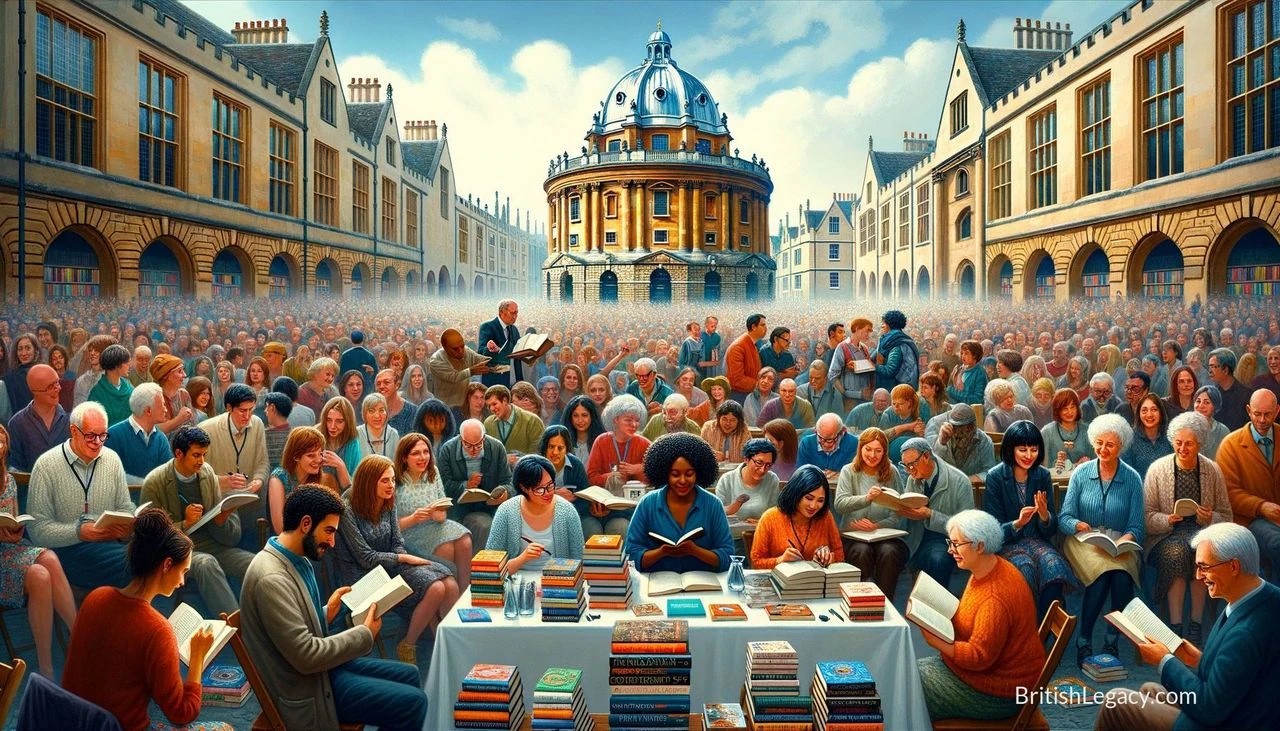
The Oxford Literary Festival was formed in 2001. It is an annual event held in Oxford, England, with venues spread across the city centre. These have included Blackwell’s bookshop, the Bodleian Library, the Sheldonian Theatre and the Weston Library, as well as colleges such as Christ Church and Worcester College. The range matters: rather than taking place in one dedicated festival building, events use spaces with different roles in the city’s cultural and academic life.
Some of those locations are among Oxford’s best-known institutions; others make a bookshop part of the festival’s geography. Together, they place talks within the city rather than separating them from the places where readers encounter books and ideas. The venues also provide a setting for a programme that draws people from beyond Oxford: the festival includes international participants, while its event locations remain distinctly local.
The event was formerly known as the Sunday Times Oxford Literary Festival. It has also been associated with the Financial Times; its current newspaper partner is The Telegraph. These changes show how the festival’s public identity has developed alongside its partnerships. Its annual programme depends not only on speakers and audiences but also on venues and organisations able to bring events together.
Talks across literature and public life
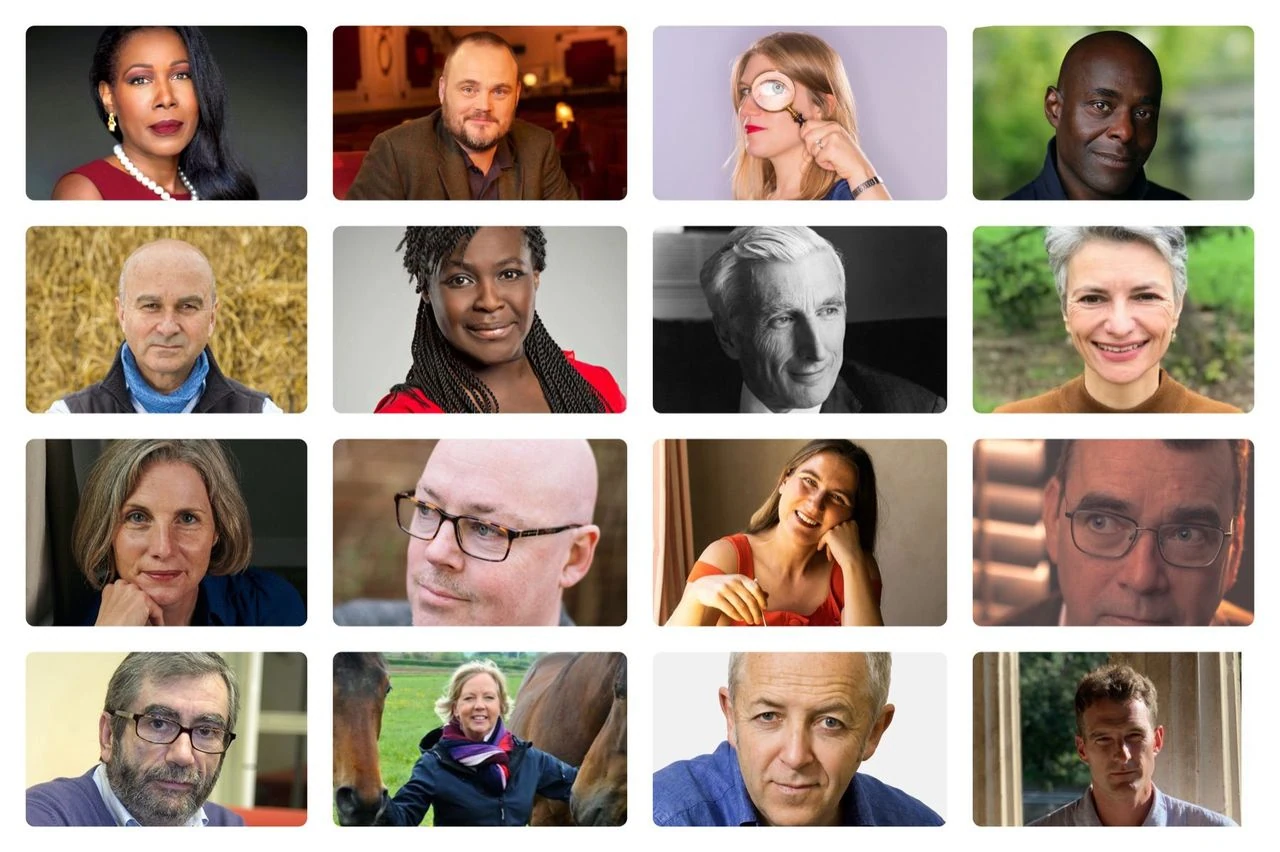
The festival includes talks by authors, journalists, intellectuals, historians and poets. Its programme has also featured readings, panels and book signings. Past speakers named in the festival’s earlier account include Hilary Mantel, Salman Rushdie, Richard Dawkins and J. K. Rowling. Their presence points to a range extending from fiction to science and public life, rather than a programme confined to one literary genre.
For readers, a talk or reading offers a chance to encounter a writer’s work in a setting shared with other people interested in the same subject. Panels can bring more than one perspective into the same discussion; a book signing gives an event a direct connection to the books being discussed. These formats make up different parts of a festival programme, moving between presentation, conversation and the meeting of readers with writers.
The breadth of the listed participants is important to the character of the event. Journalists, historians, poets and intellectuals bring distinct kinds of writing and public argument alongside authors of fiction. That mixture gives the festival room to address subjects through different forms of expertise and expression. Its central Oxford venues provide a common setting for those encounters, without making the programme the preserve of a single institution or discipline.
Learning, new voices and writers’ work
The festival’s earlier programme description includes workshops, interactive sessions and children’s programming. It also describes partnerships with schools and universities, and opportunities for emerging authors to appear alongside established writers. Taken together, these activities suggest a programme that addresses younger readers and aspiring writers as well as audiences attending talks. They place participation and learning alongside the public presentation of books.
These elements serve different purposes. Children’s events can introduce younger audiences to festival activities; workshops and interactive sessions offer a more participatory format than listening to a talk. Opportunities for emerging writers to appear beside established names can also bring different stages of a writing career into the same programme. The festival’s activity is therefore not limited to presenting well-known speakers: the account of its programme also includes education and the development of new voices.
Questions about writers’ working conditions have formed part of the festival’s history. In January 2016, Oxford novelist Philip Pullman resigned as a patron in support of the Society of Authors’ campaign for writers to be paid fees at literary festivals. That episode draws attention to the work behind a public appearance: a festival may offer a platform to writers, but the terms of their participation matter too. It is a significant strand of the story alongside the programme itself.
The Oxford Literary Festival is a registered charity in England and Wales, and ticket income is identified as a source of funding. Its charitable status and ticket-funded events are part of the practical framework around the programme. They sit alongside its newspaper partnerships and use of multiple venues, helping explain the organisational arrangements behind an annual event that brings speakers and audiences together across the city.
Recognition and a recurring meeting place
The Bodley Medal, described as the Bodleian Library’s highest honour, is awarded at the festival. Philip Pullman received it in 2024. His connection with the festival thus includes two separate events: his 2016 resignation as a patron in support of writers’ fees, and his later recognition with the medal. Keeping those moments distinct matters: one concerned the conditions under which writers take part, while the other recognised Pullman at a festival event.
The festival’s annual form brings its programme back to Oxford, but its participants include international writers and thinkers. Across bookshops, libraries, the Sheldonian Theatre and colleges, it provides a recurring occasion for readers to hear discussion spanning literature and other subjects. Its identity is shaped by both sides of that arrangement: a specific city and a programme that reaches beyond it.
Why Oxford Literary Festival deserves a place in British Legacy
The Oxford Literary Festival deserves a place in British Legacy because it gives literary and intellectual activity a public setting in a specific British city. Its use of bookshops, libraries, a theatre and colleges across central Oxford brings writers and audiences into contact in places associated with reading, study and performance. The programme’s range—from authors and poets to journalists, historians and intellectuals—makes that meeting place more than a celebration of fiction. It creates opportunities to hear different kinds of writers speak and to consider subjects through more than one discipline.
Its educational activities and opportunities for emerging writers add another dimension. Workshops, interactive sessions and children’s programming, alongside school and university partnerships described in the festival’s programme, connect the event with younger readers and people developing their writing. The 2016 dispute over writers’ fees is also part of its British cultural story: a literary platform should recognise the work of those who contribute to it. Together, these details make the festival’s legacy concrete. It convenes readers and writers in Oxford, supports a varied programme, and brings questions of access and professional recognition into view. That combination—not a claim to cultural supremacy—is the reason it belongs in a record of Britain’s cultural life.
Sources
Adapted in part from Oxford Literary Festival by Wikipedia contributors, under CC BY-SA 4.0. Text has been edited and combined with the existing article; this adapted text is shared under the same licence. Contributor history.