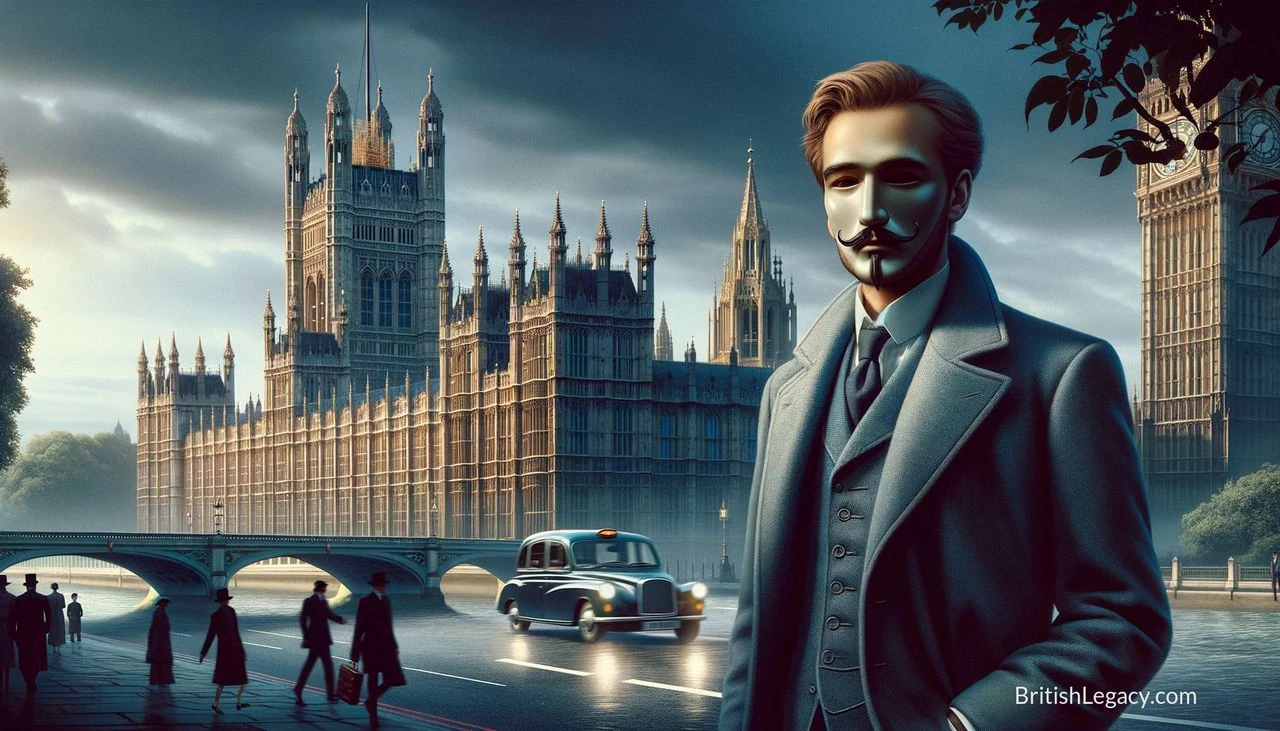
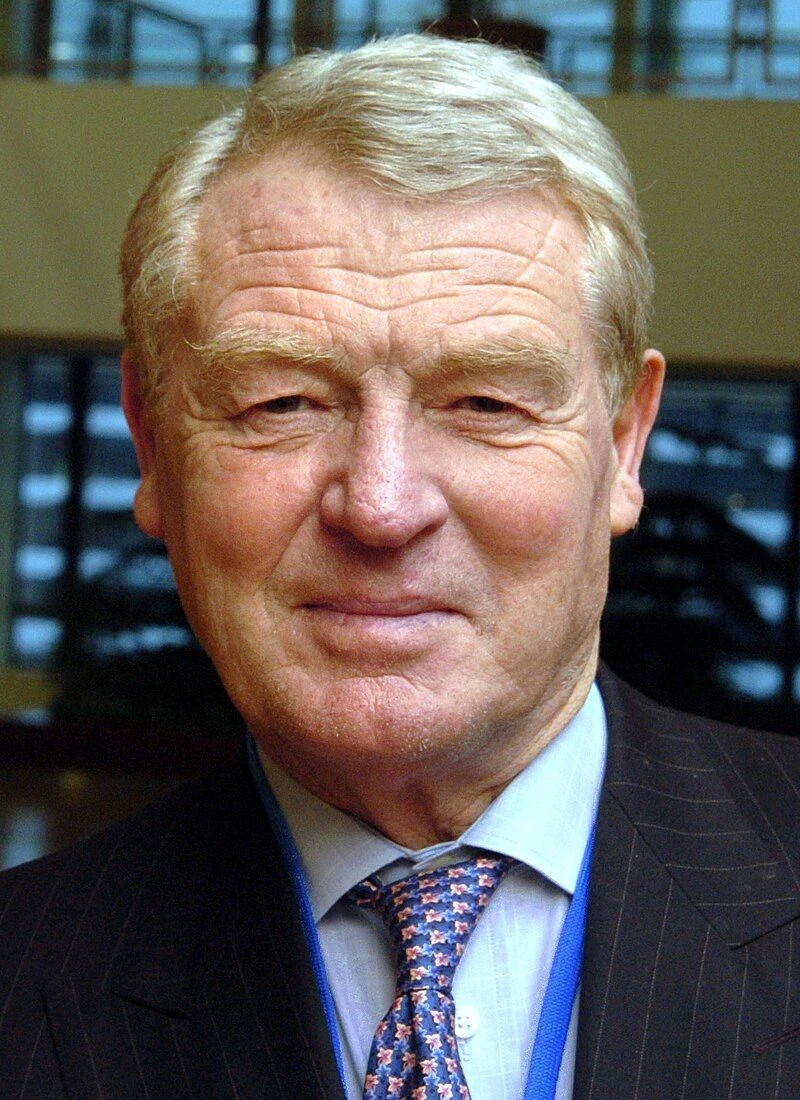
When Paddy Ashdown left the Royal Marines for politics, he exchanged military service and diplomatic work for years of local campaigning in Somerset. Elected MP for Yeovil in 1983, he went on to lead the Liberal Democrats through their formation and their strongest general-election result in decades. His career later returned to international affairs: as High Representative for Bosnia and Herzegovina, he worked to strengthen the institutions of a country emerging from war.
From New Delhi to the Royal Marines
Jeremy John Durham Ashdown was born in New Delhi on 27 February 1941. His family moved to Northern Ireland, where his father bought a farm near Comber, County Down, in 1945. Ashdown attended Garth House Preparatory School in Bangor before Bedford School in England. At school, his accent earned him the nickname “Paddy”, which stayed with him throughout his public life.
After his father’s business collapsed, Ashdown passed the naval scholarship examination but left school before taking A-levels. He joined the Royal Marines in 1959 and served until 1972, leaving with the rank of captain. His service included the Borneo confrontation and the Persian Gulf. In 1965, after training as a swimmer canoeist, he joined the Special Boat Section, later known as the Special Boat Service, and commanded a section in the Far East.
In 1967 he went to Hong Kong for a full-time Chinese interpreter’s course. After returning to Britain in 1970, he commanded a Royal Marine company in Belfast. He then left the Marines for the Secret Intelligence Service. Working under diplomatic cover as a Foreign and Commonwealth Office official, he served at the British mission to the United Nations in Geneva. His responsibilities included relations with UN organisations and involvement in international treaty negotiations and aspects of the 1975 Helsinki Accords.
Building a political base in Yeovil
Ashdown had supported Labour while serving in the Marines, but switched to the Liberal Party in 1975. He decided to enter politics after the upheavals of the mid-1970s, leaving a comfortable life in Switzerland with his wife, Jane, and their two children. In 1976 he was selected as the Liberal prospective parliamentary candidate for Yeovil, Jane’s home constituency, and took a job with the Yeovil-based Westland Group.
Winning the seat took years of local work. Ashdown contested Yeovil in 1979, when he regained second place and established a substantial lead over Labour. The Conservatives still held a large majority, but their MP stood down before the 1983 election. Ashdown won, taking the seat with a majority of more than 3,000 and a swing from the Conservatives that was considerably stronger than the national movement in the opposite direction.
In the Commons, he spoke for the SDP–Liberal Alliance on trade and industry, then education. His early campaigns included opposition to the deployment of American cruise missiles in Europe, privatisation of the Royal Ordnance Factories and the use of UK bases for the 1986 US bombing of Libya. He also opposed the loss of trade union rights at GCHQ. These issues reflected a political outlook on the social democratic wing of the Liberal Party, which had supported the 1977 Lib–Lab pact and the later SDP–Liberal Alliance.
Leading a new Liberal Democrat party
When the Liberal Party and Social Democrats merged in 1988, Ashdown became leader of the new party, initially called the Social and Liberal Democrats and renamed the Liberal Democrats in 1989. He led the party for 11 years, from July 1988 to August 1999. The early period was difficult: the party lost seats in the 1992 general election and was still recovering from the merger. It began to make gains in European elections, and in 1997 won 46 Commons seats, its best result since the Liberal Party’s performance in the 1920s.
Ashdown also pursued cooperation with Labour. From 1993 he held private discussions with Labour leader Tony Blair about the possibility of a coalition. Labour’s 1997 victory made a coalition unnecessary, but the parties established a Joint Cabinet Committee to discuss shared priorities, initially including constitutional reform. The committee’s remit later widened. Ashdown announced in January 1999 that he would resign; Charles Kennedy succeeded him that August.
Electoral reform, particularly proportional representation, was an important part of Ashdown’s political advocacy. He argued for a more representative system, while the party’s election results showed the tension between votes won and seats secured under different electoral rules. In the 1999 European Parliament election, the adoption of the D’Hondt method coincided with a net gain of eight Liberal Democrat seats despite a fall in the party’s vote share.
From Parliament to Bosnia
Ashdown left the Commons in 2001 and was made a life peer as Baron Ashdown of Norton-sub-Hamdon. The following year he took up the post of High Representative for Bosnia and Herzegovina, serving from May 2002 until January 2006. He had long argued for international intervention in the region, and his appointment placed him in a role created under the Dayton Agreement.
During his tenure, Ashdown worked to strengthen central state institutions. The measures described in his public record included establishing state-level legal bodies such as the State Investigation and Protection Agency, bringing the two ethnic armies under a central civilian command, and moving Bosnia and Herzegovina towards European Union integration. His period in office was not without opposition: critics sometimes called him “the Viceroy of Bosnia”, a pointed reference to the authority of the High Representative.
His engagement with the region also included evidence at the International Criminal Tribunal for the former Yugoslavia. In 2002 he testified for the prosecution at Slobodan Milošević’s trial, describing what he said he had seen from the Kosovo–Albania border in 1998. The account was later challenged by a defence witness, and Ashdown supplied coordinates and a ground cross-section in response. The dispute concerned the location and visibility of the places in question; it is a reminder that his international role included contested claims as well as diplomatic responsibilities.
Public life after leadership
After Bosnia, Ashdown remained active in political and international affairs. He supported military strikes in Syria in 2013 and chaired the Liberal Democrats’ 2015 general-election team. On election night that year, he said he would eat his hat if the exit poll prediction of a sharp fall in Liberal Democrat MPs proved correct. The party returned eight MPs rather than the poll’s predicted ten, and Ashdown ate a chocolate hat on Question Time the following day.
He was a member of the governing council of Interpeace and served as president of Chatham House. In 2016 he helped found More United, a liberal and progressive cross-party movement established after the EU membership referendum. He also wrote across political and historical subjects. His publications include the two volumes of The Ashdown Diaries, Swords and Ploughshares: Building Peace in the 21st Century, his autobiography A Fortunate Life, and works on the French Resistance, the Cockleshell Heroes and wartime espionage.
Ashdown was appointed a Knight Commander of the Order of the British Empire in 2000 and received the Knight Grand Cross of the Order of St Michael and St George in 2005. He was also appointed a Member of the Order of the Companions of Honour in 2014. He died in Bristol on 22 December 2018, aged 77, after being diagnosed with bladder cancer. He was buried at Norton-sub-Hamdon, Somerset, following a funeral at the Church of St Mary the Virgin.
Why Paddy Ashdown deserves a place in British Legacy
Ashdown’s place in British political history rests not on a single office but on the route he took between institutions. He moved from the Royal Marines and intelligence work into the diplomatic service, then built a parliamentary career through sustained local campaigning in Yeovil. As Liberal Democrat leader, he guided a new party through the unsettled years after a major merger and helped it reach 46 seats in 1997. His advocacy of electoral reform and his discussions with Labour over constitutional change made questions about representation and political cooperation part of his leadership’s defining agenda.
His later work in Bosnia connects that British political experience to the difficult business of post-war institution-building. As High Representative, Ashdown backed stronger central institutions, state-level legal bodies, civilian command over the armed forces and closer European integration. Those are specific tasks, rather than a claim that one official could settle every consequence of conflict. His record also drew criticism and included contested testimony, which belongs in an account of public service alongside its achievements. For British Legacy, Ashdown matters as a figure whose career crossed military service, domestic democratic politics and international diplomacy—and whose work shows how political choices made in Britain can lead to responsibilities far beyond it.
Sources
Adapted in part from Paddy Ashdown by Wikipedia contributors, under CC BY-SA 4.0. Text has been edited and combined with the existing article; this adapted text is shared under the same licence. Contributor history.