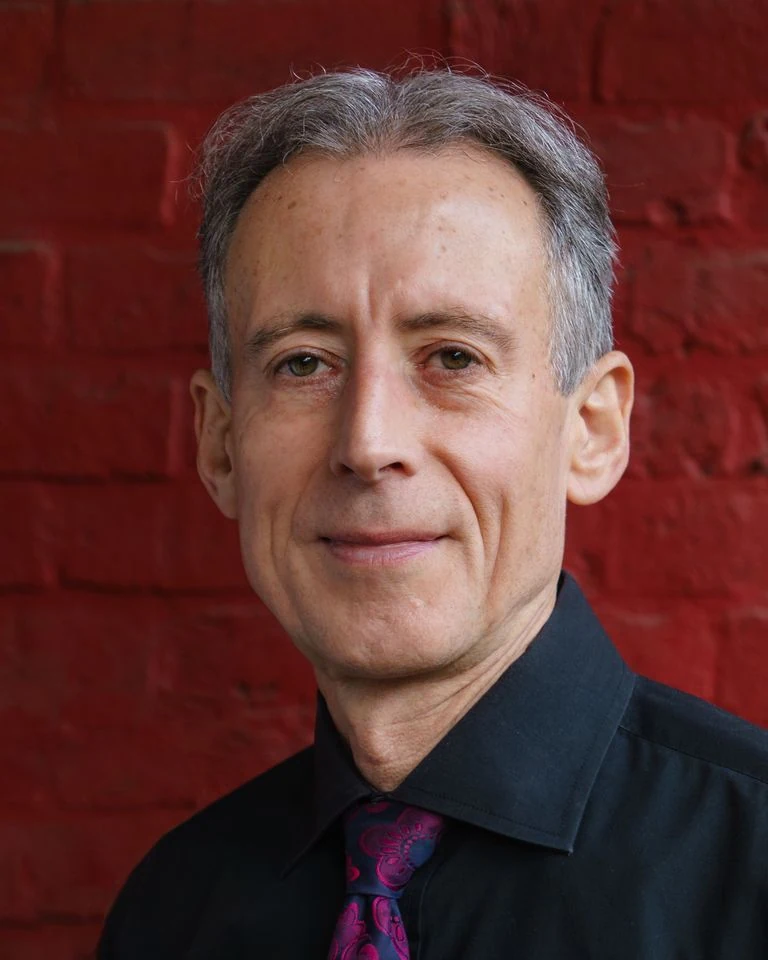
When Peter Tatchell helped organise Britain’s first Pride march, in London in 1972, public visibility was itself a political act. Gay people were still expected to keep their lives private; taking to the streets challenged that expectation. Tatchell became known for this kind of direct intervention. Across decades of British campaigning, he pressed institutions to confront discrimination, sometimes through patient advocacy and sometimes through actions designed to make silence impossible.
Born in Melbourne in 1952, Tatchell moved to London in 1971. His career has connected LGBT liberation with broader concerns including apartheid, censorship, asylum and state abuse. He was a leading member of the Gay Liberation Front, later co-founded OutRage!, stood as Labour’s candidate in the 1983 Bermondsey by-election and has campaigned internationally against human-rights violations. His approach has often been contentious; his record is not a story of universal agreement. It is, more substantially, a story of a campaigner helping to change which voices British public life could ignore.
Early campaigning and a move to London
Tatchell’s political activity began as a schoolboy in Australia. He campaigned against the death penalty and the Vietnam War, and for Aboriginal rights. At Mount Waverley Secondary College he was elected secretary of the student representative council. As school captain, he helped establish a scholarship scheme for Aboriginal people and led a campaign for Aboriginal land rights. His early campaigning was not confined to one issue: it reflected a conviction that citizens could challenge laws and public decisions they considered unjust.
At 16, in 1968, he left school and began working as a sign-writer and window-dresser in department stores. He later said that the theatricality of those displays influenced his activism. The connection is persuasive in a career that repeatedly made use of placards, performance and visual images, though it should not be mistaken for a complete explanation of his politics. After taking A-levels at evening classes, he attended the Polytechnic of North London, where he studied sociology and graduated with a BSc. He was involved in the National Union of Students Gay Rights Campaign and subsequently worked as a freelance journalist, writing on foreign affairs.
Tatchell moved to London in 1971, partly to avoid conscription into the Australian Army. The city became the setting for his most enduring public work. He joined the Gay Liberation Front (GLF), becoming one of its leading members during the movement’s active years in the early 1970s. GLF challenged more than legal restrictions. Its activists objected to police harassment, protested when pubs refused to serve gay customers and rejected the medical classification of homosexuality as an illness. They argued for a change in social attitudes as well as formal rights.
In 1972 Tatchell helped organise Britain’s first Gay Pride march. It took place in London on 1 July, when the idea of openly celebrating gay life was far from familiar. The march’s significance lay in the act of appearing together in public: a declaration that gay people belonged in civic life and should not have to trade visibility for safety or acceptance. Tatchell was one participant in a collective effort, not the sole maker of Pride. The movement’s wider achievement was to put a previously marginalised community into the public conversation on its own terms.
In 1973 he represented the GLF at the World Youth Festival in East Berlin. He attempted to raise gay-rights issues there, including through a speech and leaflets, and carried a placard at the festival’s closing rally despite opposition. He was beaten and the placard was torn. Tatchell later described the episode as an early public discussion of gay liberation politics in a communist country, while acknowledging that gay men in East Germany had greater legal rights in some respects than in much of the West at the time. The episode illustrates both the risks he was prepared to take and his interest in making human-rights claims across national borders.
Bermondsey: entering electoral politics
Tatchell joined the Labour Party in 1978 and moved to a council flat in Bermondsey, south-east London. He became secretary of the constituency party in 1980. When Labour MP Bob Mellish retired, Tatchell was selected as his successor. The route to candidacy was disputed within Labour. Party leader Michael Foot opposed endorsing him after Tatchell argued for more militant forms of extra-parliamentary opposition to the Thatcher government. The Bermondsey party continued to back him, and he was eventually endorsed as the candidate.
The February 1983 by-election became notorious for its homophobic campaigning. Tatchell lost to the Liberal candidate, Simon Hughes, in a seat that had long been a Labour stronghold. The campaign also involved political controversy over Tatchell’s support for direct action and conflict within his own party. But the election’s wider significance was the visibility of anti-gay prejudice in mainstream political life. Tatchell was assaulted, his flat was attacked, and a death threat and live bullet were put through his letterbox. The episode showed the personal danger attached to openly gay political participation, as well as the willingness of campaigners to turn sexuality into a weapon at the ballot box.
It would be too simple to treat the defeat as a victory in disguise. Tatchell did not win the seat, and the campaign brought real hostility. Yet the contest made the treatment of a gay candidate impossible to keep abstract. The hostile tactics and language became part of the public record of British politics, exposing what electoral ambition could license. Bermondsey was one episode in a wider shift, not a change Tatchell brought about alone, but it helped reveal the conditions under which later arguments about equality would have to be made.
OutRage!, Section 28 and confrontation
In 1990 Tatchell co-founded OutRage!, a direct-action group that used protest, theatrical tactics and media attention to challenge anti-gay prejudice. The group’s work addressed law, religion and public culture. It became closely associated with Tatchell’s campaigning style: interventions that placed institutions under pressure rather than relying solely on quiet persuasion. He was a prominent member, though the group did not have him as a leader; he described himself as one among equals.
One of the central domestic fights of the period concerned Section 28, the provision in the Local Government Act 1988 that prohibited local authorities from intentionally promoting homosexuality. The law’s ambiguous wording fostered a climate of caution among councils and people working in education and public services. Tatchell was among the prominent campaigners who opposed it. Its repeal followed years of pressure and political argument: Scotland repealed its equivalent in 2000, and the provision was removed in England and Wales in 2003. Those outcomes belong to a broad campaign, rather than to any one activist. Tatchell’s contribution was to keep the issue in public view and challenge the silence the law encouraged.
Not every OutRage! action was welcomed, including within the communities whose rights the group sought to advance. Campaigns involving the outing of public figures and confrontations in religious settings provoked criticism. Tatchell later called the group’s action against Church of England bishops his greatest mistake, saying he had failed to anticipate that the media and the Church would see it as an invasion of privacy. Including that admission matters: his record is not best served by presenting every tactic as justified or every campaign as successful. His politics relied on confrontation, and that method could expose hypocrisy while also alienating people or crossing lines he later regretted.
Human rights beyond LGBT politics
Tatchell’s campaigning and journalism have also addressed issues outside LGBT rights. As a freelance journalist, he publicised child labour on British-owned tea farms in Malawi and the Indonesian annexation of West Papua. He campaigned against apartheid in South Africa and has worked on questions of asylum, free expression and persecution. His concerns have included the use of state power against people with little protection, whether the victims were in Britain or far beyond it.
That breadth matters because it places his LGBT activism within a larger account of human dignity. Tatchell has argued for rights as principles that should not be applied selectively. His methods, however, have not always been uncontested, and the combination of international campaigning and direct action has brought disputes over tactics and language. A fair account can recognise his commitment to speaking out without treating every position he has taken as beyond criticism.
His attempts to make a citizen’s arrest of Zimbabwean president Robert Mugabe in 1999 and 2001 became some of his best-known international interventions. The actions drew attention to allegations of human-rights abuses under Mugabe’s government. In Brussels in 2001, Tatchell was beaten by Mugabe’s bodyguards and briefly knocked unconscious; the assault contributed to lasting damage to his right eye. The attempted arrests were symbolic acts rather than successful legal proceedings, but they made a pointed argument: political power should not place a leader beyond scrutiny. The episode also underlined the physical risks that could accompany Tatchell’s confrontational style.
In 2011 Tatchell became director of the Peter Tatchell Foundation, which promotes and protects human rights in the UK and internationally. The foundation gives an organisational form to work that had often depended on individual campaigning: it undertakes advocacy and casework and provides advice. The organisation became a registered charity in 2018. Its existence is one way Tatchell’s work has extended beyond the campaigns and demonstrations with which he is most readily associated.
Recognition, records and public memory
Tatchell’s career has attracted honours as well as sustained disagreement. Among them are the Gandhi International Peace Award, which he received in 2016, and an honorary doctorate of laws from De Montfort University in 2014. In 2009 he received several awards, including Campaigner of the Year at The Observer Ethical Awards and the London Citizen of Sanctuary Award. These recognitions do not settle debates about his tactics or opinions. They do show that his campaigning has been treated as a significant contribution to public life by institutions beyond the activist groups in which he worked.
The preservation of his papers is another kind of recognition. Tatchell’s papers are held in the Hall-Carpenter Archives at the London School of Economics, part of a record of LGBT history and activism. In 2024 the National Portrait Gallery acquired a portrait of him by Sarah Jane Moon for its permanent collection. An archive preserves the material of campaigns; a portrait makes a public figure visible in a different way. Together, they mark a transition from activism in the moment to a place in the historical record.
His political career also included party politics beyond Labour. He left the party in 2000 and joined the Green Party of England and Wales in 2004. Selected as its prospective parliamentary candidate for Oxford East in 2007, he stood down in 2009, citing brain damage he said resulted mainly from injuries sustained at protests and a bus accident. These changes of political affiliation form part of a career that has never been confined to one institution or a single route to influence.
Why Peter Tatchell deserves a place in British Legacy
Peter Tatchell deserves a place in British Legacy because his work helped change the practical terms of public visibility and citizenship in modern Britain. When he helped organise the first Pride march in 1972, gay people were not being invited into a settled tradition of public celebration. Marching openly challenged the expectation that they should remain private. His later campaigning against Section 28 helped sustain opposition to a law that encouraged public bodies to avoid acknowledging gay lives. The repeal of Section 28 was the result of many people’s efforts over many years, but Tatchell was among the campaigners who kept the issue in public debate.
His British legacy also includes the harder parts of political participation: the hostility surrounding the Bermondsey by-election, the costs of protest and the disputes over how direct action should be used. Tatchell’s willingness to confront powerful people and institutions made human-rights questions visible, but some methods drew justified criticism, and he later acknowledged a major mistake. Remembering both the impact and the controversy gives a more useful account than either unqualified praise or dismissal. His career shows how activists can shift public debate without controlling its outcome or acting alone.
Finally, his work connects campaigns in Britain with international human-rights concerns. From anti-apartheid activism and journalism to the Peter Tatchell Foundation, he has treated the protection of rights as an ongoing responsibility rather than a finished achievement. The papers preserved at the LSE and the National Portrait Gallery’s portrait place that work within the country’s record of activism and public life. Britain is better able to understand the history of LGBT rights, and the risks taken to make them visible, because Tatchell and the movements around him helped leave evidence, arguments and institutions that others can build on.
Sources
Peter Tatchell — Wikipedia revision 1375643523
Adapted in part from Peter Tatchell by Wikipedia contributors, under CC BY-SA 4.0. Text has been edited and combined with the existing article; this adapted text is shared under the same licence. Contributor history.