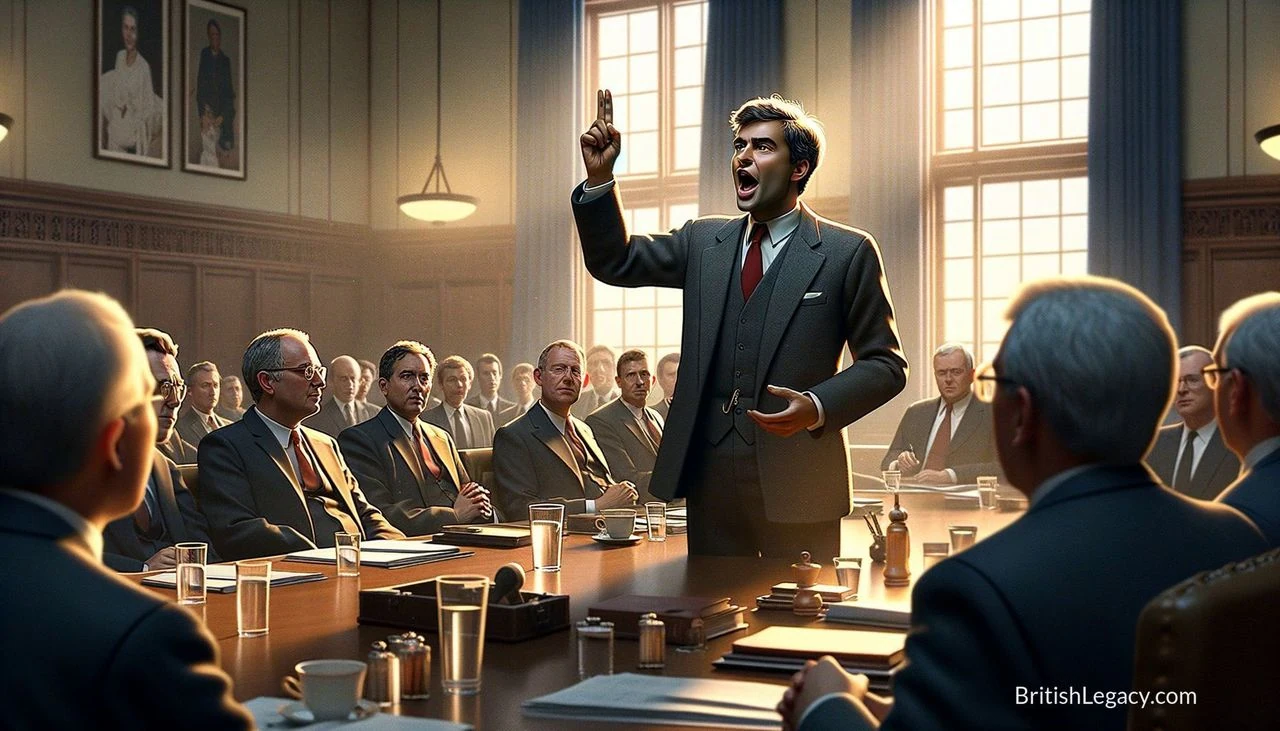
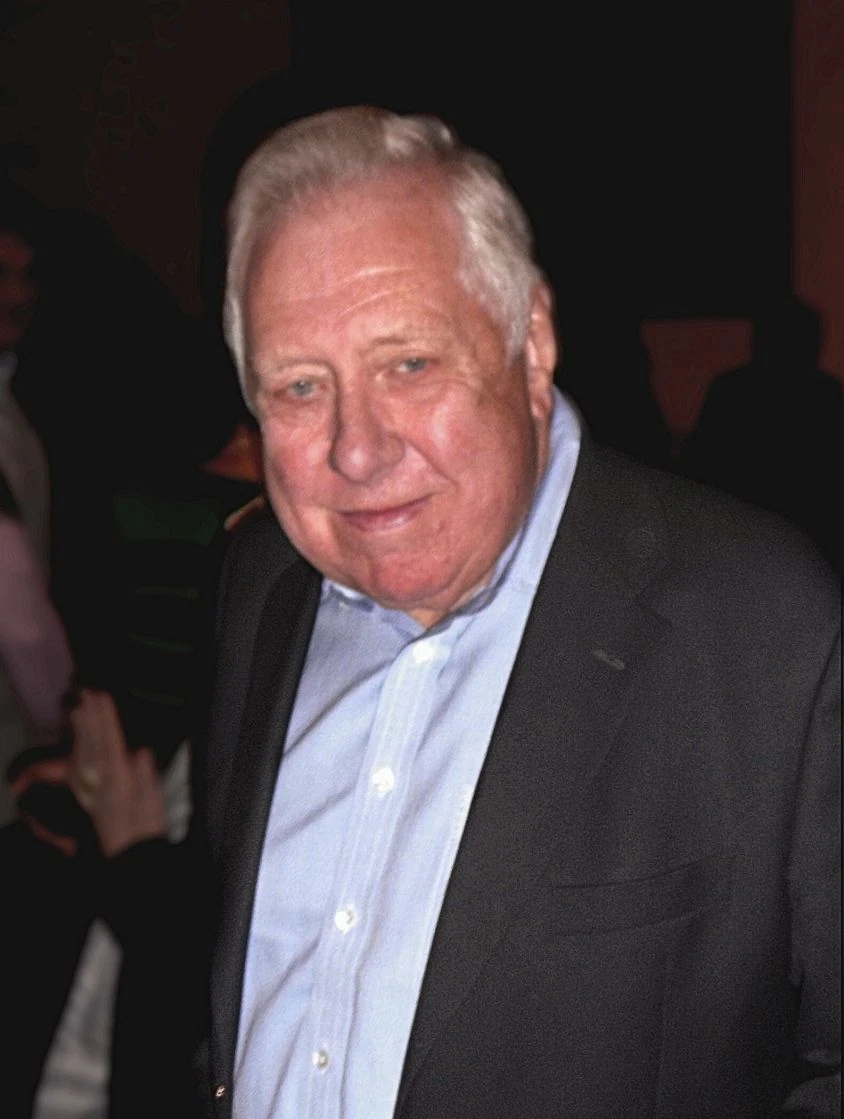
Roy Hattersley’s political career spanned local government, ministerial office, opposition leadership and the House of Lords. Elected to Parliament for Birmingham Sparkbrook in 1964, he served as a minister under Harold Wilson and James Callaghan before becoming Labour’s deputy leader under Neil Kinnock. He was also a prolific author and journalist. His career was shaped by a commitment to Labour’s parliamentary politics and by repeated attempts to define what democratic socialism should mean in practice.
A Sheffield upbringing and an early start in politics
Hattersley was born in Sheffield on 28 December 1932. His mother, Enid, was active in the Labour Party and introduced him to politics when he was 12, taking him campaigning during the 1945 general election. He joined Labour at 16. He later recalled A. V. Alexander, his local MP, as a political hero, and identified R. H. Tawney’s Equality as an important influence.
He attended Wisewood Primary School, Hillsborough High School and Sheffield City Grammar School before going to the University of Hull. At 23, he was elected to Sheffield City Council, becoming its youngest member. As chair of the council’s housing management committee, he commissioned the Park Hill housing development. This local-government experience preceded his entry into national politics and gave him practical responsibilities before he became a Westminster figure.
Hattersley first stood for Parliament in Sutton Coldfield in 1959 and lost. In the 1964 general election he won Birmingham Sparkbrook, becoming the youngest MP elected that year. He represented the constituency for 33 years, until the seat was abolished in 1997. His route to senior office was therefore built on both an early electoral defeat and a lengthy relationship with a single Birmingham constituency.
Government service and the Labour years
Hattersley’s ministerial career began in 1967 as a parliamentary secretary at the Ministry of Labour. He became parliamentary under-secretary for employment and productivity in 1968, then minister of state for defence administration from 1969 to 1970. In the latter role, he oversaw the launch of Operation Banner, the deployment of British troops to Northern Ireland. The responsibilities he held were not confined to domestic economic policy, even though that would become a defining part of his public image.
After Labour returned to office in 1974, Hattersley became deputy to Foreign Secretary James Callaghan. He served as minister of state for foreign and Commonwealth affairs from 1974 to 1976. In September 1976, he entered the Cabinet as Secretary of State for Prices and Consumer Protection, holding the post until Labour left office in 1979. These offices put him at the centre of government during a period of economic difficulty and political strain.
Hattersley was also involved in Labour’s arguments about its political future. He supported British membership of the European Economic Community and remained in Labour when colleagues left to form the Social Democratic Party in 1981. That year he chaired the Labour Solidarity Campaign, which sought to strengthen the party’s moderates and reverse changes to the way its leader was elected. In the 1983 leadership contest, Hattersley stood for the leadership but lost to Kinnock; he then defeated Michael Meacher to become deputy leader.
Deputy leader, opponent and party critic
Hattersley held the deputy leadership from October 1983 until July 1992. During those years he also served in the shadow Cabinet, first as shadow Chancellor of the Exchequer and later as shadow Home Secretary. His relationship with Kinnock brought him close to Labour’s efforts to change its public and political course after its 1983 defeat. Hattersley supported the expulsion of the Militant tendency and set out his own case for democratic socialism in Labour’s Choice, published in 1983 and updated as Choose Freedom in 1987.
Hattersley did not leave Labour when the party split, but neither did he avoid disagreement within it. He blamed the unions and the Winter of Discontent for Labour’s 1979 defeat, while also arguing that the Callaghan government’s acceptance of an International Monetary Fund bailout in 1976 and its failure to defend public spending had helped pave the way for Margaret Thatcher. The record shows a politician willing to criticise both the party’s leadership and its organised supporters, rather than treating Labour’s electoral setbacks as the result of a single cause.
After Labour lost the 1992 general election, Kinnock and Hattersley both resigned from their leadership posts. Hattersley announced his retirement from politics in 1994, left the Commons in 1997 and entered the House of Lords as Baron Hattersley of Sparkbrook. He left the Lords in 2017. In later years he criticised Labour under Tony Blair and Jeremy Corbyn, including what he saw as the abandonment of blue-collar workers under Blair and the party’s handling of antisemitism.
A second career in books and journalism
Writing ran alongside Hattersley’s political life and continued after his departure from the Commons. He published more than 20 books, including political works, autobiography, fiction and historical biographies. A Yorkshire Boyhood appeared in 1983; No Discouragement: An Autobiography followed in 1996. His later books included The Life of John Wesley and The Catholics: The Church and its People in Britain and Ireland.
His journalism appeared in publications including The Spectator, The Listener, The Guardian and the Daily Mail, and he contributed to the New Statesman. The range of his writing widened his public work beyond the parliamentary record: he wrote about political life and British history, as well as subjects such as religion. His career therefore joined an active role in party politics to a sustained life as a writer and commentator.
Why Roy Hattersley deserves a place in British Legacy
Hattersley’s place in British political history rests first on the length and variety of his public service. He represented Birmingham Sparkbrook for more than three decades, held ministerial responsibility in successive Labour governments, and served as deputy leader through a difficult period of opposition and internal change. His path from Sheffield City Council to the Cabinet and the shadow leadership also shows how local government could be a serious foundation for national political work. These are specific contributions to Britain’s parliamentary and party institutions, rather than a claim that one politician alone transformed social policy.
His legacy also lies in the arguments he took part in and recorded. Hattersley remained in Labour through the party’s split, sought to strengthen its moderates, and made a sustained case for democratic socialism in books and political debate. His criticism of Labour’s handling of economic pressures, its relationship with trade unions and its later direction gives a further dimension to that record: he was not simply a holder of office, but a participant in disputes over how the party should represent its voters and govern. Alongside more than 20 books and decades of journalism, that public argument forms a substantial British legacy—one rooted in parliamentary service, political writing and the contested evolution of the Labour movement.
Sources
Roy Hattersley — Wikipedia revision 1379279102
Adapted in part from Roy Hattersley by Wikipedia contributors, under CC BY-SA 4.0. Text has been edited and combined with the existing article; this adapted text is shared under the same licence. Contributor history.