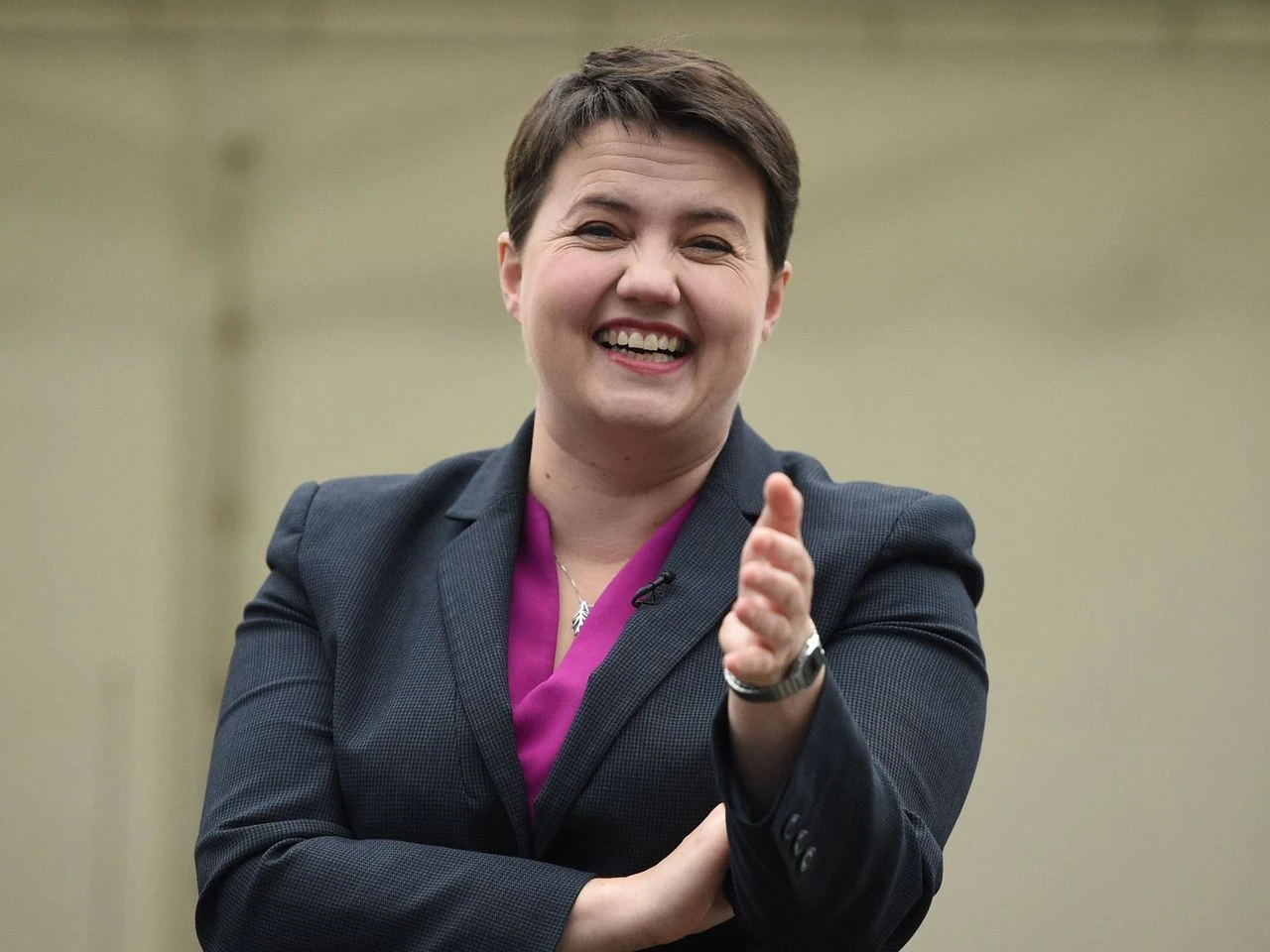
Ruth Davidson’s leadership changed the Scottish Conservatives’ standing at Holyrood. In 2016, the party won 31 seats and replaced Labour as the second-largest party in the Scottish Parliament. The result did not belong to its leader alone, but Davidson had made the party a more prominent advocate of the Union and an electoral alternative to the SNP. Her career brought together Scottish political identity, Conservative party renewal and the constitutional arguments that have shaped modern Scottish politics.
From journalism to Holyrood
Davidson was born in Edinburgh on 10 November 1978. She was raised first in Selkirk and later in Lundin Links, Fife, and attended Buckhaven High School. After studying English literature at the University of Edinburgh, she began work as a trainee reporter at the Glenrothes Gazette. She went on to work for Kingdom FM and Real Radio before joining BBC Scotland in 2002, where her roles included radio journalist, producer, presenter and reporter.
Alongside her early career, Davidson served for three years, from 2003 to 2006, as a signaller in the Territorial Army’s 32 Signal Regiment. A back injury sustained during a training exercise at Sandhurst ended her service. In 2009 she left the BBC to study international development at the University of Glasgow and joined the Conservative Party. She later said David Cameron’s call for people with no previous political involvement to enter politics had influenced her decision.
Davidson first stood for the House of Commons in the 2009 Glasgow North East by-election, finishing third. She contested the same seat at the 2010 general election and came fourth. Between those contests she worked in the private office of Annabel Goldie, then leader of the Scottish Conservatives. At the 2011 Scottish Parliament election, Davidson contested Glasgow Kelvin and was elected as a regional-list MSP for Glasgow. She became a party spokesperson on culture, Europe and external relations.
Goldie resigned as leader after the election, and Davidson entered the subsequent leadership contest. The campaign included disagreement within the party about its relationship with the UK-wide Conservatives: rival Murdo Fraser proposed creating a separate Scottish centre-right party, while Davidson opposed splitting the organisation. She won the leadership election and took office on 4 November 2011.
Making the Union central to her appeal
Davidson’s early leadership was not an immediate electoral breakthrough. The party lost seats in the 2012 local elections, and commentators criticised its lack of clear policy direction. She also shifted her position on devolution: after initially promising to oppose further transfers of powers, she supported greater responsibility for the Scottish Parliament and established the Strathclyde Commission to consider the issue.
The 2014 Scottish independence referendum gave Davidson a prominent platform. She campaigned for a No vote, arguing for Scotland to remain in the United Kingdom. The vote against independence prevailed, but the referendum did not settle the constitutional question. Davidson continued to appeal to voters who had backed No, opposing a second independence referendum and presenting the Scottish Conservatives as a defender of the Union. Her role was part of a wider campaign; it should not be mistaken for sole responsibility for the result.
She took a different position in the 2016 referendum on the UK’s membership of the European Union, campaigning for Remain. Scottish voters backed remaining, while the UK-wide vote favoured leaving. The split between those outcomes intensified the constitutional debate. Davidson urged the UK and Scottish governments to work together and argued that another independence vote would not resolve concerns about Brexit.
Her advocacy of the Union coexisted with a push to make the party’s public position broader and more modern. She supported same-sex marriage and greater devolution, and warned Conservatives against moving sharply to the right. As an openly gay leader, she also challenged expectations about who could lead a traditionally conservative party. Her public visibility grew, although her sexuality was only one aspect of a political profile increasingly associated with unionism and electoral campaigning.
Election gains and a difficult departure
At the 2016 Scottish Parliament election, the Conservatives doubled their representation to 31 MSPs, becoming the second-largest party at Holyrood behind the SNP. Davidson also won Edinburgh Central, moving from the regional list to a constituency seat. She described the task facing her party as holding the SNP government to account, rather than assuming that those who voted Conservative shared the party’s traditional identity.
The gains continued in other elections. In the 2017 local elections, the Scottish Conservatives won 164 seats, their strongest result since devolution. At the 2017 general election they won 13 Scottish seats, their best result there since 1983. Davidson’s profile and campaigning were important to the party’s performance, though they were not the only factors. The results reflected, among other things, the political space created by the independence referendum and the Conservatives’ appeal to some voters who prioritised the Union.
Later in her leadership, electoral momentum weakened. The party’s support fell in polling, and its vote share declined in Scotland at the 2019 European election. Davidson opposed a no-deal Brexit and had a difficult relationship with Boris Johnson’s approach to leaving the EU. After spending much of late 2018 and early 2019 on maternity leave, she resigned as leader on 29 August 2019. She cited political and personal reasons, including the strain of balancing family life with an election campaign and her conflicting feelings about Brexit.
Beyond party leadership
Davidson remained an MSP after resigning, and in 2020 she supported Douglas Ross’s bid to lead the Scottish Conservatives. She agreed to serve as leader of the party in the Scottish Parliament while Ross was not yet an MSP, then stood down at the 2021 Scottish Parliament election. In July that year she entered the House of Lords as Baroness Davidson of Lundin Links, a life peer. She made her maiden speech in October, supporting a bill on assisted dying.
Her later public work has included broadcasting and commentary. She presented a Channel 4 documentary on football and gambling addiction, began presenting a weekly programme on Times Radio in 2022, and has appeared on Sky News and the podcast Electoral Dysfunction. In 2023 she joined the board of the Scottish Rugby Union as a non-executive director. These roles have kept her in public life beyond party leadership, though her defining political achievement remains the electoral revival of the Scottish Conservatives during the middle of the 2010s.
Why Ruth Davidson deserves a place in British Legacy
Davidson’s place in British Legacy rests on a specific political achievement: she led the Scottish Conservatives from a weak position to become the second-largest party in the Scottish Parliament. The 2016 result, followed by gains in the 2017 local and general elections, gave the party a greater capacity to challenge the SNP government and made it a more consequential force in Scotland’s devolved politics. Those results cannot be credited to one leader alone, but Davidson helped define the party’s offer and gave it a recognisable public voice.
Her significance also lies in the constitutional argument she made. Davidson campaigned for Scotland to remain in the United Kingdom in 2014, then continued to speak to voters who had supported that outcome. In 2016 she campaigned for the UK to remain in the European Union, a position that exposed the different political choices being made across the country. Her career therefore records tensions within the Union as well as advocacy for it. As an openly gay woman leading the Scottish Conservatives, she also unsettled assumptions about the party’s public identity. The combination of electoral change, contested constitutional politics and a visible challenge to political convention gives her story a distinctly Scottish and British significance.
Sources
Ruth Davidson — Wikipedia revision 1376110748
Adapted in part from Ruth Davidson by Wikipedia contributors, under CC BY-SA 4.0. Text has been edited and combined with the existing article; this adapted text is shared under the same licence. Contributor history.