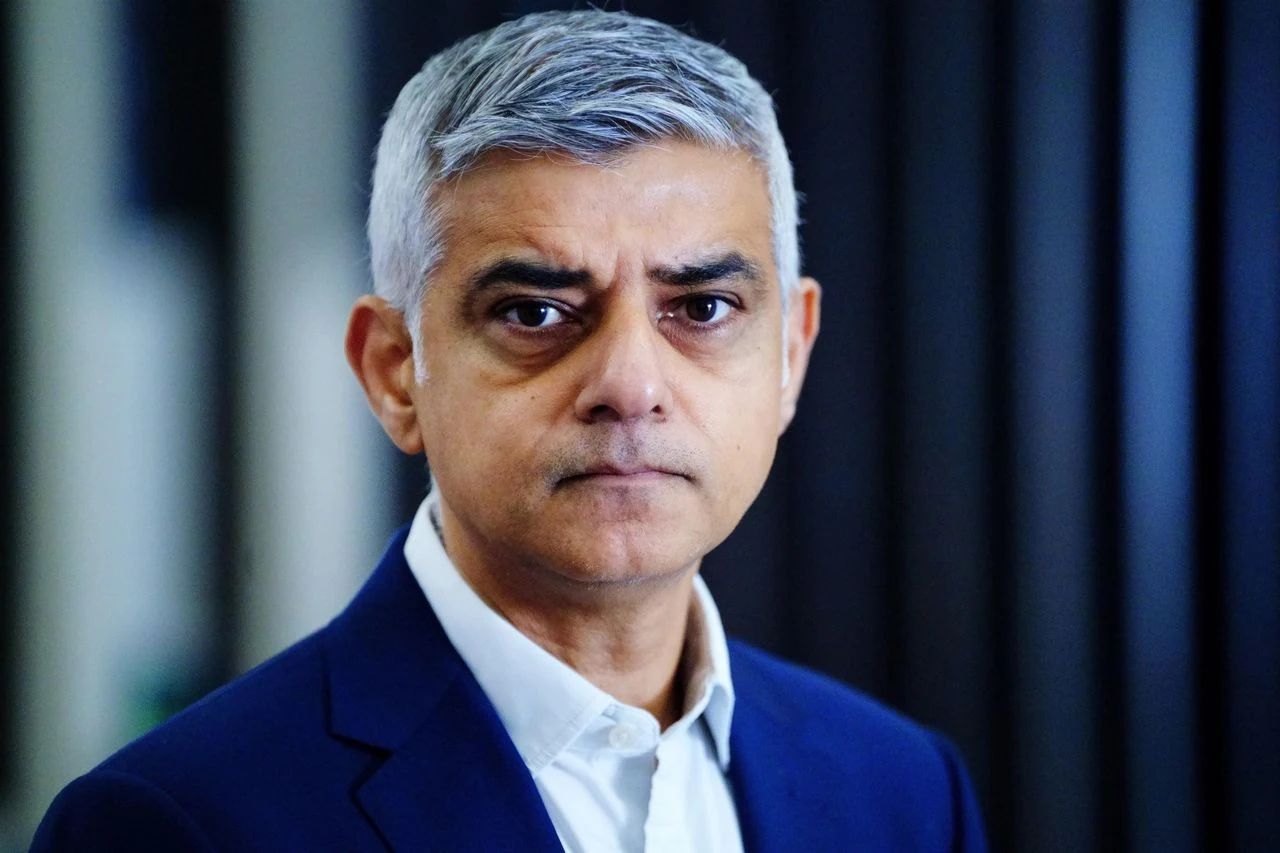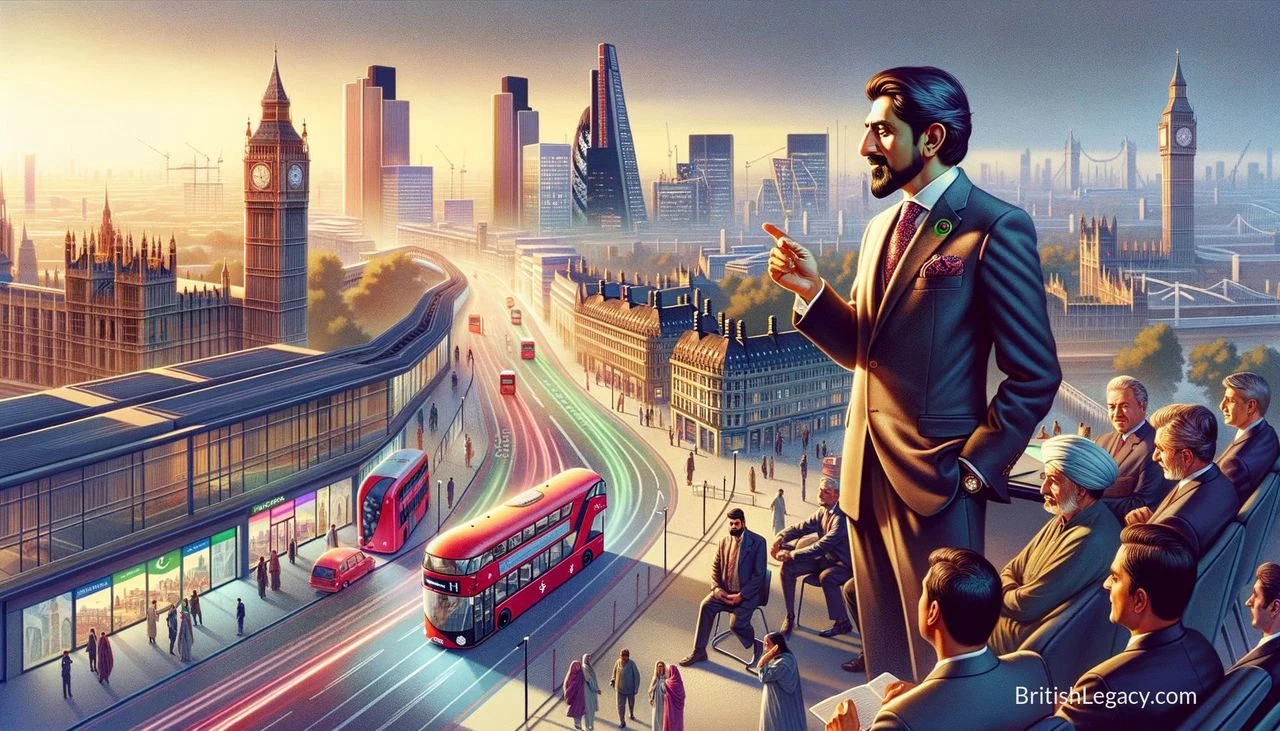
Sadiq Khan’s route to City Hall ran from Tooting through human-rights law and Parliament. Elected Mayor of London in 2016, he made transport, housing and the environment prominent parts of his mayoralty. The policies associated with his time in office affect how Londoners move around the city, how the capital plans for homes and how it responds to air pollution.
Tooting, law and Parliament
Khan was born in Tooting, south London, to Pakistani immigrant parents. His father drove buses and his mother worked as a seamstress; the family lived on a council estate. Those details place his early life within the same city whose government he would later lead, though they do not need to be turned into a ready-made tale of triumph. His path into public life began in law, where he worked as a human-rights solicitor.
In 2005, Khan entered Parliament as Labour MP for Tooting. His legal work and constituency role brought questions of justice and equality into his political career. A decade later, his election as Mayor made him the first Muslim to hold the office. The move from representing a south London constituency to leading the capital’s elected city government also changed the scale of his responsibilities: mayoral decisions reach across London and touch everyday services as well as longer-term planning.
Transport: fares, night services and cleaner travel
Transport was a central part of Khan’s programme. The Hopper fare allowed passengers to make unlimited bus and tram journeys within an hour for the price of one fare. Its practical focus was the cost of changing services: a journey involving more than one bus or tram could be made without paying a separate fare for each leg during that period. The policy was presented as particularly helpful to Londoners on low incomes, for whom the cost of travel can shape access to work and other parts of city life.
The Night Tube also expanded overnight travel on key lines during Khan’s mayoralty, extending the hours in which some of the Underground network operated. Alongside these services, his transport approach placed emphasis on cycling infrastructure and low-emission buses. These measures address different parts of the transport system: fares and operating hours concern passengers’ access, while cycling provision and bus emissions concern the options and impacts associated with travel.
Housing and air quality
Housing was another defining issue. London faced high living costs and a shortage of affordable homes, and Khan’s agenda included increasing their supply. His administration backed the building of new council homes and sought tougher requirements for developers. The London Plan set out a framework for delivering thousands of homes each year, with a significant proportion intended to be affordable. The scale of the ambition matters, but the stated aim should not be confused with proof that every planned home was delivered.
Khan also pursued the Ultra Low Emission Zone (ULEZ), which began in central London and was later expanded. It charges vehicles that do not meet emissions standards, using the cost of entering the zone to encourage the use of cleaner vehicles and other ways of travelling. The policy made air quality a visible part of the debate over how London should manage traffic: it was a direct intervention affecting drivers, rather than simply a broad environmental pledge.
Representation and the wider reach of City Hall
Khan has spoken against Islamophobia and antisemitism and supported LGBT+ communities. As London’s first Muslim Mayor, his public role also carried a representational significance beyond the policies of City Hall. That distinction is worth keeping clear: holding a barrier-breaking office is a fact about his place in the city’s political life, while claims that it automatically produced social cohesion or changed attitudes require evidence beyond the claims made here.
His work has also been associated with international forums and collaborations on urban sustainability and inclusion. Those activities gave London a platform in discussions about city governance, but sweeping claims that they transformed Britain’s standing abroad would overstate what can be established. The more concrete record is the combination of a large city’s local responsibilities—transport, housing and air quality—with a mayor who has taken those questions into wider public debate.
Why Sadiq Khan deserves a place in British Legacy
Khan’s place in British Legacy rests on a specific connection between personal representation and the practical government of London. Born in Tooting to Pakistani immigrant parents, the son of a bus driver and a seamstress, he went on to represent Tooting in Parliament and lead the capital as its Mayor. His election as the first Muslim Mayor of London marks an important milestone in the city’s public life. It is a substantial part of his story, but his legacy is not only symbolic: it is also visible in choices about fares, night travel, homes and emissions.
The Hopper fare, the Night Tube, plans for affordable and council housing, and the ULEZ show the range of issues a London mayor can influence. Each responds to a different pressure on urban life: the cost and timing of travel, the availability of homes, and pollution from vehicles. These policies also make clear that public leadership involves decisions with direct consequences for residents, rather than only statements of aspiration. Khan’s career—from human-rights solicitor to MP and Mayor—therefore belongs in a British account of representation and city government. Its significance lies in the documented offices he has held and the concrete policy areas he has pursued, not in unsupported claims of universal success.