
Sam Taylor-Johnson’s career has moved between the gallery, the portrait and the cinema without leaving moving images behind. She first attracted attention as a visual artist, making multi-screen video works and photographs that placed familiar cultural figures in carefully constructed scenes. Later, she directed feature films about John Lennon and Amy Winehouse, as well as the adaptation of Fifty Shades of Grey. The journey from London’s contemporary art world to international cinema is not a change of subject so much as an expansion of her working methods.
Finding a place in British art
Born Samantha Louise Taylor-Wood in Croydon, London, on 4 March 1967, she attended Beacon Community College before studying at Goldsmiths, University of London. She began exhibiting fine-art photography in the early 1990s and became associated with the group known as the Young British Artists. Her early projects drew on photography, performance and film, often using the moving image to make a gallery work feel like an event unfolding in front of its audience.
In 1993, she collaborated with artist Henry Bond on 26 October 1993. The two reprised the roles of Yoko Ono and John Lennon in a pastiche of Annie Leibovitz’s portrait of the couple, made hours before Lennon’s assassination in 1980. The work set a pattern that would recur in Taylor-Johnson’s practice: images could borrow from public memory while making the act of looking part of the subject.
Her 1994 work Killing Time used four screens to show people miming to an opera score. Multi-screen video then became a central focus, including Travesty of a Mockery and Pent-Up, both made in 1996. That year she held a solo show at Chisenhale Gallery in east London. The following year she won the Illy Café Prize for Most Promising Young Artist at the Venice Biennale, and in 1998 she was nominated for the Turner Prize.
Portraits, public figures and moving images
In 2000, Taylor-Johnson created a large photomural around the scaffolding of Selfridges while the London department store was being restored. Its 21 cultural figures included Elton John, Alex James, Richard E. Grant and Ray Winstone. Their poses referred to artworks and films, bringing familiar faces into a playful conversation with earlier images. She also photographed the cover and sleeve for Elton John’s 2001 album Songs from the West Coast.
The National Portrait Gallery commissioned her video portrait David in 2002. It showed footballer David Beckham asleep, turning a well-known public figure into the still subject of an extended moving-image portrait. Taylor-Johnson’s photographic series Crying Men, made between 2002 and 2004, took a different approach to celebrity portraiture. It depicts actors including Robin Williams, Jude Law and Laurence Fishburne crying. Rather than presenting fame as polished composure, the series records visible vulnerability and makes emotion central to the image.
Her work continued to cross artistic forms. In Strings, a 2004 installation at White Cube, ballet dancer Ivan Putrov was suspended above four musicians playing the slow movement of Tchaikovsky’s Second String Quartet. In 2006 she contributed the short film Death Valley to the British version of Destricted and became a Governor of the British Film Institute. That year, the Baltic Centre for Contemporary Art in Gateshead presented a survey exhibition of her work.
From Nowhere Boy to feature films
Taylor-Johnson’s first feature as a director was Nowhere Boy, a film about John Lennon’s childhood. She was chosen to direct it in 2008. The film closed the 53rd London Film Festival in October 2009 and was released in the UK on Boxing Day that year. It received positive reviews, and Taylor-Johnson was nominated for a BAFTA in January 2010. The project brought her earlier interest in images of Lennon into a different form: a feature-length account of the experiences surrounding his youth.
In 2008, she also directed the short film Love You More, written by Patrick Marber and produced by Anthony Minghella. Its story included two songs by the Buzzcocks and a cameo from the band’s lead singer, Pete Shelley. In 2009, she worked with Sky Arts on an interpretation of “Vesti la giubba” from Pagliacci. These projects sit alongside her gallery work as evidence of a career that has not been confined to one screen size or format.
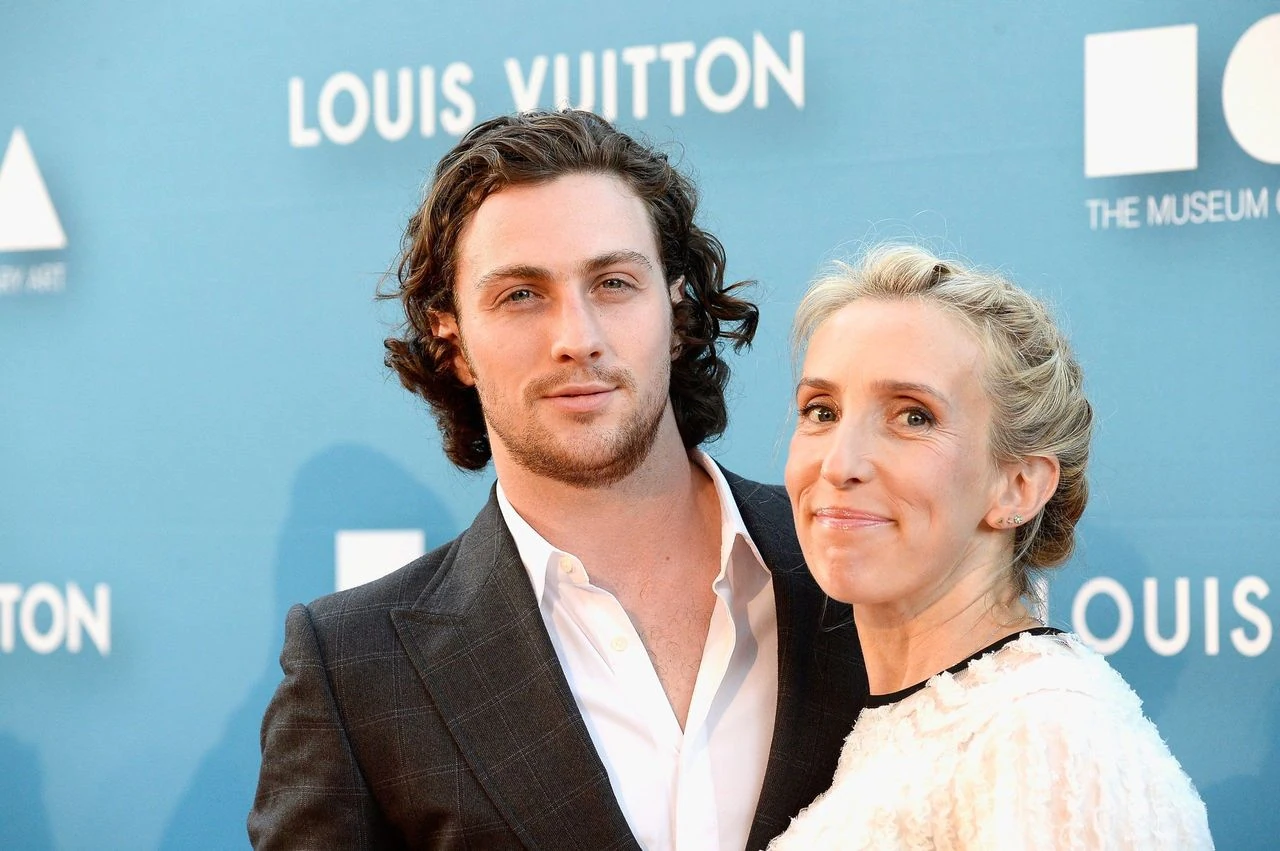
In 2011, Taylor-Johnson directed the R.E.M. music video “Überlin”, starring Aaron Johnson. She later directed Fifty Shades of Grey, the 2015 film adaptation of E. L. James’s novel. The sequel was widely discussed, but Taylor-Johnson decided not to direct it after disagreements with James. In 2017, she said she regretted directing the first film. Her other feature work includes A Million Little Pieces (2018), which she directed, wrote and produced.
In 2014, she exhibited Second Floor at the Saatchi Gallery: 34 photographs of Coco Chanel’s private apartment at 31 Rue Cambon in Paris. In July 2022, it was announced that Taylor-Johnson would direct Back to Black, a biographical film about British singer Amy Winehouse. Filming began in London in January 2023, and the film was released in 2024.
Recognition and a career across forms
Taylor-Johnson was appointed an Officer of the Order of the British Empire in the 2011 Birthday Honours for services to the arts. The honour recognises a career that spans British visual art, cultural institutions and filmmaking. Her work has included commissions for the National Portrait Gallery, a major London department store and music artists, alongside gallery installations, short films and feature-length cinema.
Her photographs and video works often begin with people or images already present in public life. Beckham asleep, actors crying, Lennon recalled through a staged portrait, and cultural figures arranged across Selfridges’ façade: each project changes how its subject is encountered. The later films use a different scale and production context, but retain an interest in real people and stories that have already acquired public significance.
Why Sam Taylor-Johnson deserves a place in British Legacy
Sam Taylor-Johnson merits a place in British Legacy for the range of her contribution to the country’s visual culture. Her early work developed in the British art world of the 1990s, from the multi-screen video experiments of Killing Time to solo exhibitions and recognition at the Venice Biennale and the Turner Prize. Her large Selfridges mural placed contemporary portraiture on a prominent London building, while her commission for the National Portrait Gallery took the form of a video portrait rather than a conventional still image. These works show an artist testing how photography, film and public display can alter the way people are seen.
Her move into directing extended that practice to wider audiences. Nowhere Boy brought a British story about John Lennon’s early life to cinemas, and Back to Black made the life and career of another British singer the subject of a feature film. Alongside those projects, her work for the British Film Institute and her OBE for services to the arts connect her individual career with the institutions and cultural recognition that sustain British film and art. Her legacy lies not in a single medium, but in demonstrating how an artist can carry visual ideas between galleries, public spaces and cinema while remaining attentive to the people at the centre of each image.
Sources
Adapted in part from Sam Taylor-Johnson by Wikipedia contributors, under CC BY-SA 4.0. Text has been edited and combined with the existing article; this adapted text is shared under the same licence. Contributor history.
.jpg)