The Cadbury family’s place in British industrial history rests on more than chocolate. Beginning with John Cadbury’s Birmingham cocoa business, the family built a major confectionery enterprise and pursued a distinctive idea about the responsibilities of employers. Bournville, the factory and community developed by his sons Richard and George, brought those strands together: production, workers’ welfare and the creation of a planned place to live.
From Birmingham cocoa to Bournville
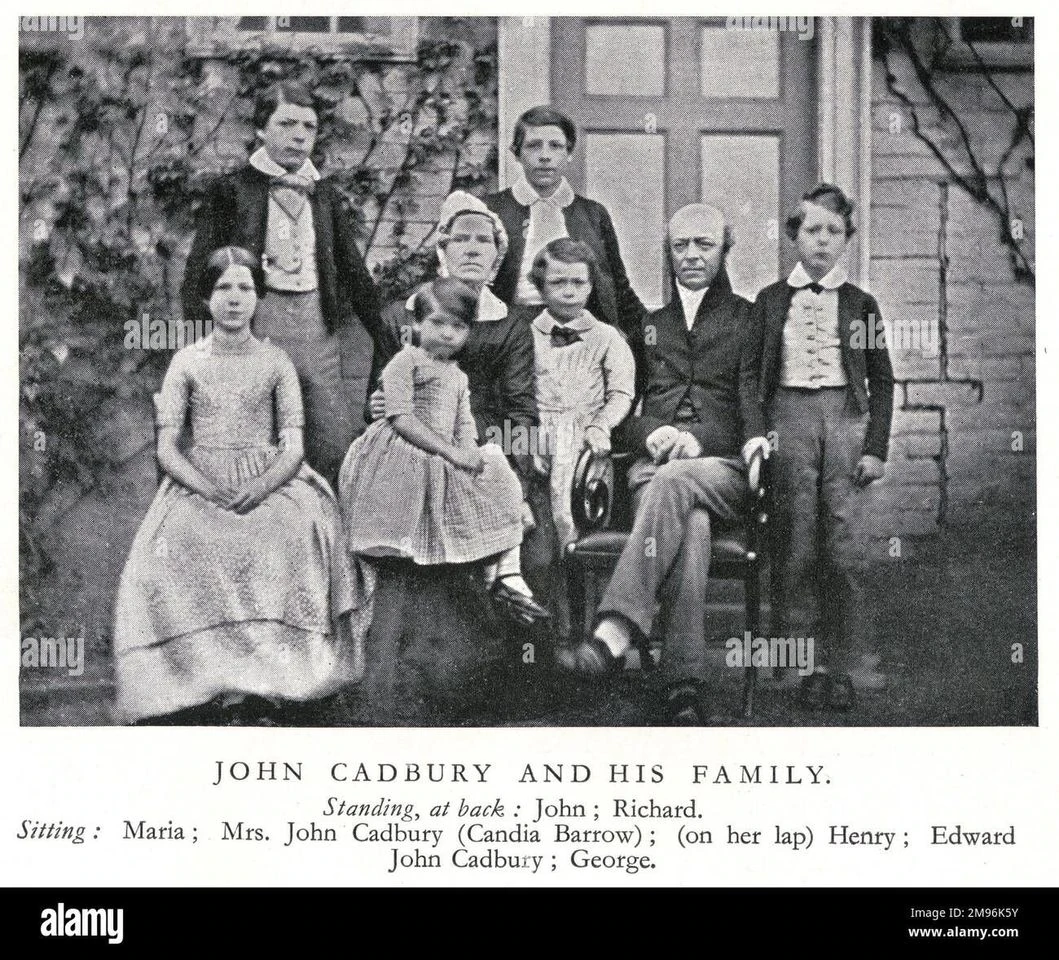
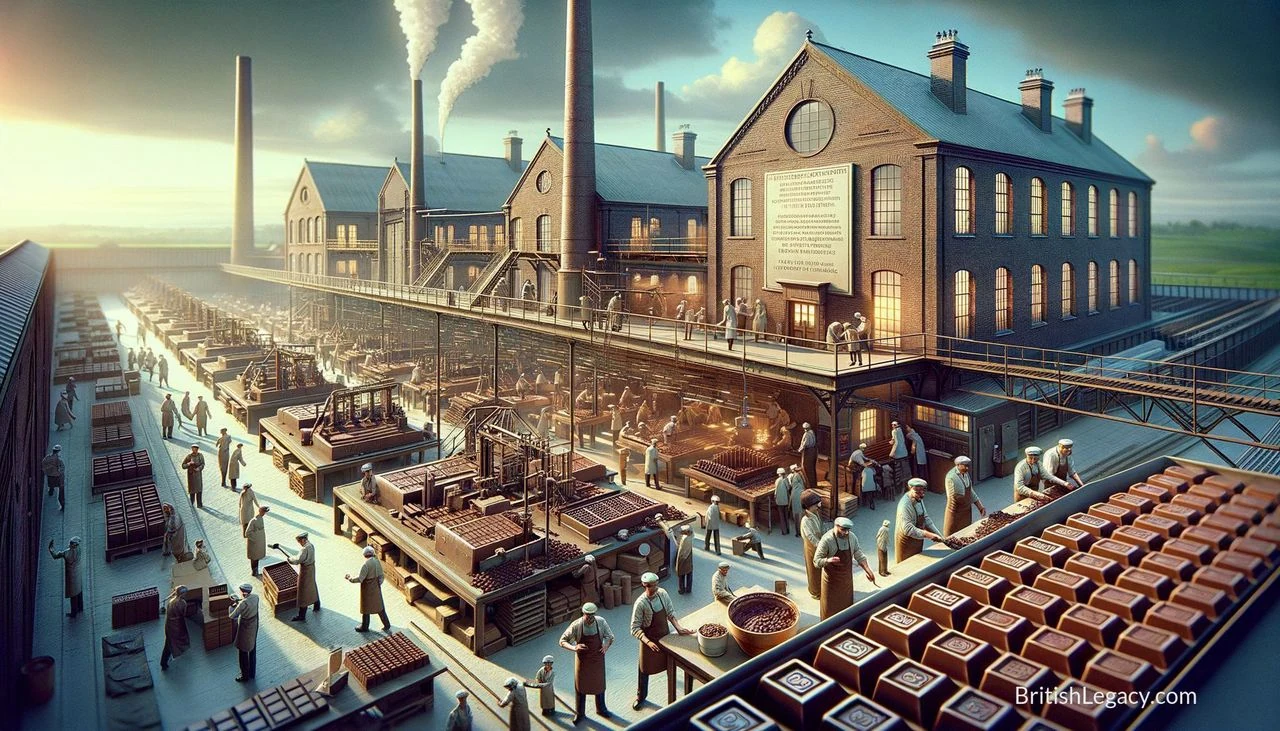
John Cadbury, a Birmingham Quaker, began selling drinking chocolate and cocoa in 1824. His religious background forms part of the family’s account of its business and philanthropic outlook. The enterprise expanded under his sons Richard and George, who established the Bournville factory in 1879. The move took production from the city centre to a site south-west of Birmingham; the factory became the starting point for a wider community.
Bournville was intended to offer more than a place to work. The Cadburys’ plans included housing, schools, hospitals and recreational facilities for employees. The village expressed their belief that workers’ welfare belonged alongside the needs of the business. It also made the surroundings of industrial production part of their approach: the factory and the community were conceived together, rather than as separate concerns.
The family’s example has often been connected with later ideas about corporate social responsibility. That connection is best understood through what they established at Bournville: a community with facilities for workers beyond the factory itself. The model joined employment to aspects of everyday life, and presented welfare as a responsibility that could be built into the organisation of a business.
Chocolate, products and public identity
The company’s commercial achievement developed alongside this social programme. Cadbury Dairy Milk was introduced in 1905 under the leadership of Richard and George. The brand became familiar in British homes, while the company’s products also found customers overseas. Chocolate-making gave the family its public profile, but the history of the business also involved decisions about how production and a workforce should be supported.
The family’s account links Cadbury’s identity with quality, tradition and ethical production. Its distinctive purple packaging became closely associated with the brand. Such claims describe how the company presented itself and how its products were recognised; they should not be mistaken for a detailed account of every business practice. The broader point is that commercial identity and the Cadburys’ social aims developed side by side in the public story of the company.
Philanthropy and social reform
The Cadburys’ activities extended beyond Bournville. They supported educational causes, including the establishment of the University of Birmingham, and took part in charitable work. The family was also associated with the Temperance movement, reflecting an interest in social reform and healthier ways of living. These efforts widened the scope of their public influence beyond manufacturing and employment.
That combination of business and philanthropy is central to the family’s reputation. Their work included creating a product range, developing a factory community and supporting causes outside the company. The scale and character of those activities should not be collapsed into a single claim that every outcome was beneficial. What can be seen in the family’s history is an attempt to make commercial success and social provision parts of the same enterprise.
Why the Cadbury family deserves a place in British Legacy
The Cadbury family deserves a place in British Legacy because its history connects a recognisable British business with a specific experiment in industrial welfare. John Cadbury began selling cocoa and drinking chocolate in Birmingham; Richard and George developed that enterprise and established the Bournville factory in 1879. Their plans for housing, schools, hospitals and recreation for employees made the community around the factory part of the family’s industrial story. Bournville gives substance to the Cadburys’ stated concern for workers: it was not only an idea about responsible business, but a settlement organised to provide facilities beyond the workplace.
The family’s influence also reached into products and public life. Dairy Milk, introduced in 1905, became one of the company’s well-known products, while support for education, charitable activity and the Temperance movement extended the family’s interests beyond chocolate manufacture. These strands matter together. The Cadburys show how one British family used commercial enterprise to build a lasting business while also pursuing community development and social reform. Their legacy is not simply a story of success or benevolence; it is a record of the relationship they sought to create between industry, workers and the wider community.