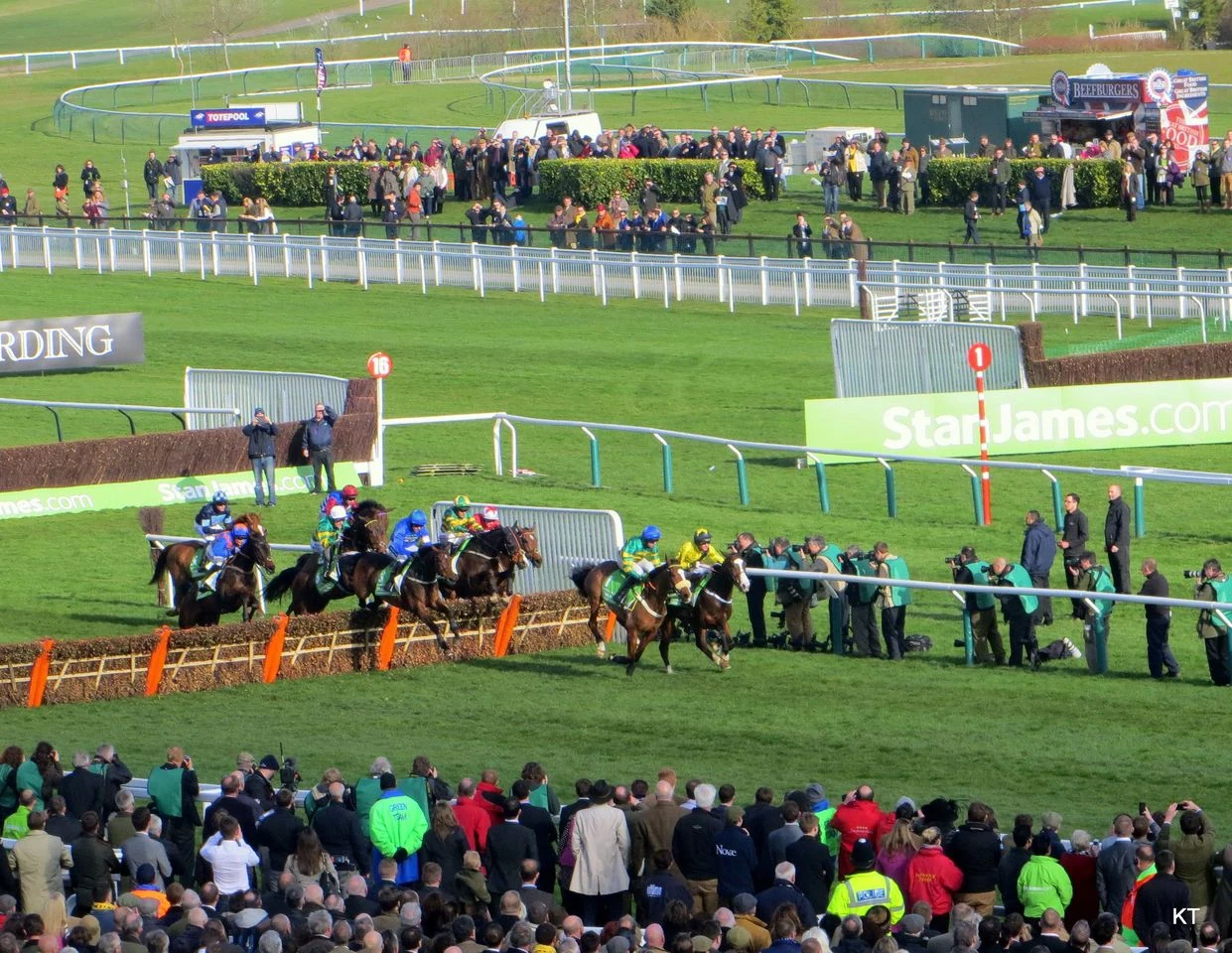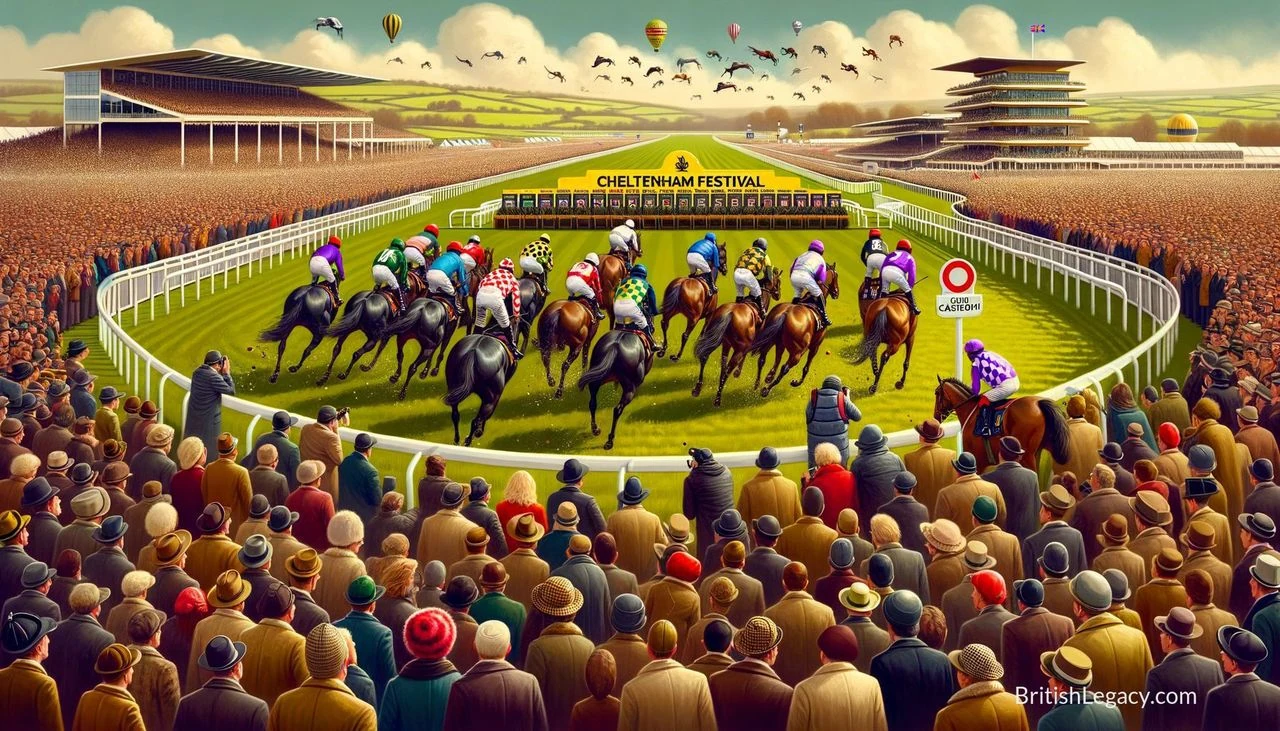
Each March, the Cheltenham Festival brings four days of National Hunt racing to Gloucestershire. Its best-known contest, the Cheltenham Gold Cup, has been run since 1924; its wider identity rests on a packed race programme, an excited crowd and the annual gathering of racing fans in the town. The Festival is both a sporting event and a social occasion, with a local setting and an audience that reaches well beyond the Cotswolds.
A meeting shaped by racing history
Horse racing at Cheltenham Racecourse dates to the early 19th century, while the modern Festival took shape in the early 20th century. It developed into a four-day meeting centred on National Hunt racing, the discipline that provides the Festival’s programme. That history gives the event a place in British racing, but its continuing draw also depends on the contests themselves: horses, jockeys and trainers arrive to compete across a sequence of races watched by spectators at the course and audiences further afield.
The Gold Cup is the meeting’s most prominent race. First run in 1924, it is a steeplechase and a major test of stamina and skill for horse and jockey. Its winners include Arkle, Best Mate and Kauto Star, names that have become closely associated with the race. For those competing, victory brings a place in the Gold Cup’s history as well as the prize. For spectators, the contest supplies a focal point within a broader programme of racing.
The roar and the occasion
The crowd’s cheer as the first race begins is known as the “Cheltenham Roar”. It captures the noise and anticipation that greet the start of the meeting, and helps distinguish the Festival’s atmosphere from the quieter business of following a racecard. The audience includes committed racing followers, punters and first-time visitors. Their shared attention to the races creates the sense of a collective occasion, while the meeting’s rituals and social life extend beyond the course.
Dress is one visible part of that occasion. Tweeds, hats and fascinators feature among the Festival crowd, making the meeting a social gathering as well as a day at the races. These traditions contribute to its recognisable character without displacing the sport at its centre: the horses and jockeys, the competition between them and the anticipation of each start.
A local event with an international audience
The Festival draws visitors to Cheltenham and the surrounding Cotswolds. The event’s reach is also international: horses, trainers and jockeys from outside Britain compete, while broadcasts carry the races to viewers around the world. That combination connects a meeting rooted in Gloucestershire with a wider racing audience, and gives the town an annual occasion with visibility beyond the region.
The meeting is also associated with economic activity for local businesses, including hotels, restaurants and retailers, and with employment connected to staging the event. Sponsorship and media rights are further parts of its commercial profile. The Festival’s broader significance, then, lies not only in its famous race but in the recurring influx of people, attention and activity around a four-day sporting programme.
Why The Cheltenham Festival deserves a place in British Legacy
The Cheltenham Festival merits a place in British Legacy because it brings a particular British sporting tradition into focus. Its roots in racing at Cheltenham stretch back to the early 19th century, and the modern meeting has grown into a four-day National Hunt fixture. The Gold Cup, first run in 1924, gives that history a clear focal point. Winners such as Arkle, Best Mate and Kauto Star are part of the race’s story, while each new contest renews its place in the sport.
Its legacy is not confined to the course. The “Cheltenham Roar”, the gathering of racing followers and first-time visitors, and the Festival’s international competitors and broadcast audience connect a local event to a wider public. Visitors also bring activity to Cheltenham businesses, while the meeting supports event-related employment and generates sponsorship and media-rights revenue. Together, these features explain the Festival’s significance: it combines sport, shared public ritual and a lasting connection to its Gloucestershire home.