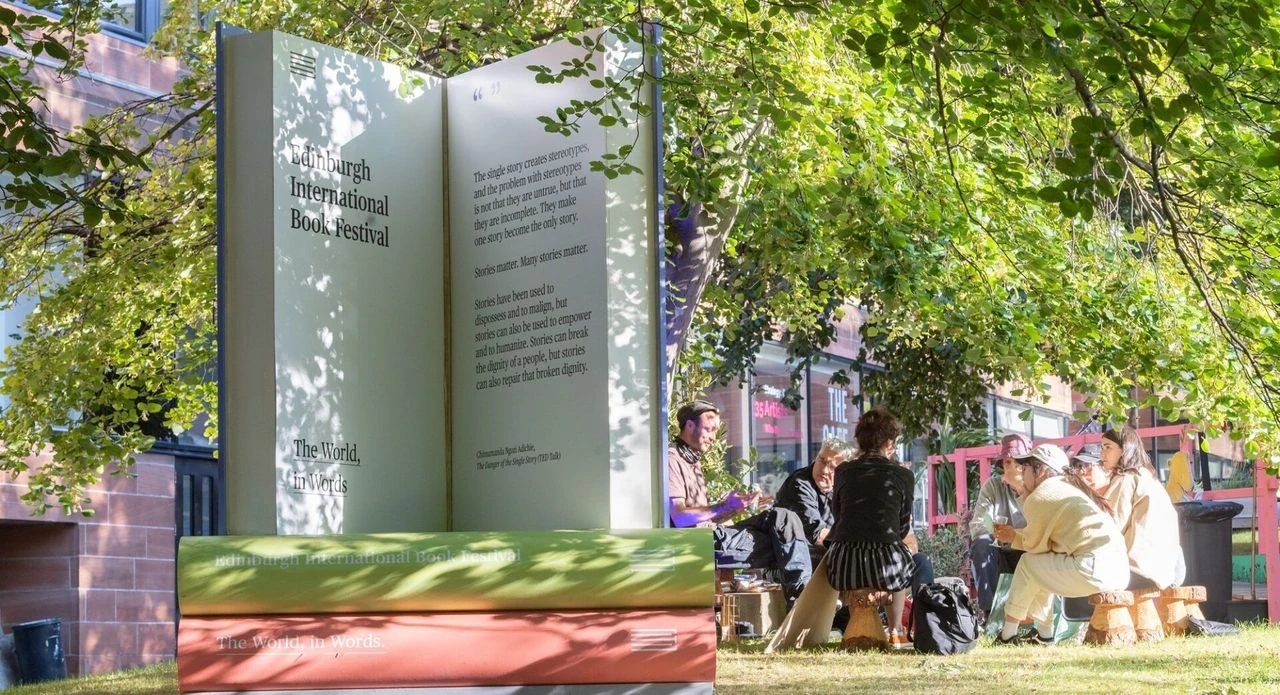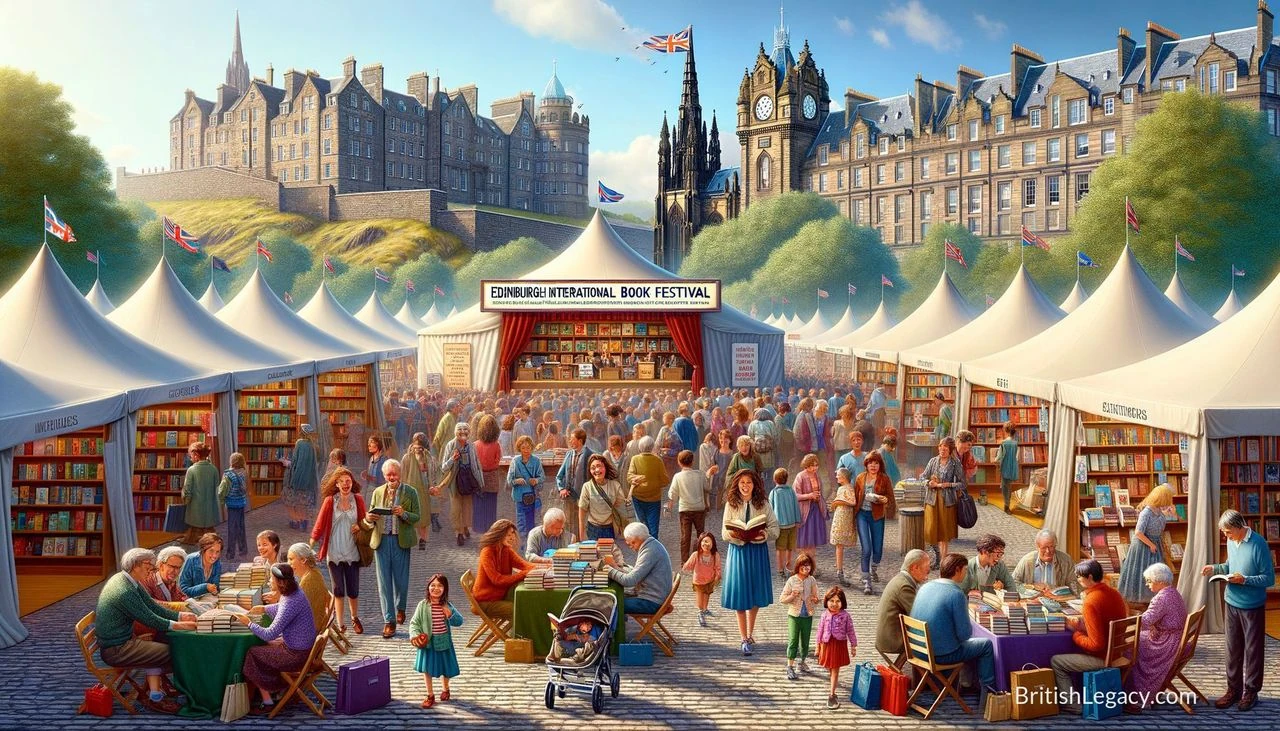
Each year, the Edinburgh International Book Festival brings writers and readers together in Scotland’s capital. Its programme combines author events and readings with discussions that can range beyond literature into politics, science, technology and philosophy. The festival’s appeal lies not only in meeting established writers, but in making room for emerging voices, younger readers and the exchange of ideas.
From a small programme to a major festival
The festival began in 1983 with 30 events. The original account describes its later programme as exceeding 800 events and attracting more than 230,000 visitors. Those figures are presented here as reported scale rather than a guarantee of the programme in any particular year. The festival has been associated with Charlotte Square Gardens, where its events have drawn audiences to a setting in the heart of Edinburgh.
Its programme brings together writers and thinkers across genres and disciplines. The original account names Ian McEwan, Margaret Atwood and Noam Chomsky among figures who have featured. Alongside appearances by established authors, the festival presents opportunities to encounter emerging writers and to hear discussion of subjects beyond books themselves.
Readers of different ages, ideas from many fields
Children and young people are part of the festival’s audience. The account describes a Schools Programme and family events, including storytelling workshops, interactive performances and book signings. Such events give younger readers a direct encounter with authors and stories, rather than treating the festival solely as an adult literary gathering.
Discussion is another strand of the programme. Conversations and debates connect writing with contemporary questions, including politics, science, technology and philosophy. The festival’s account also emphasises international participation and a range of perspectives, including work addressing multiculturalism, gender equality and social justice. Taken together, these elements place literature in conversation with the wider concerns that shape public life.
Edinburgh and the wider audience
The festival forms part of Edinburgh’s cultural life and contributes to the city’s reputation as a destination for literary events. The original article links the festival’s work to Edinburgh’s recognition as a UNESCO City of Literature; it does not establish the extent of that contribution, so the festival is best understood as part of the city’s broader literary presence rather than its sole cause.
The account also describes digital activity, including streamed events and podcasts, as a way to reach audiences beyond those attending in person. These formats extend the possibility of listening to festival discussions beyond the event venue. The festival’s international outlook and its Edinburgh base therefore meet in two ways: visitors gather in the city, while recordings and online events can travel further.
Why The Edinburgh International Book Festival deserves a place in British Legacy
The Edinburgh International Book Festival deserves a place in British Legacy because it gives literature a public meeting place in Scotland’s capital. Its programme brings authors, readers and thinkers into the same conversation, and its discussions allow books to open onto questions of politics, science and society. That range matters: a literary festival can make ideas accessible not just through reading, but through listening, debate and the chance to encounter writers directly.
Its attention to schools, families and younger readers gives that public role a longer horizon. Storytelling, performances and author events invite children and teenagers into literary culture, while the international programme makes room for different voices and perspectives. The festival’s digital events and podcasts can carry some of those conversations beyond Edinburgh. Together, these features connect a distinctively Scottish cultural institution with a wider British literary life: rooted in a city, open to global writing and designed to bring readers of different ages into contact with books and ideas.