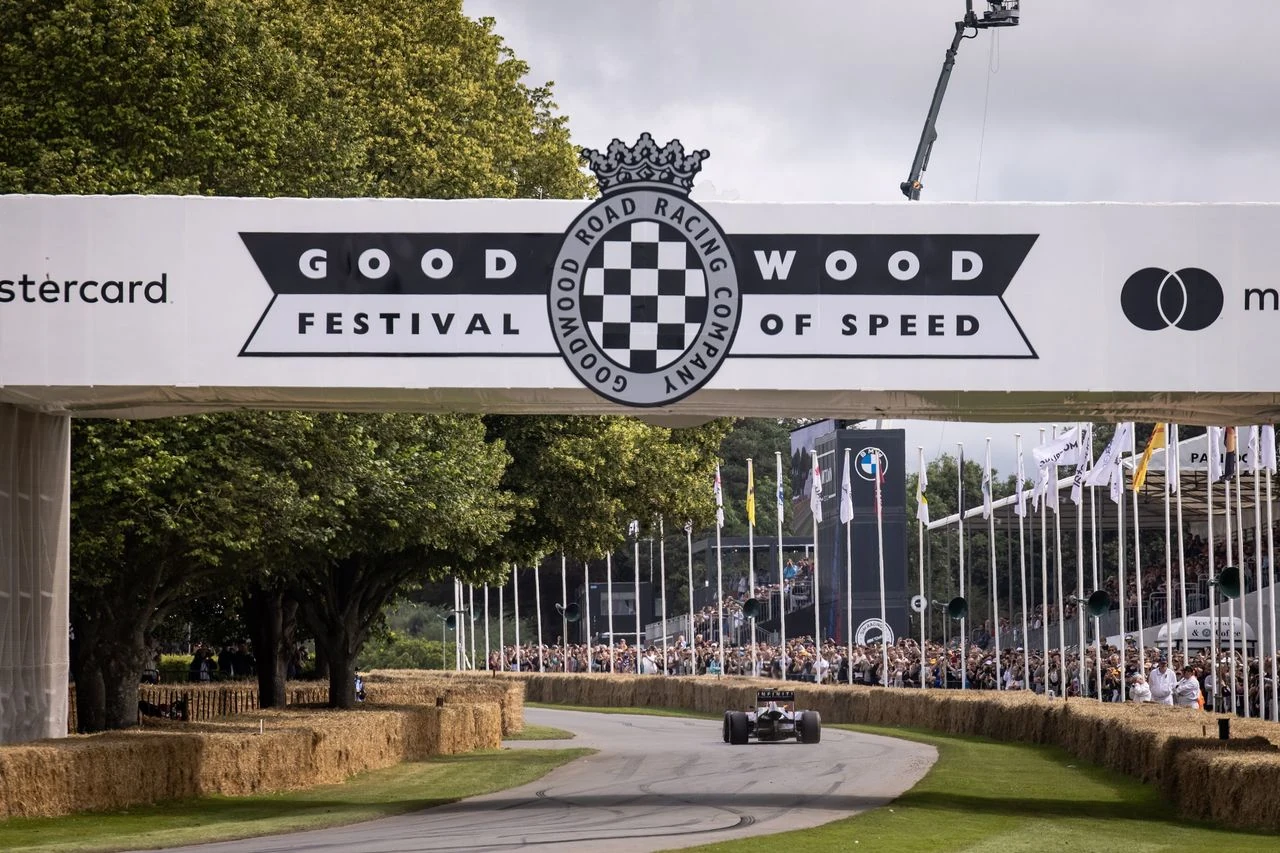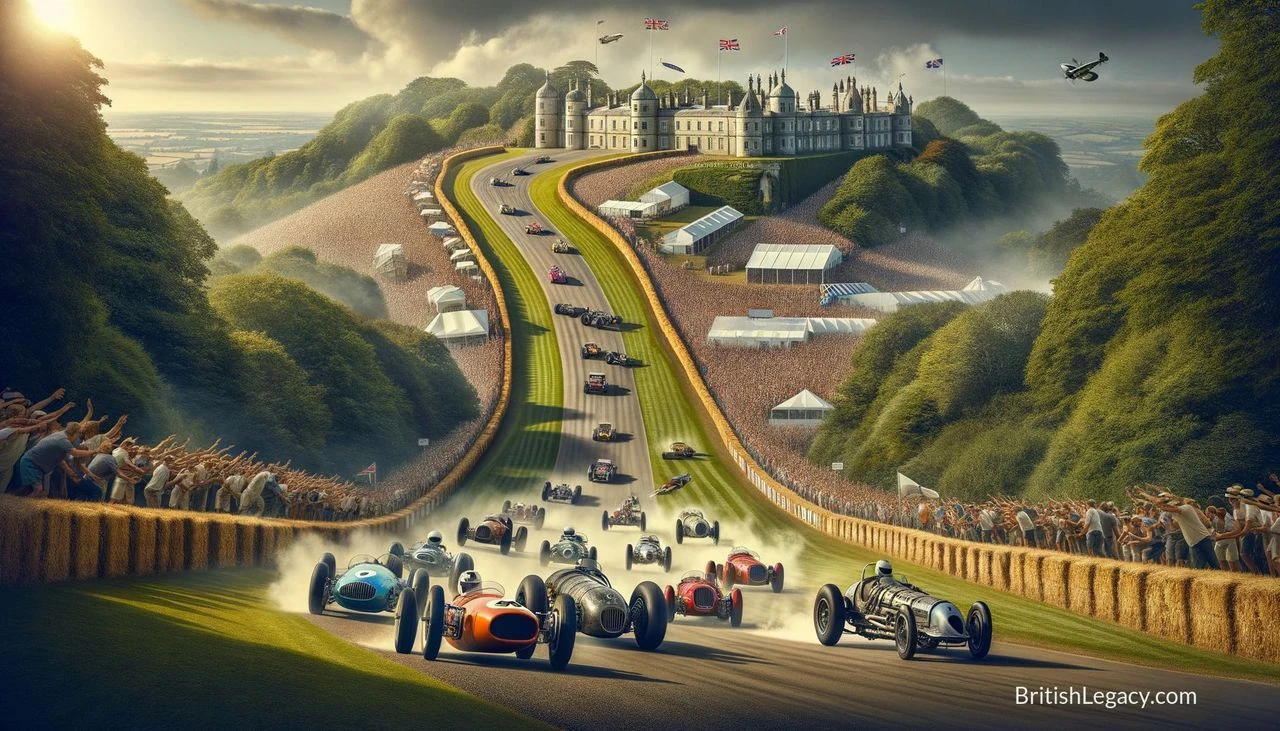
At Goodwood, motor racing history is not kept behind glass. The Festival of Speed brings historic and contemporary vehicles to the same West Sussex estate, where they are displayed and driven up a hill-climb course. Its appeal rests on that meeting of eras: classic machinery and modern supercars share the event with Formula 1 cars, electric vehicles and other visions of motoring’s future.
A festival returns motor sport to Goodwood
The Festival of Speed began in 1993. Charles Henry Gordon-Lennox, the 11th Duke of Richmond, established it with the aim of bringing motor sport back to the historic Goodwood Estate. The event has since grown from a gathering of racing enthusiasts into an international festival attracting visitors and participants from around the world.
Goodwood House, in the countryside of West Sussex, gives the event its particular setting. The festival’s history is not simply a backdrop: the cars themselves are part of its subject. The programme places machines from different periods alongside one another, making the development of motoring visible through the vehicles and engineering on display.
The hill climb and its changing machinery
The hill climb is the festival’s central attraction. The 1.16-mile course combines straights with twists and turns, and provides a route for modern cars to tackle at speed as well as historic vehicles to be seen in motion. The event’s hill-climb format gives the festival a competitive edge, while its range of machinery makes it a celebration of motor racing history as well as a test of performance.
The cars span a broad sweep of motoring. The festival has featured everything from Edwardian steam-powered vehicles and 1920s Bentleys to 1950s Le Mans winners, Formula 1 cars and contemporary hypercars. Electric vehicles also form part of its display. Rather than separating old and new, Goodwood puts them in the same setting, letting visitors encounter very different technologies within a single event.
Drivers, visitors and new technologies
Well-known names from motor sport have appeared at the festival, including Sir Stirling Moss, Jackie Stewart and Lewis Hamilton. Their presence adds to the event’s connection with racing history, while the mix of vehicles and displays offers visitors with different levels of knowledge a way into the subject. The festival combines public access with a high-profile atmosphere.
Its audience is international, and the event has been described as a draw for visitors from overseas as well as the UK. That reach gives the festival a role in presenting Goodwood and West Sussex to motoring enthusiasts. Its importance is not only in the hill climb itself, but in bringing visitors together around a shared interest in speed, engineering and the history of cars.
The display also looks beyond conventional racing machinery. The festival has given attention to electric and hybrid vehicles and to fuel-efficient engineering, reflecting wider changes in the technologies used to power cars. It offers a setting in which the future of motoring can be shown alongside its past. That does not erase the tension between speed and sustainability; rather, it places emerging technologies within a festival organised around automotive performance.
Why the Goodwood Festival of Speed deserves a place in British Legacy
The Festival of Speed merits a place in British Legacy because it connects a specific British estate and motor-sport tradition with an event that brings historic and modern vehicles together. Founded in 1993 by the 11th Duke of Richmond to return motor sport to Goodwood, it has made the estate a setting for both competition and public engagement with motoring history. Its hill climb, stretching 1.16 miles, gives that history movement: visitors can see vehicles from distinct periods tackle the same course rather than encountering them only as static exhibits.
The festival’s contribution is also its willingness to include contemporary engineering in that historical account. Alongside Bentleys, Le Mans winners and Formula 1 cars, its displays have included electric and hybrid vehicles and developments in fuel-efficient engineering. International visitors and appearances by figures such as Stirling Moss, Jackie Stewart and Lewis Hamilton add to its public reach. The result is a distinctly local event with a wider motor-sport audience, rooted in West Sussex but attentive to the changing machines and technologies that shape motoring.