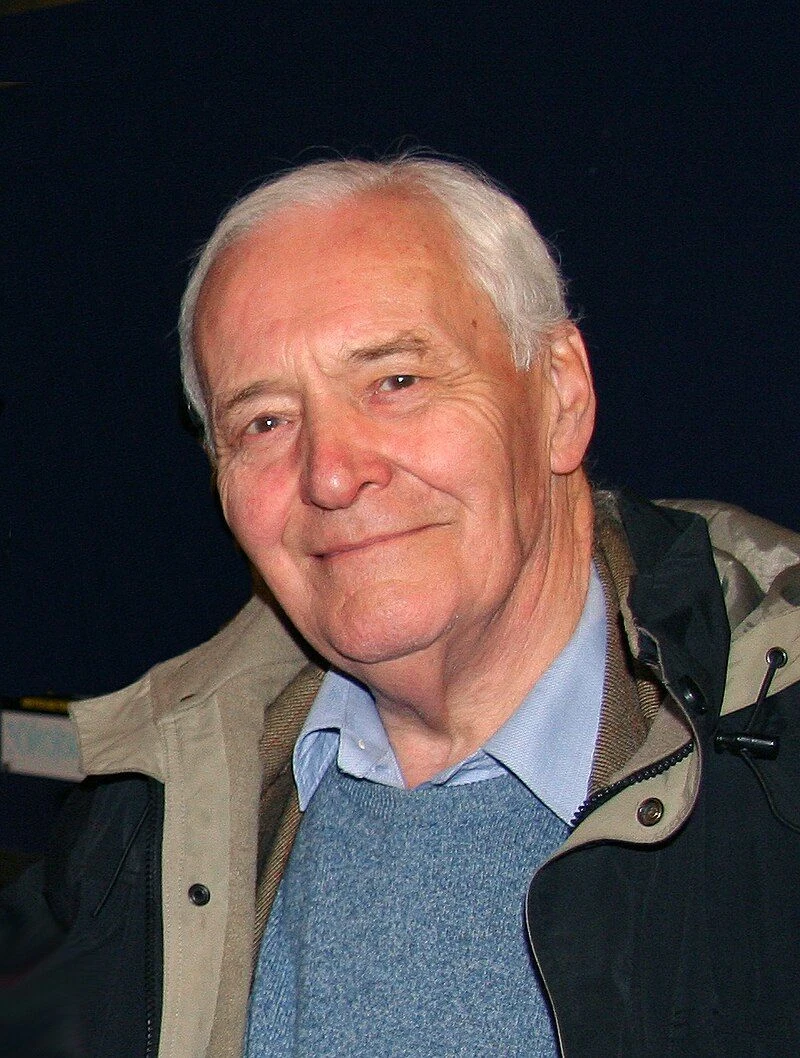
Tony Benn spent much of his political life asking who held power, how it was exercised and whether ordinary people could hold decision-makers to account. He served in Harold Wilson’s governments, campaigned to return to the House of Commons after inheriting a peerage, and later became one of the Labour Party’s most prominent voices on its left. His politics were often contested, but his public work ranged well beyond Westminster: from industrial policy and constitutional reform to anti-war campaigning and a prolific record of diaries, speeches and books.
A political inheritance, and a fight to return to the Commons
Born Anthony Neil Wedgwood Benn in London on 3 April 1925, he was the son of Labour politician William Wedgwood Benn, later Viscount Stansgate, and Margaret Holmes. He was educated at Westminster School and New College, Oxford, where he studied philosophy, politics and economics and was elected president of the Oxford Union in 1947. During the Second World War he served in the Royal Air Force, becoming a pilot officer and flying in South Africa and Southern Rhodesia.
After the war, Benn worked briefly as a BBC radio producer. He entered Parliament in 1950 as the Labour MP for Bristol South East. His Commons career was interrupted in 1960, when his father’s death made him Viscount Stansgate. Under the law then in force, inheriting the hereditary peerage prevented Benn from remaining an MP. He challenged that position, and the Peerage Act 1963 made it possible to disclaim a peerage. Benn was the first to do so; he returned to the Commons after winning a by-election in August 1963.
The episode became an early, practical expression of his interest in the constitution and parliamentary representation. Benn opposed the House of Lords and later proposed a wider constitutional settlement, but his immediate campaign concerned his own right to sit in the elected chamber. He represented Bristol South East until 1983, then served as MP for Chesterfield from 1984 to 2001. Across those constituencies, he was a member of Parliament for 47 of the 51 years between his first election and retirement.
Ministerial work and a changing political outlook
In Harold Wilson’s government, Benn served first as Postmaster General and then as Minister of Technology. As Postmaster General, he oversaw the opening of the Post Office Tower and the introduction of the Post Bus service and Girobank. He also proposed issuing stamps without the monarch’s head; after opposition to the proposal, the portrait was reduced to a small silhouette on stamps. As Minister of Technology, he was involved in the development of Concorde and the creation of International Computers Ltd, during a period of government involvement in industrial reorganisation.
In the Labour governments of 1974–79, Benn served as Secretary of State for Industry and then Secretary of State for Energy. At Industry, he supported improved pay in nationalised industries and better workplace conditions; he was involved in setting up worker co-operatives at struggling firms, including the Meriden factory producing Triumph motorcycles. As Energy Secretary, he supported nuclear power. He later changed his position, saying that his experience in government had persuaded him it was not cheap, safe or peaceful. The shift is one example of how his politics developed through, rather than simply outside, ministerial responsibility.
Benn’s movement towards the Labour left was shaped in part by what he said he had learnt in office: that civil servants, financial pressures, party structures and the media could constrain elected governments. He argued for greater industrial democracy and for stronger participation by party members. In 1971–72, while Labour was in opposition, he chaired its National Executive Committee. During the 1980s he became a leading figure on the party’s left and challenged Neil Kinnock for the leadership in 1988, losing by a substantial margin.
Arguments about Europe, the constitution and civil rights
Benn’s opposition to British membership of the European Economic Community, and later European integration, rested on his concern about democratic accountability. He argued that decision-making power was moving towards institutions that voters could not directly remove. This position brought him into conflict with many in his own party and was not simply a question of national sovereignty: Benn also pursued a broader programme of constitutional change at home.
In 1991 he proposed the Commonwealth of Britain Bill, setting out a vision of a democratic, federal and secular republic. Its proposals included abolishing the House of Lords, creating a House of the People, establishing national parliaments for England, Scotland and Wales, separating church and state, and ending British rule in Northern Ireland. The bill was introduced more than once before his retirement, but did not reach a second reading. It gave parliamentary form to Benn’s argument that democratic accountability required changes not only to policy but to the institutions through which power was exercised.
His interventions also extended to civil rights. He supported gay liberation and voted for decriminalisation in 1967. In opposing Section 28, he warned against giving judges broad power to interpret what it meant to “promote” homosexuality; he later voted for the section’s repeal and for equalising the age of consent. On race, he spoke against the arguments advanced by Enoch Powell in 1968, though his own language in the 1970 election campaign attracted criticism in the press and from Harold Wilson. His record, like his wider politics, should be understood through specific positions and arguments rather than reduced to uncomplicated praise.
From Parliament to public campaigning
Benn chose not to stand again at the 2001 general election, saying he was leaving Parliament to spend more time on politics. He continued to speak and campaign, becoming president of the Stop the War Coalition. He opposed the wars in Afghanistan and Iraq and spoke at the large anti-war demonstration in London in February 2003. He had also travelled to Baghdad in 2003 to meet Saddam Hussein; the interview was broadcast on British television.
He remained a public speaker and performer after leaving the Commons. He toured with a one-man show and appeared regularly with folk singer Roy Bailey; their show was voted Best Live Act at the BBC Radio 2 Folk Awards in 2003. Benn also spoke at Glastonbury and appeared on radio and television programmes, including a 2005 edition of Question Time made by a school-age film crew. His communication was not incidental to his politics: speeches, broadcasts and writing were among the ways he tried to make political arguments accessible beyond Parliament.
Benn was a prolific diarist. Nine volumes of his diaries were published, alongside collections of speeches and political writing and his autobiography, Dare to Be a Daniel. The diaries record both public events and his own changing judgements. In 2002, their publication also revealed that he had been diagnosed with chronic lymphatic leukaemia in 1990. He had a stroke in 2012 and died at home in London on 14 March 2014, aged 88. His funeral took place at St Margaret’s Church, Westminster, and ended with the singing of “The Red Flag”.
Why Tony Benn deserves a place in British Legacy
Tony Benn’s place in British political history rests on a combination of parliamentary service, ministerial responsibility and sustained argument about democratic power. His campaign after inheriting the title of Viscount Stansgate helped bring about a change in the law that allowed hereditary peers to disclaim their titles. He then returned to the Commons and held ministerial office in areas as varied as communications, technology, industry and energy. These episodes show a politician concerned not only with the policies governments pursued but with the rules that determined who could represent the public and how decisions were made.
His legacy also lies in the questions his public work kept in circulation: whether major economic decisions were answerable to voters, how far workers should share in control of industry, and what constitutional arrangements best served a democracy. His proposals for a federal, secular republic did not become law, and his views on Europe and socialism remained controversial. Yet the combination of practical office, constitutional campaigning, published diaries and public speaking gave those debates a durable form. Benn’s career offers British Legacy a specific story of political participation: one in which parliamentary procedure, workplace power and public protest were connected, and in which conviction was expressed through both government service and persistent dissent.
Sources
Tony Benn — Wikipedia revision
Adapted in part from Tony Benn by Wikipedia contributors, under CC BY-SA 4.0. Text has been edited and combined with the existing article; this adapted text is shared under the same licence. Contributor history.