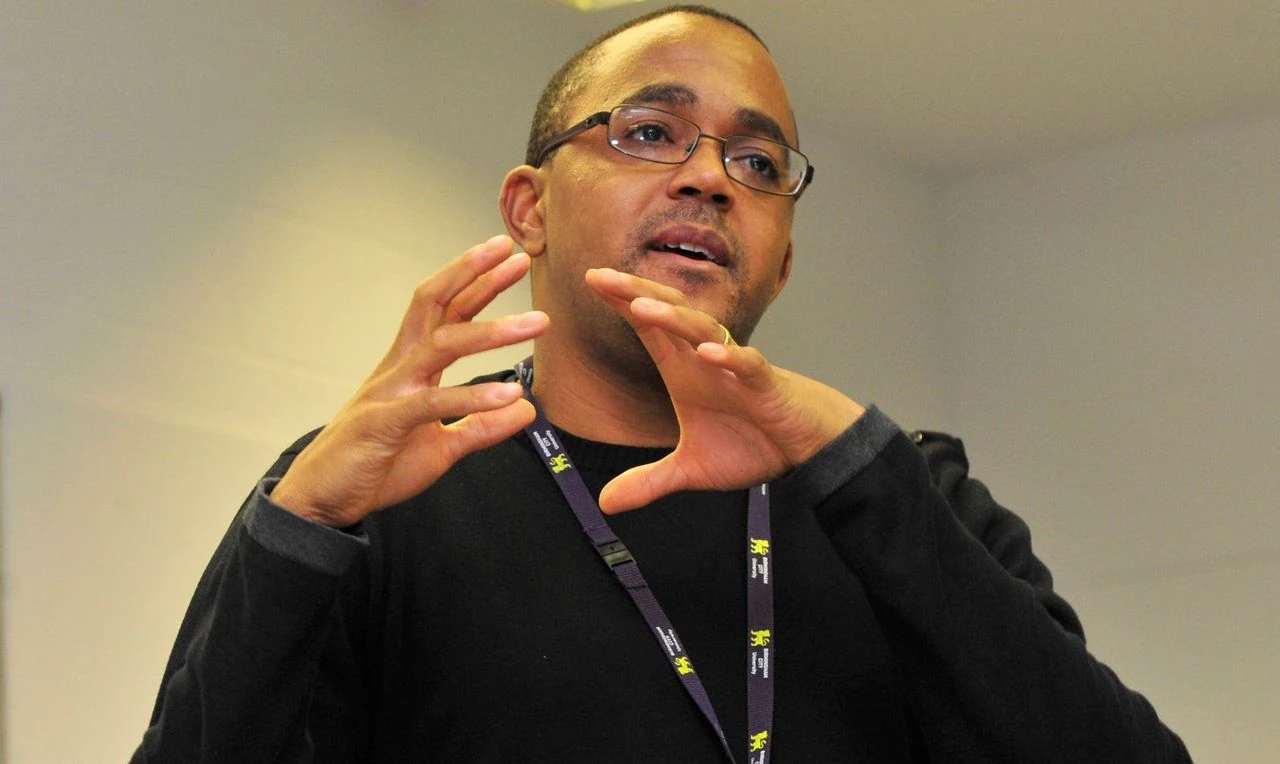
Kehinde Andrews has worked to change not only how Britain discusses race, but what its universities recognise as a field of study. A British academic of African-Caribbean heritage who grew up in Birmingham, he became the United Kingdom’s first professor of Black Studies and helped establish the first Black Studies degree programme in Europe at Birmingham City University. His career connects scholarship about Black history and political thought with community education, publishing and public debate.
That institutional work is central to his significance. Black experience has often been treated as a supplementary subject in accounts of British history and society. Andrews has helped make the case for studying Black political thought, community history, education, culture and resistance as subjects in their own right—and as necessary parts of understanding modern Britain. His work links the creation of a university discipline to questions that reach beyond the campus: what is taught, whose experience is represented and how the legacies of empire are understood.
A discipline, not a footnote
Black Studies is broader than the study of prejudice. It brings history, politics, education, culture and everyday life into conversation through the experiences of African and diasporic communities. Birmingham City University describes the field as rooted in those experiences and concerned with improving conditions locally, nationally and globally. Andrews’s work has helped make that approach more visible in British higher education.
The distinction of becoming the UK’s first professor of Black Studies matters beyond the personal title. A professorship can help a subject acquire an institutional home: a place for teaching, research, supervision and debate. Andrews’s work at Birmingham City University helped develop that foundation, connecting academic study with activism and public life. The change is not simply a matter of adding a new topic to an existing curriculum. It creates room to ask how the curriculum itself has been formed, whose experience it centres and what it leaves out.
The creation of a degree programme was a concrete achievement. A course gives students a route into sustained study and allows a field to develop through teaching and research, rather than depending on occasional events or individual interventions. The university’s Black Studies cluster describes the discipline as emerging in the UK and identifies Birmingham City University as a centre for its development. Andrews’s contribution has been to help turn an argument for recognition into an academic structure.
That work also challenges a narrow definition of what counts as academic knowledge. Community histories, political organising and education created outside formal institutions can be examined as serious subjects, not merely as context for more conventional accounts. Black Studies provides a framework for bringing those histories into conversation with broader questions of politics and society. Its institutional presence makes room for sustained teaching and debate about them.
Research rooted in community education
Andrews earned his doctorate at the University of Birmingham in 2011. His thesis examined Black radicalism through the supplementary school movement: community-led education developed by Black families and organisers when mainstream schools did not adequately serve their children. The subject gave his scholarship a practical starting point. It asked how communities responded to institutional shortcomings by creating educational spaces of their own.
His first book, Resisting Racism: Race, Inequality and the Black Supplementary School Movement, grew out of that research. It directs attention towards organisation and collective action, showing Black communities not only as people experiencing an unequal system but as people who taught, built institutions and supported their children’s ambitions. In doing so, the book contributes to the social history of post-war Black Britain, including histories that can be obscured when the past is told chiefly through official accounts of integration, multiculturalism or reform.
This focus on supplementary schools helps explain the connection between Andrews’s academic work and his interest in community education. The schools were responses to everyday educational needs, built by people who understood that a fairer system could not simply be assumed. Studying their history makes visible both the barriers Black families encountered and the ways they acted collectively. It also places community knowledge within an academic account of British education, rather than treating it as separate from that account.
The subject is significant not only as a record of educational inequality but as a history of initiative. Supplementary schools offered spaces in which families and organisers could support learning and ambition. Andrews’s research gives attention to that activity and to the institutions communities built for themselves. It therefore connects the history of Black British education with the wider study of political action and social change.
Building Black Studies in Birmingham
At Birmingham City University, Andrews helped drive the establishment of a Black Studies programme described as the first of its kind in Europe. The city is not incidental to that story. Andrews grew up in Birmingham, and the university’s approach links researchers and students with activists and the wider community. The result is a model in which the subject is not confined to a seminar room: scholarship can inform public discussion, while community experience can shape the questions scholars pursue.
The work takes place within a city shaped by migration, manufacturing and anti-racist organising, as well as persistent educational inequality. Those contexts make the connections between education, public institutions and community life tangible. Black Studies offers a way to examine those histories and their continuing effects; building the programme in Birmingham gives that examination a local setting as well as a national significance.
Andrews’s contribution to a university programme is part of a wider effort to create durable support for the discipline. A field is more likely to endure when it has organised teaching, research activity and places for scholars and students to meet. The university’s Black Studies cluster and public events help give that work a structure beyond a single individual’s profile. Andrews has therefore contributed not only as a writer and teacher, but as an institution-builder.
The programme also connects the university’s work to people beyond its own students and staff. The supplied university material presents Black Studies as a network involving researchers, students and activists. That relationship matters because a discipline concerned with community histories and present-day conditions can be enriched by exchange with the communities it studies. It makes the subject a form of public scholarship as well as an academic specialism.
Books that widen the argument
Andrews’s books carry his arguments beyond the university. Back to Black: Retelling Black Radicalism for the 21st Century calls attention to radical traditions that can be softened or sidelined in more market-friendly accounts of anti-racism. The New Age of Empire argues that colonialism should not be treated as a closed chapter, but as a system whose inequalities persist in modern institutions and global power. The Psychosis of Whiteness considers the stories white societies tell about themselves and the ways those stories can sustain racial hierarchy.
In 2025, Andrews added Nobody Can Give You Freedom: The Political Life of Malcolm X, extending his engagement with radical political thought through the life and politics of Malcolm X. Across these books, his work asks readers to connect British experience with wider histories and structures. Racism, in this account, cannot be understood only as a collection of individual attitudes. It must also be examined in relation to education, economics, public memory, empire and international power.
Readers need not agree with every conclusion to recognise the breadth of the questions. Andrews presses British debates to look beyond individual conduct and consider how institutions and histories shape present inequalities. That approach brings colonialism into discussions of contemporary society and asks what is lost when the past is treated as separate from the present. His writing has helped move those arguments into public circulation, where they can be considered and contested.
His work in publishing extends that contribution beyond his own books. Bloomsbury’s Global Black Studies series lists Andrews as a series editor and presents itself as developing earlier work on Blackness in Britain into an international platform. Editing a series is a different kind of institution-building: it helps make room for other scholars, brings work into print and supports Black Studies as an ongoing field of inquiry. The role complements his teaching and research by helping others contribute to the subject’s development.
The books and editorial work have distinct functions. His own writing makes arguments about Black radicalism, race and empire for a broad readership; the series-editor role helps provide a platform for scholarship by others. Taken together, they support a field that depends not only on individual authors but on institutions and routes through which new work can reach readers.
Scholarship in public and community life
Andrews has also brought his arguments into the public sphere through newspaper writing and broadcast appearances on race, colonialism, education and British nationalism. The move from academic research to public debate gives ideas a wider audience and exposes them to arguments beyond specialist circles. His public interventions have made Black Studies more audible in discussions that might otherwise give the subject little attention.
There is a practical dimension to this work. Birmingham City University’s impact material credits Andrews’s research with informing discussions connected to the European Union, the United Nations and US legislators, as well as efforts to rethink Eurocentric teaching in schools, colleges and universities. The associated research impact account describes work with non-governmental organisations and workshops delivered with Birmingham City University students. Together, these examples show research being taken into policy and education discussions, rather than remaining solely a subject for publication.
Andrews’s public style is described as uncompromising. His arguments challenge versions of inclusion that leave institutions otherwise unchanged, and ask what Britain teaches about its past and how it understands continuing inequality. The important point is not simply that his views provoke debate. It is that he has carried questions about race, empire and education into spaces where they might otherwise be marginal, helping make them part of wider public argument.
His community work gives that engagement another setting. Andrews is associated with the Harambee Organisation of Black Unity, whose current activities include events, membership activity and a Black Studies 101 course taught by him at the Marcus Garvey Centre in Birmingham. The course brings the subject beyond the university and into a community setting. It also echoes the history of supplementary education that Andrews studied: organised learning shaped by the needs and ambitions of Black communities.
Across these roles, the work forms a connected pattern. Andrews has researched community education, helped build a university programme, written books for a broad readership, supported a publishing platform and remained involved in grassroots activity. His influence cannot be measured only by academic work or media appearances. It also lies in the places and structures through which other people can study, teach and discuss Black Studies.
Why Kehinde Andrews deserves a place in British Legacy
Kehinde Andrews deserves a place in British Legacy because he has helped change what British higher education can study about Britain. Becoming the UK’s first professor of Black Studies and helping establish Europe’s first Black Studies degree programme were more than personal milestones. They helped give Black history, Black politics and Black intellectual life a recognised place in a university. That matters to the study of Britain because these subjects are part of the country’s history and present, not optional additions to them.
His contribution also reaches beyond the institution. Research on supplementary schools records how Black families and organisers responded when mainstream education fell short. Books on Black radicalism, empire and race extend those arguments to wider audiences, while his publishing work helps other scholarship reach readers. Birmingham City University’s reported policy and education impact, alongside Andrews’s community teaching in Birmingham, shows how the work can travel between research, classrooms and public discussion.
This is a specifically British legacy: a scholar who grew up in Birmingham has helped establish a field in a British university and brought questions about British education, public memory and empire into national debate. The benefit is not a single settled account of the past, but better provision for studying it and more informed grounds for discussing its consequences. Andrews has helped create places—in a degree programme, in print and in community learning—where Black Studies can be taught and debated as a living subject. Those lasting opportunities, and the larger account of Britain they make possible, are the substance of his place in British Legacy.