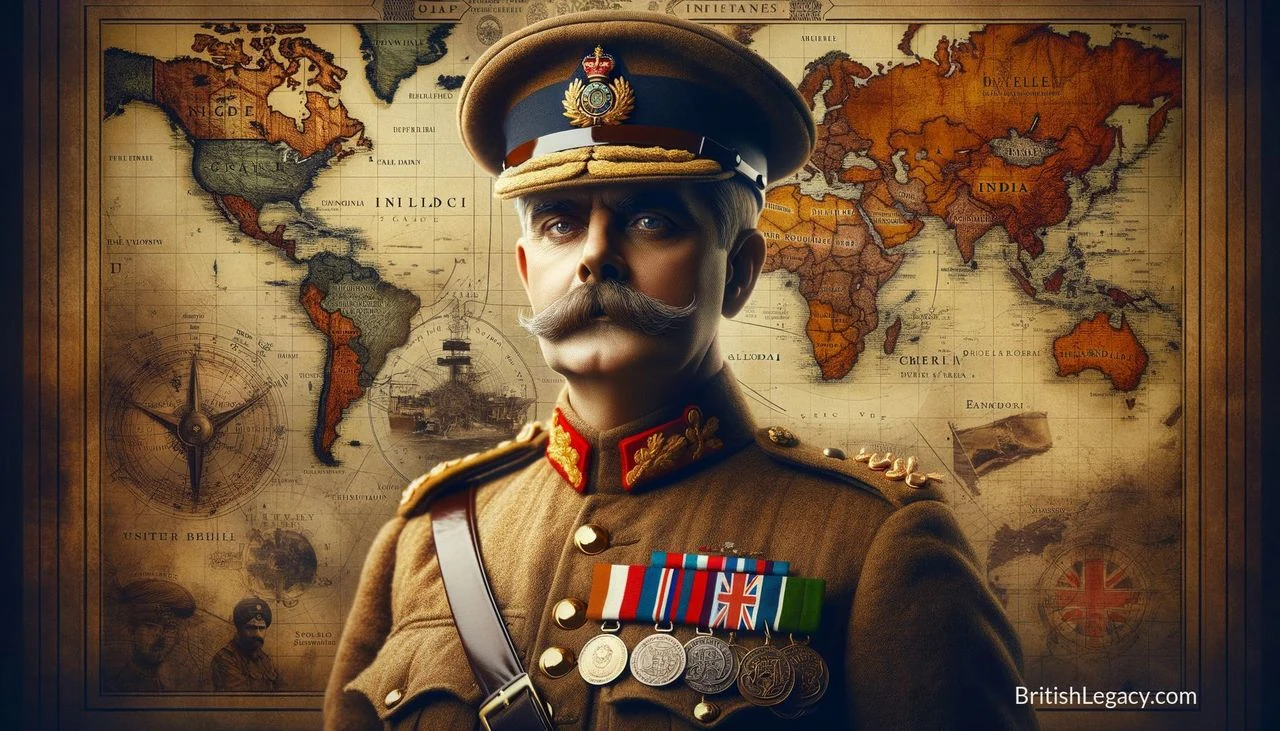
In October 1915, as the Gallipoli campaign faltered, General Sir Charles Monro was appointed to command the British forces there. After assessing the position, he judged that a breakthrough against the Ottoman lines was unlikely and recommended evacuating the peninsula. The decision to withdraw, rather than persist with an offensive he considered unpromising, became the defining episode of his wartime record.
Early service and the road to command
Monro was born in Dublin on 15 June 1860. He entered the army in 1879, when he was commissioned into the Royal Scots Fusiliers. The account of his career records early service in colonial conflicts and a subsequent rise through the ranks, but gives no dates, locations or particular appointments for that period.
That early service preceded his senior commands in the First World War. The broad outline is clear: a career begun in the late nineteenth-century army led to responsibility first at Gallipoli and then in India. The available biographical detail is sparse, so his path between those milestones cannot be described more closely without speculation.
Gallipoli: recommending withdrawal
Monro took command of the British forces at Gallipoli in October 1915, after the campaign had faltered. His assessment was that the prospects of breaking through the entrenched Ottoman lines were bleak. He recommended evacuating Allied forces from the peninsula, a choice that turned away from further attempts to achieve a breakthrough there.
The account says the withdrawal was overseen by Monro and completed without significant loss of life. It provides no operational detail about the planning, the forces involved or the stages of the evacuation. His role is therefore best described through the appointment, assessment and recommendation recorded: the account does not justify attributing the operation’s entire outcome to him alone.
Commander-in-Chief in India
In 1916 Monro became Commander-in-Chief, India. His responsibilities there were described in terms of internal security and the region’s contribution to the war effort. The account also refers to growing nationalist activity and says the British Indian Army was strengthened under his command, with the aim of maintaining security and readiness.
No particular policy, operation or measure is identified, and the effects of this work are not detailed. The appointment nevertheless marks a change in the kind of command associated with Monro’s wartime career: from assessing a difficult position at Gallipoli to a senior role in India connected with security and the wider war effort.
Retirement and the record of his service
Monro retired in 1923. The account records that his career was honoured with the Grand Cross of the Order of the Bath, but gives no further information about his life after retirement or other awards. Its clearest details of his service remain his command at Gallipoli, his recommendation to evacuate, and his appointment in India the following year.
Those episodes provide a more grounded account than broad claims of strategic brilliance or lasting influence. At Gallipoli, Monro judged that continuing the offensive was unlikely to succeed and recommended withdrawal. In India, he held the senior command described in the account, with responsibilities linked to security and the war effort. The limits of the record matter: it does not detail his decisions in India or establish the wider effects of his command.
Why Charles Monro deserves a place in British Legacy
Monro’s place in British Legacy rests on a consequential decision made during a difficult campaign. Appointed to command British forces at Gallipoli in October 1915, he assessed the chances of breaking through Ottoman lines as bleak and recommended evacuation. The account describes the withdrawal as completed without significant loss of life. This episode makes his service a useful case in the judgement required when a military objective appears unlikely to be achieved. It is not a simple victory story, and the available detail does not support giving Monro sole credit for the operation’s execution.
His appointment as Commander-in-Chief, India, in 1916 places that decision within a broader wartime career. The account connects his Indian command with internal security and support for the war effort, but does not specify policies or outcomes. Remembering Monro responsibly means recognising both what is recorded and what remains unclear: his assessment and recommendation at Gallipoli, his senior post in India, and the limits of the detail about his wider influence. That measured approach gives readers a concrete account of British military service without relying on unsupported praise.