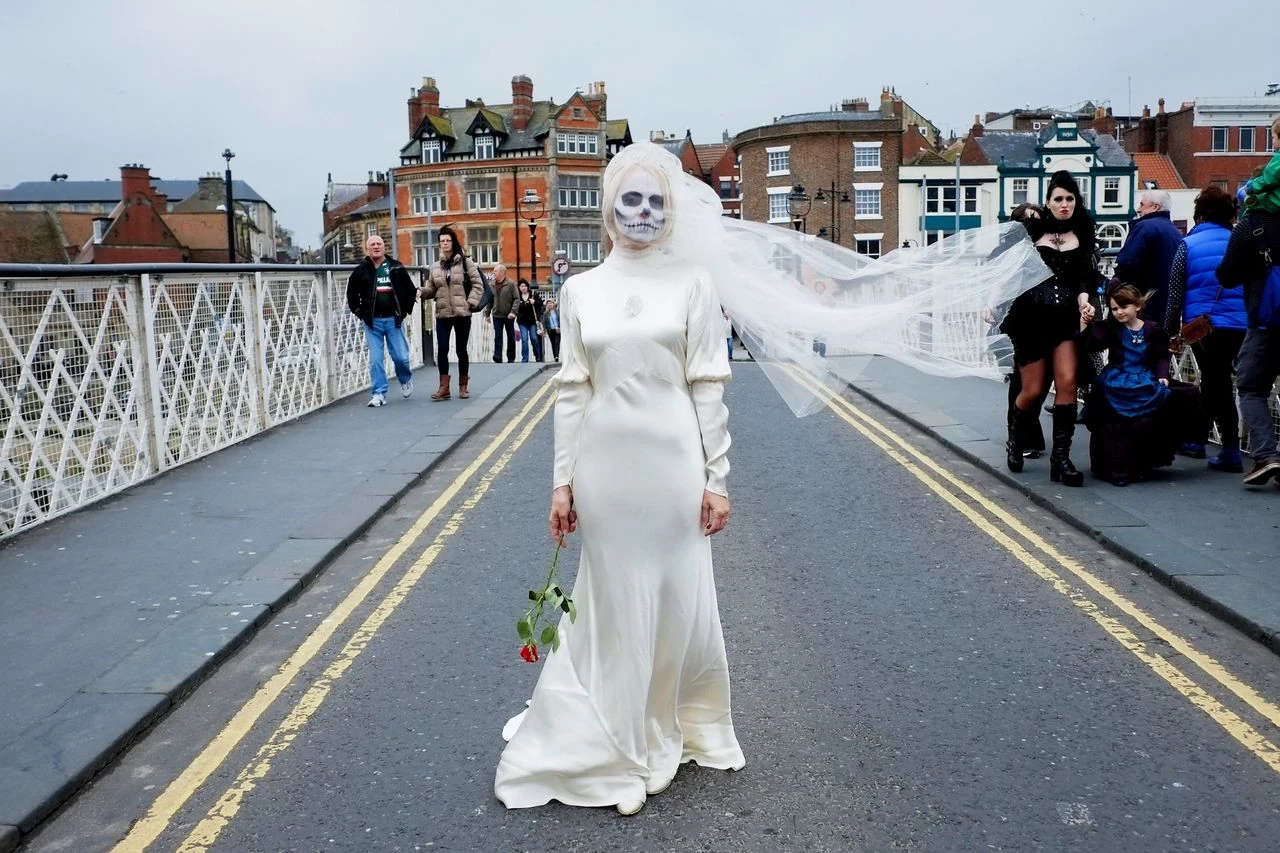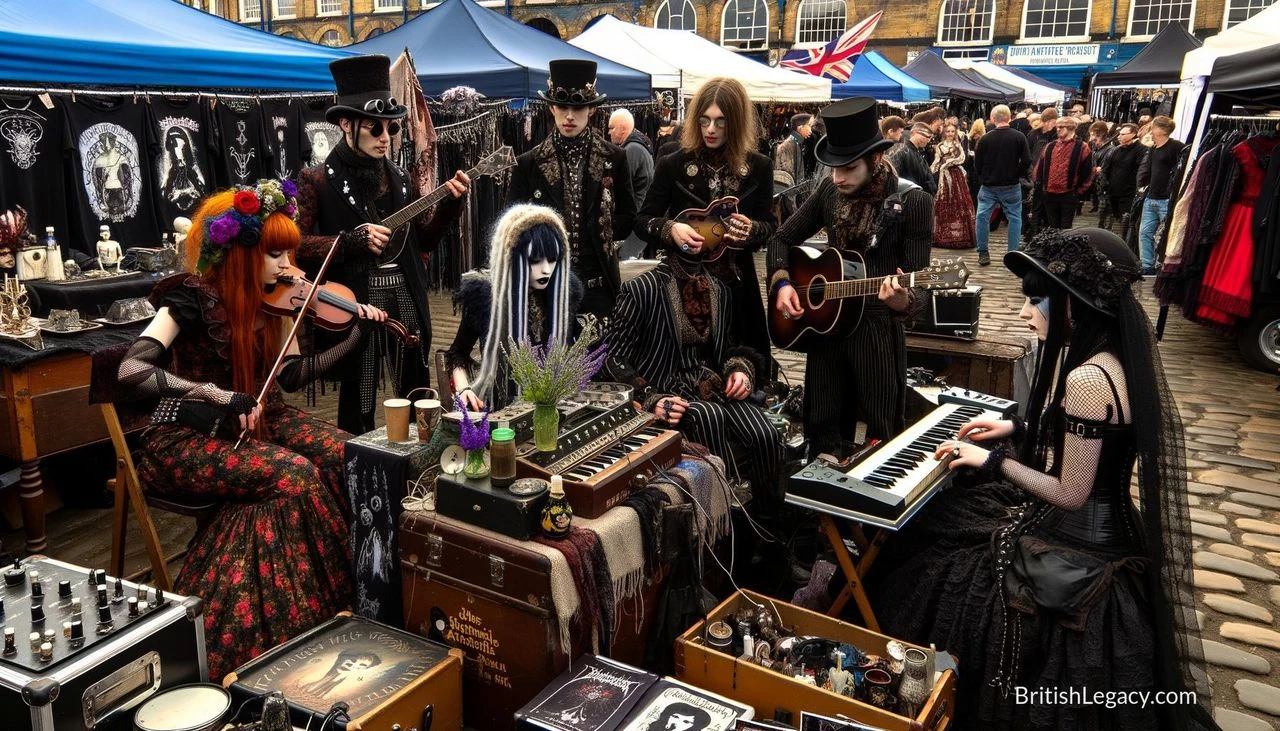
Twice a year, Whitby’s historic streets and coastal setting provide a meeting place for people drawn to Gothic music and style. Whitby Goth Weekend combines live bands and DJs with alternative market stalls, creating a festival shaped both by its subculture and by the North Yorkshire town in which it takes place.
A gathering takes shape
Whitby Goth Weekend began in 1994 as a gathering for people interested in Gothic culture. The event has since developed into a biannual festival, held in spring and autumn. Its focus is not confined to music: it brings together performance, clothing, jewellery, records and artworks in a setting where visitors can share an interest in Gothic expression.
The festival’s programme includes bands and DJs, with styles described as ranging from post-punk to synthwave. Market stalls offer an alternative to the usual festival merchandise, with clothing, handcrafted jewellery, vinyl records and art among the items associated with the event. Together, the performances and stalls give the weekend both a musical programme and a public marketplace for independent creative work.
Whitby as a setting
The town is not merely a backdrop. Whitby’s maritime history and its associations with Bram Stoker’s Dracula sit alongside the festival’s contemporary Gothic culture. The Whitby Pavilion, identified as the event’s principal venue, overlooks the North Sea from its cliff-top position. Whitby Abbey and the town’s historic streets add a distinctive setting to a weekend whose visitors may wear Victorian or steampunk-inspired clothing.
That combination brings different kinds of history and expression into the same public space: the town’s built and literary associations, the festival’s music, and the individual styles of those attending. The event’s character comes from this meeting rather than from any single attraction. Its seasonal returns also give participants a recurring occasion to gather, while the town’s familiar landmarks remain part of the experience.
Music, markets and a local gathering
Whitby Goth Weekend is described as attracting visitors from beyond the area and as bringing activity to local businesses, including hotels, restaurants, shops and taxis. The scale of that economic effect is not established here, but the festival’s mix of performances and stalls offers visitors reasons to spend time in the town beyond attending a gig. The event also creates a shared occasion for people with an interest in Gothic culture, bringing different backgrounds together around music, dress and art.
Its appeal is therefore both cultural and practical. For attendees, it is a place to meet others and encounter a range of music and creative work. For Whitby, it is a recurring event that makes use of the town’s existing venues and character. The festival does not need to claim that it represents all of Gothic culture to matter: its importance lies in providing a recognisable gathering place for one part of that wider community.
Why Whitby Goth Weekend deserves a place in British Legacy
Whitby Goth Weekend deserves recognition because it connects a contemporary cultural gathering with a specific British town. Since its beginnings in 1994, it has brought Gothic music, dress and art into public view in Whitby, where the town’s coastal setting and historic associations form part of the occasion. The event shows how a local festival can give a community a recurring meeting place without reducing its identity to a single performance or style.
Its contribution is also tangible in the range of activity it brings together: bands and DJs, independent market stalls, visitors and local businesses. This is a modest but meaningful form of cultural life, built around shared interests and a distinctive setting. Whitby Goth Weekend belongs in British Legacy not because it can stand for the whole country, but because it records how a subculture makes space for itself in a British town and adds a modern chapter to that town’s continuing public life.