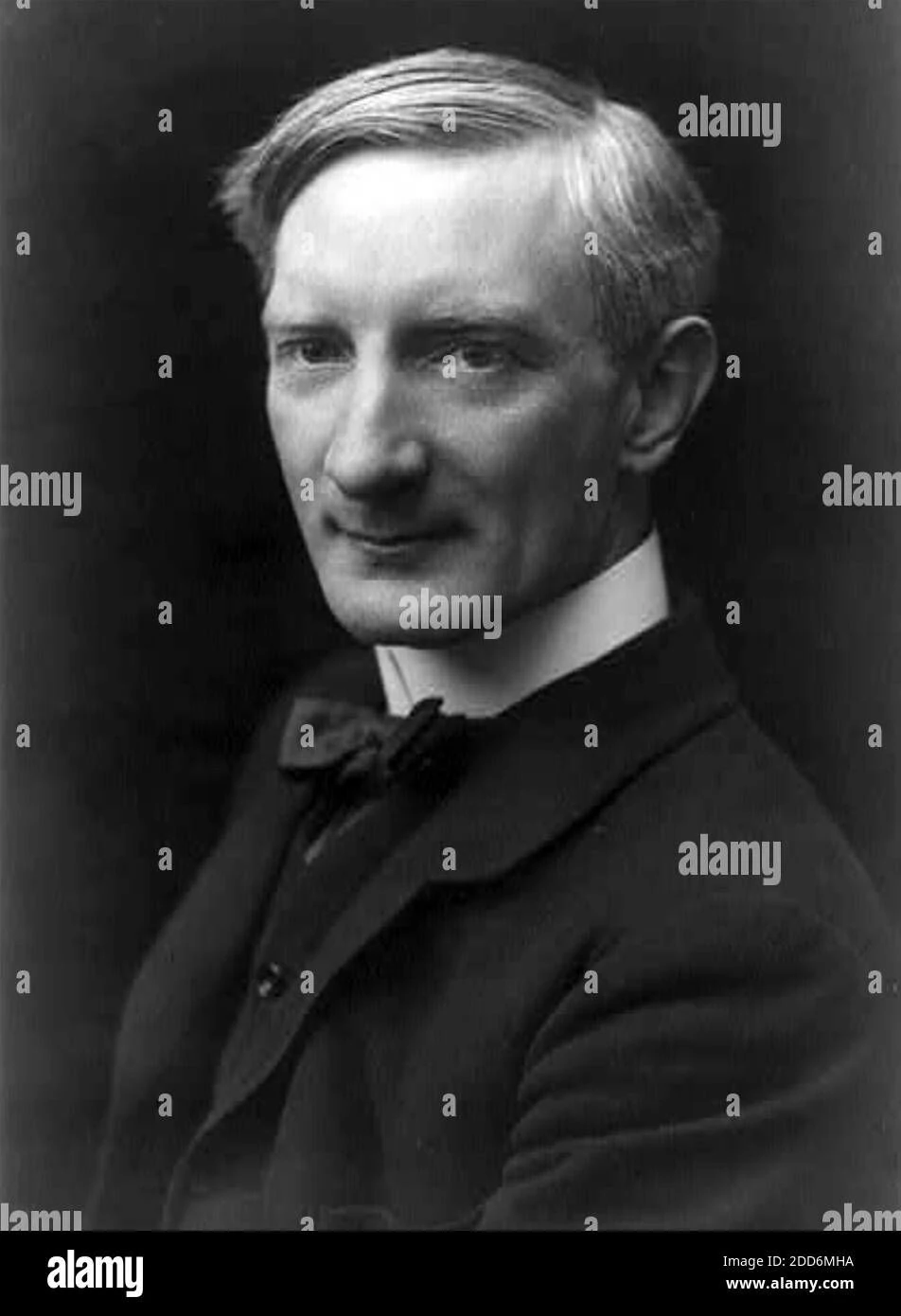
William Beveridge’s name became attached to one of the defining documents of post-war Britain. Published in 1942, his report on social insurance set out a plan to protect people against unemployment, sickness, retirement and widowhood. Its proposals helped provide the basis for the welfare state established by the Labour government elected in 1945. But Beveridge’s contribution grew from decades of work on poverty, employment and public administration—and his political and personal record is more complicated than the familiar image of a single architect of social security.
From Rangpur to the study of unemployment
William Henry Beveridge was born in Rangpur, India, on 5 March 1879. His father, Henry Beveridge, was an Indian Civil Service officer and district judge; his mother, Annette Akroyd, was a scholar. She had helped found the Working Women’s College in London before travelling to Calcutta to open a school for Indian girls. Beveridge attended Charterhouse and then Balliol College, Oxford, where he studied mathematics and classics, taking a first-class degree in both. He later studied law.
After university, Beveridge initially worked as a lawyer and wrote about social services for the Morning Post. His interest in unemployment took shape in 1903, when he worked at Toynbee Hall, a settlement house in London. There he worked closely with social reformers Sidney and Beatrice Webb and became involved in campaigns for old-age pensions, free school meals and a national system of labour exchanges.
In 1908, Beatrice Webb introduced him to Winston Churchill, then President of the Board of Trade. Beveridge joined the Board and organised the implementation of national labour exchanges and National Insurance measures intended to address unemployment and poverty. During the First World War he worked on the mobilisation and control of manpower. After the war he was knighted and became permanent secretary to the Ministry of Food.
In 1919, he left the civil service to become director of the London School of Economics, a post he held until 1937. He also worked on commissions and committees concerned with social policy. His research was not confined to welfare: he led an international committee on price history and published a study of prices and wages in England across several centuries. In 1933, he helped establish the Academic Assistance Council, which supported academics dismissed because of their race, religion or political position in escaping Nazi persecution. In 1937, he became Master of University College, Oxford.
Planning for social security
During the Second World War, Beveridge worked on manpower questions and chaired a committee on skilled men in the services. Its recommendations included initially enlisting Army recruits in the General Service Corps so that their skills could be considered when they were posted. The Royal Electrical and Mechanical Engineers was also created following the committee’s work.
In 1941, a committee was formed to examine existing social insurance and related services. Beveridge accepted its chairmanship reluctantly, seeing the inquiry at first as a distraction from his manpower work. Its report, Social Insurance and Allied Services, appeared in November 1942. It proposed that people of working age pay weekly contributions into a national insurance system, with benefits available to people who were sick, unemployed, retired or widowed. Beveridge argued for a minimum standard of living “below which no one should be allowed to fall”.
The report named five “giants on the road of reconstruction”: Want, Disease, Ignorance, Squalor and Idleness. Social insurance was central to its response, but Beveridge also treated full employment as essential to the plan. He defined it as unemployment of no more than three per cent and argued that the state, rather than individual employers alone, had to take responsibility for maintaining demand and employment. His 1944 book Full Employment in a Free Society developed that argument.
Beveridge’s report also assumed that there would be a national health service of some kind, a policy already being considered by the Ministry of Health. It did not create that service itself. Its proposals gained support across political lines in part because Beveridge argued that social provision could also strengthen British industry: healthier, more secure and better-motivated workers could be more productive, while their spending could sustain demand.
Parliament, implementation and controversy
Beveridge joined the Liberal Party and entered Parliament in 1944 after winning the Berwick-upon-Tweed by-election. In the Commons he was associated with the Radical Action group, which wanted the Liberals to leave the wartime electoral pact and adopt more radical policies. He lost his seat at the 1945 general election. The Labour government that followed began implementing proposals for which his report had provided a basis. A national system of benefits was introduced, and the National Health Service began in 1948, offering taxpayer-funded medical treatment.
In 1946, Beveridge was made Baron Beveridge of Tuggal and took a leading role among Liberal peers in the House of Lords. He continued to write on social and economic questions, publishing Power and Influence in 1953 and A Defence of Free Learning in 1959. His public work included a decade as president of the National Association of Leagues of Hospital Friends, from 1952 to 1962.
His record also includes views on eugenics that sit uneasily beside his reputation as a social reformer. Beveridge belonged to the Eugenics Society. In 1909, he proposed that men deemed unable to work should receive state support but lose citizen rights, including the right to vote and to father children. His approach to inherited health problems was also described by historian Jose Harris as predominantly environmental, emphasising factors such as housing, preventive medicine, childcare and nutrition. Beveridge credited the Eugenics Society with promoting children’s allowances, which were included in his 1942 report, while denying that the report had overall “eugenic value”. These distinctions help explain the context of his social-policy work, but do not erase the coercive views he expressed.
Life beyond the report
Beveridge married the mathematician Janet Philip in 1942. She had been his colleague in the civil service and at the LSE and contributed to drafting and publicising the report. He died at his home in Oxford on 16 March 1963, aged 84, and was buried in Thockrington churchyard in Northumberland. His barony became extinct on his death.
His writing ranged well beyond the report that bears his name. Unemployment: A Problem of Industry appeared in 1909; Social Insurance and Allied Services in 1942; and Full Employment in a Free Society in 1944. His work on prices and wages, voluntary action and political ideas reflects a career spent examining how institutions and public policy shape people’s lives. In 2018, English Heritage unveiled a blue plaque at the London home where he had lived from 1914 to 1921. University College, Oxford, also named its society for students and tutors in philosophy, politics and economics after him.
Why William Beveridge deserves a place in British Legacy
Beveridge deserves a place in British Legacy because his report helped turn social protection into a practical national programme. It brought risks that could be experienced separately—unemployment, illness, old age and the death of a spouse—within a common framework of insurance and public responsibility. The Labour government elected in 1945 used the report as a basis for the post-war welfare settlement, including a national benefits system and the NHS. Beveridge did not create those institutions single-handedly, and the health service was already being considered within government, but his report gave the debate a powerful, organised plan.
His contribution also extended beyond the wartime inquiry. From his early work on labour exchanges and unemployment insurance to his later argument that full employment required state action, Beveridge repeatedly connected economic policy to people’s material security. His committee work on manpower, his support for academics escaping Nazi persecution and his years directing the LSE show the breadth of that public career. A responsible British legacy must include its difficult aspects as well: his membership of the Eugenics Society and his proposal to strip some people of civil rights. Remembering both the reach of his reforms and the limits of his views gives a fuller account of how modern British social policy was argued over and made.
Sources
William Beveridge — revision 1372200484
Adapted in part from William Beveridge by Wikipedia contributors, under CC BY-SA 4.0. Text has been edited and combined with the existing article; this adapted text is shared under the same licence. Contributor history.