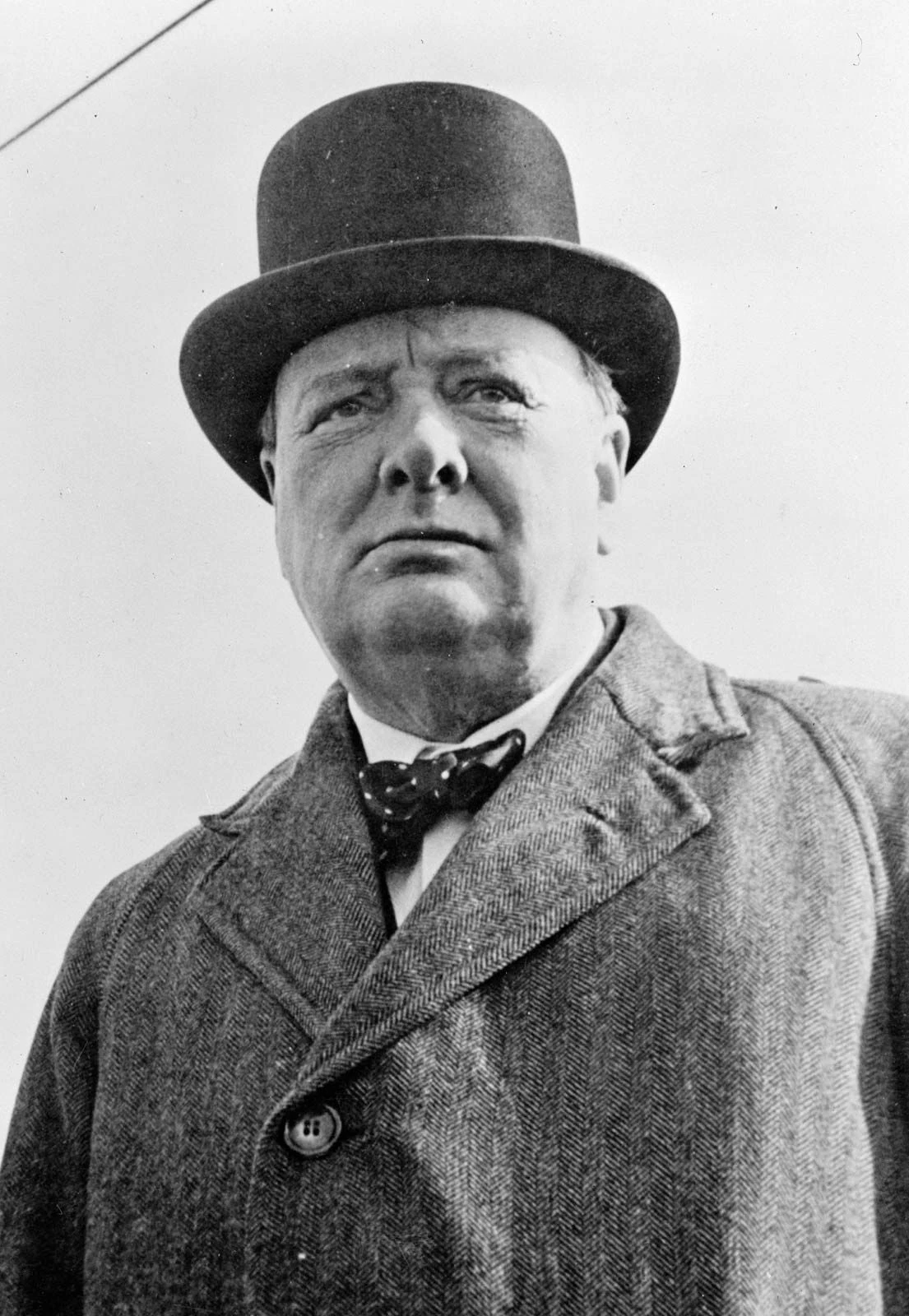
Winston Churchill’s public life stretched across more than six decades of British politics. He was a soldier, journalist, writer and parliamentarian before becoming prime minister in 1940. His wartime speeches helped give public expression to Britain’s determination to continue fighting, while his dealings with allies and his direction of the war shaped events far beyond the country. But Churchill’s record cannot be contained in the image of the wartime leader: it includes domestic reforms, political reversals, imperial commitments and decisions that remain contentious.
From Blenheim to the House of Commons
Churchill was born at Blenheim Palace in Oxfordshire on 30 November 1874, into the aristocratic Spencer family. His father, Lord Randolph Churchill, was a Conservative politician; his mother, Jennie Jerome, was American. After attending schools in Berkshire, Hove and Harrow, Churchill entered the Royal Military College at Sandhurst. Commissioned into the 4th Queen’s Own Hussars in 1895, he served in India and Sudan and reported on military campaigns as a journalist. His dispatches and books helped establish a writing career alongside his military one.
During the Second Boer War, Churchill travelled to South Africa as a correspondent, was captured after his train was attacked and escaped from a prisoner-of-war camp. His account of the escape drew public attention. In 1900, he was elected Conservative MP for Oldham, beginning a parliamentary career that would span 1900–22 and 1924–64. He crossed to the Liberals in 1904, then returned to the Conservatives in 1924.
In Liberal governments he held several ministerial posts, including president of the Board of Trade and Home Secretary. Working with David Lloyd George, he supported measures including labour exchanges, trade boards and a minimum wage. As First Lord of the Admiralty from 1911, he oversaw naval preparations and backed the development of the tank. The failed Dardanelles campaign during the First World War damaged his standing. He left government in 1915 and served on the Western Front before returning to ministerial office in 1917.
His later posts included Minister of Munitions, Secretary of State for War and Air, and Colonial Secretary. He helped negotiate the Anglo-Irish Treaty and took part in decisions over British policy in the Middle East. As Chancellor of the Exchequer from 1924 to 1929, he returned sterling to the gold standard in 1925, a policy associated with deflation and economic pressure, particularly in the coal industry.
Warning against appeasement
Out of office for much of the 1930s, Churchill called for British rearmament as Nazi Germany expanded its military power. He opposed appeasement and warned against allowing German aggression to proceed unchecked. His political views in this period were bound up with his commitment to the British Empire, and his opposition to greater self-government for India brought him into conflict with political opponents and many in his own party.
When Britain declared war on Germany in September 1939, Neville Chamberlain appointed Churchill First Lord of the Admiralty. After Germany invaded the Low Countries in May 1940 and Chamberlain’s position collapsed, Churchill became prime minister on 10 May. He formed a coalition government that included Labour ministers, among them Clement Attlee, and became responsible for directing Britain’s war effort.
Leading Britain through war
Churchill’s first months as prime minister brought the retreat to Dunkirk, France’s defeat and the threat of invasion. In Commons speeches, he insisted that Britain would continue the struggle. His address after the Dunkirk evacuation included the pledge to fight “on the beaches”; in June 1940 he described the approaching Battle of Britain as a test of the country’s resolve. His speeches were memorable not simply for their language but for the starkness of the choice they presented: resist, despite the risks, rather than seek terms with Hitler.
Churchill worked to secure American support before the United States entered the war. He developed a close relationship with President Franklin D. Roosevelt; American supplies under Lend-Lease helped Britain sustain its war effort. Following Germany’s invasion of the Soviet Union in June 1941, the Soviet Union also became an ally. Churchill met Roosevelt and Joseph Stalin at wartime conferences to discuss strategy and the post-war settlement, although their countries’ interests did not always coincide.
The Allied victory in Europe in May 1945 marked the end of Churchill’s first premiership, not the end of his political career. He lost the July 1945 general election to Labour’s Clement Attlee, whose government had promised post-war reform. As Leader of the Opposition, Churchill delivered his 1946 “Iron Curtain” speech on Soviet influence in Europe. The Conservatives returned to office in 1951, and Churchill served as prime minister again until his resignation in 1955. His second government concentrated on foreign affairs, while its domestic programme included a successful housebuilding target of 300,000 homes a year.
A writer and a contested public figure
Churchill’s writing accompanied his political career and helped support him financially. His work included journalism, biographies and histories. The Second World War, a six-volume account of the conflict, and the four-volume A History of the English-Speaking Peoples became his best-known books. In 1953 he received the Nobel Prize in Literature. The Nobel recognition acknowledged a body of writing as well as the speeches for which he was widely known; it did not make his historical accounts a neutral record of events.
He also painted, often signing his work “Charles Morin”, and spent much of his retirement at Chartwell in Kent. He remained an MP until 1964 and died in London on 24 January 1965, aged 90. His state funeral was held at St Paul’s Cathedral, and he was buried at St Martin’s Church, Bladon, near Blenheim Palace.
Churchill is remembered as a victorious wartime leader, but his legacy also requires attention to the costs and limits of his policies. He was a committed imperialist who resisted moves towards Indian self-government. His government’s response to the Bengal famine of 1943 has been criticised; the scale and causes of the famine, and the effects of British policy on deaths, remain matters of historical debate. His wartime decisions, including the Allied area bombing campaign, have also been scrutinised. Recognising these disputes does not erase his role in leading Britain through a period of grave danger; it gives a fuller account of the choices and consequences that form part of his record.
Why Winston Churchill deserves a place in British Legacy
Churchill’s place in British Legacy rests first on a specific, consequential achievement: as prime minister from 1940, he led a coalition government through the period when Britain faced the defeat of its European allies and the prospect of invasion. His decision to continue the war, his work to secure American material support and his participation in the Allied conferences connected Britain’s survival and military effort to a wider international campaign. His speeches became part of how that struggle was publicly understood. These are reasons to remember him, not to treat his leadership as a simple story of individual triumph: the war was fought by millions, and depended on allies as well as the British public and armed forces.
His wider career matters too. As a minister, he helped advance measures affecting workers and the unemployed; as a writer, he produced histories that won the 1953 Nobel Prize in Literature and shaped how readers encounter the war. His return as prime minister in 1951 and his long service as an MP show a political life extending well beyond the crisis for which he is best known. A British legacy worthy of study should include both the influence he exercised and the arguments his policies continue to provoke. Remembering Churchill in this way connects leadership, language, public policy and historical accountability, rather than reducing his life to a set of celebrated quotations.
Sources
Winston Churchill — Wikipedia revision 1378790280 · Winston Churchill — Wikipedia
Adapted in part from Winston Churchill by Wikipedia contributors, under CC BY-SA 4.0. Text has been edited and combined with the existing article; this adapted text is shared under the same licence. Contributor history.