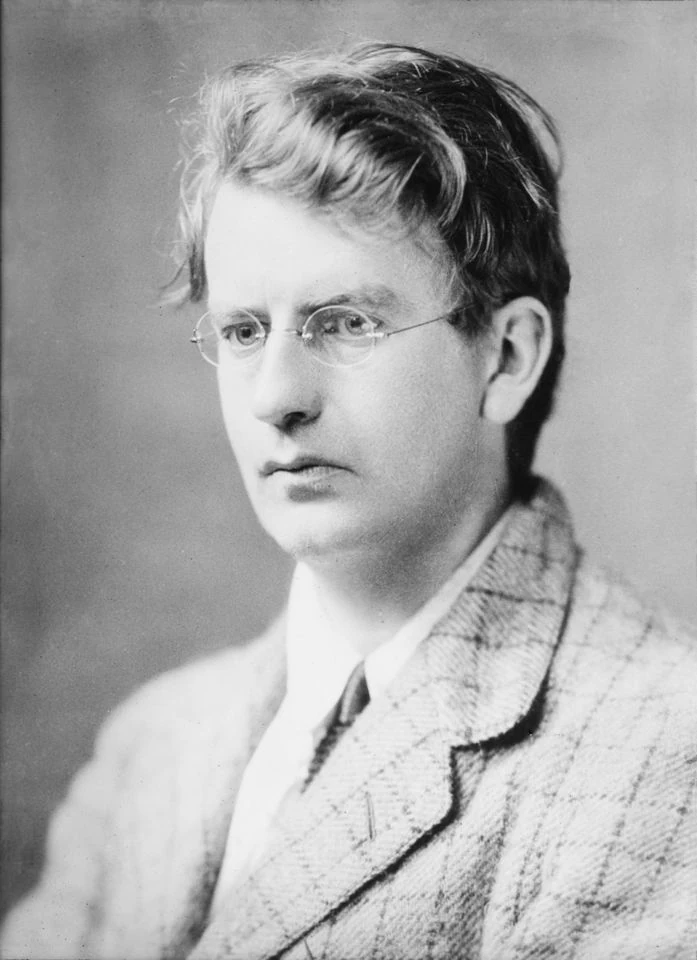
John Logie Baird’s television experiments tackled a difficult practical problem: how to scan a moving scene, transmit it and reproduce it as a visible image. In 1926, he demonstrated a system that could display live moving pictures with tonal gradation. His mechanical apparatus was eventually overtaken by electronic television, but Baird’s experiments helped bring television into public view. He continued to work on colour and other technologies long after his first demonstrations.
The Birth of a Visionary
Baird was born in Helensburgh, Scotland, on 13 August 1888, the youngest of four children. His father, the Reverend John Baird, was a Church of Scotland minister; his mother was Jessie Morrison Inglis. He attended Larchfield Academy and studied at the Glasgow and West of Scotland Technical College and the University of Glasgow, undertaking engineering apprenticeships as part of his education.
The First World War interrupted his degree course, and he never returned to complete it. He volunteered for the British Army in 1915 but was considered unfit for active service. Instead, he worked for the Clyde Valley Electrical Power Company, which was engaged in munitions work. Industrial conditions in Glasgow helped form his socialist convictions and contributed to the ill health that affected him.
In early 1923, in poor health, Baird moved to Hastings on England’s south coast. He rented a workshop in the town’s Queen’s Arcade and began developing a television system. The working apparatus he built used ordinary and discarded objects, including a hatbox, bicycle-light lenses, darning needles and a used tea chest. Its rough construction belied the engineering problem he was trying to solve: turning a changing scene into a signal that could be transmitted and reconstructed.
The Dawn of Television
In February 1924, Baird demonstrated to Radio Times that a semi-mechanical television system could transmit moving silhouette images. A serious electric shock later that year left him with a burnt hand, and his landlord asked him to leave his premises. In London, he also tried to attract newspaper interest in his invention, but his early approaches met with scepticism.
On 2 October 1925, Baird transmitted an image of a ventriloquist’s dummy known as Stooky Bill in his laboratory. The greyscale picture was scanned as 32 lines, at five pictures per second. Wanting to see what a human face would look like, he fetched William Edward Taynton, a 20-year-old office worker. Taynton became the first person televised in a full tonal range.
There were two distinct public milestones. Beginning on 25 March 1925, Baird demonstrated moving silhouettes at Selfridges in London. On 26 January 1926, at his laboratory at 22 Frith Street in Soho, he demonstrated live moving images with tonal gradation to members of the Royal Institution and a reporter from The Times. His apparatus used a mechanical scanning disc, developing a principle first patented by Paul Gottlieb Nipkow in 1884. Baird improved the system’s picture rate from five to 12.5 pictures per second around 1927.
Transmission, broadcasting and the limits of a system
In 1927, Baird transmitted television pictures over 438 miles of telephone line between London and Glasgow. The following year, his company, the Baird Television Development Company, achieved a transatlantic transmission from London to Hartsdale, New York. These demonstrations extended the distance over which television pictures could travel, but did not settle which technical systems would prove most practical for broadcasters.
In 1929, the BBC transmitted its first television programmes using Baird’s system. BBC transmitters carried programmes using his 30-line system from 1929 to 1935. From 1932, the BBC also produced programmes in its own studio. Baird and his company made and broadcast a small number of programmes independently from their studios and transmitter at Crystal Palace in south London.
Television’s development involved competing approaches. When the BBC began regular television transmissions from Alexandra Palace in November 1936, it alternated Baird’s 240-line transmissions with EMI’s electronic scanning system, then operating at 405 lines. Baird’s system relied on an intermediate film process, and its cameras were difficult to move. A fire at the Crystal Palace facilities further damaged the company’s prospects. The BBC stopped using the Baird system in February 1937. This marked the end of its use by the broadcaster, not the end of Baird’s work on television.
The distinction matters: a successful demonstration did not guarantee that an invention would become the enduring technical standard. Baird’s system helped bring television into broadcasting practice, while the limitations of its cameras and production methods contributed to its displacement.
Colour and Beyond
Baird continued to work on television as mechanical systems became obsolete. In 1928, he demonstrated colour transmission using scanning discs at both ends of the system. The discs had filters for the three primary colours, and the receiver used alternating light sources. That year he also demonstrated stereoscopic television. In 1939, he showed a hybrid colour system using a cathode-ray tube behind a rotating disc fitted with colour filters.
From 1940, Baird worked on an electronic colour system he called the Telechrome. Early devices used two electron guns aimed at a patterned phosphor plate. On 16 August 1944, he gave the first demonstration of a practical fully electronic colour television display. Its 600-line picture used triple interlacing, with six scans building each image. This was a demonstration of a display, not the adoption of Baird’s proposed system as a post-war broadcasting standard.
Television was not his only line of invention. Among his less successful experiments were attempts to make diamonds by heating graphite, a glass razor that shattered and pneumatic shoes whose prototype balloons burst. A thermal undersock, based on an extra layer of cotton, was more successful. Between 1926 and 1928, he also developed Phonovision, an early attempt to record video signals on disc. Technical difficulties prevented further development, although some original discs have survived.
His work extended into fibre optics, radio direction finding, infrared night viewing and radar. The extent of any contribution to radar remains disputed. Baird’s wartime defence projects were not officially acknowledged by the British government, and accounts differ over whether his Noctovision device could properly be described as radar. The evidence described for the device distinguishes it from radar systems able to determine the distance and three-dimensional position of a target.
Later years and recognition
From December 1944, Baird lived in Bexhill-on-Sea, Sussex. He died there on 14 June 1946, aged 57, after suffering a stroke in February. He was buried beside his parents in Helensburgh Cemetery. His career had taken him from engineering studies interrupted by war to public demonstrations in London, broadcasts from the BBC and experiments with colour systems.
Recognition continued after his death. In 1957, Baird became the only posthumous subject of the BBC programme This Is Your Life. The Australian television industry named its Logie Awards in his honour. Historic Environment Scotland awarded a commemorative plaque in Helensburgh in 2013; in 2017, a bronze plaque was unveiled at 22 Frith Street in London. In 2021, the Royal Mint issued a John Logie Baird 50p coin to mark the 75th anniversary of his death.
Legacy of Connection
Baird’s work also sits within a wider story of television’s development. His early system helped demonstrate that moving images could be scanned, transmitted and displayed, and his company’s broadcasts formed part of the medium’s first years in Britain. The change from mechanical to electronic systems shows that television did not emerge fully formed from one invention. It developed through experimentation, competition between technical approaches and the practical demands of broadcasting.
His later work on colour pursued a problem that had not been solved by the first monochrome demonstrations. The Telechrome’s 1944 display showed how far his experiments had advanced, even though his proposal did not become the British post-war broadcast standard. Phonovision, meanwhile, reflects another part of his approach: investigating how images might be recorded as well as transmitted. The survival of some of its discs gives those experiments a continuing material trace.
Conclusion
Baird’s career combined public demonstrations with persistent technical experimentation. The hatbox-and-tea-chest apparatus in Hastings and the later colour display in 1944 belong to the same broad effort: making images possible through electrical and mechanical systems. His achievements should not be confused with the later dominance of electronic television, nor should the limitations of his apparatus obscure the importance of demonstrating what television could do.
Why John Logie Baird deserves a place in British Legacy
Baird deserves a place in British Legacy for a defined contribution to engineering and broadcasting. His 1925 transmission of Stooky Bill and his January 1926 demonstration of live images with tonal gradation made television a visible, testable system rather than an abstract proposal. The transmissions between London and Glasgow, and later across the Atlantic, showed that pictures could travel well beyond a single laboratory. His company’s work with the BBC placed his system within the early development of television broadcasting in Britain. These achievements do not make Baird the sole inventor of modern television, or mean his mechanical system became the lasting standard. The contrast between its early success and its eventual replacement is an important part of the history.
His legacy also reflects sustained work beyond the first breakthrough. Baird continued to investigate colour, giving a practical fully electronic colour display demonstration in 1944, and explored recording moving images through Phonovision. He worked in Scotland and England, and his experiments connected engineering education and invention with the emerging public medium of television. Remembering both his successes and the systems that superseded his own gives a fuller account of British technological history. It recognises the value of a demonstrable innovation while acknowledging that turning a prototype into a reliable, widely used technology requires further development.
Sources
John Logie Baird — Wikipedia, revision 1375520986
Adapted in part from John Logie Baird by Wikipedia contributors, under CC BY-SA 4.0. Text has been edited and combined with the existing article; this adapted text is shared under the same licence. Contributor history.