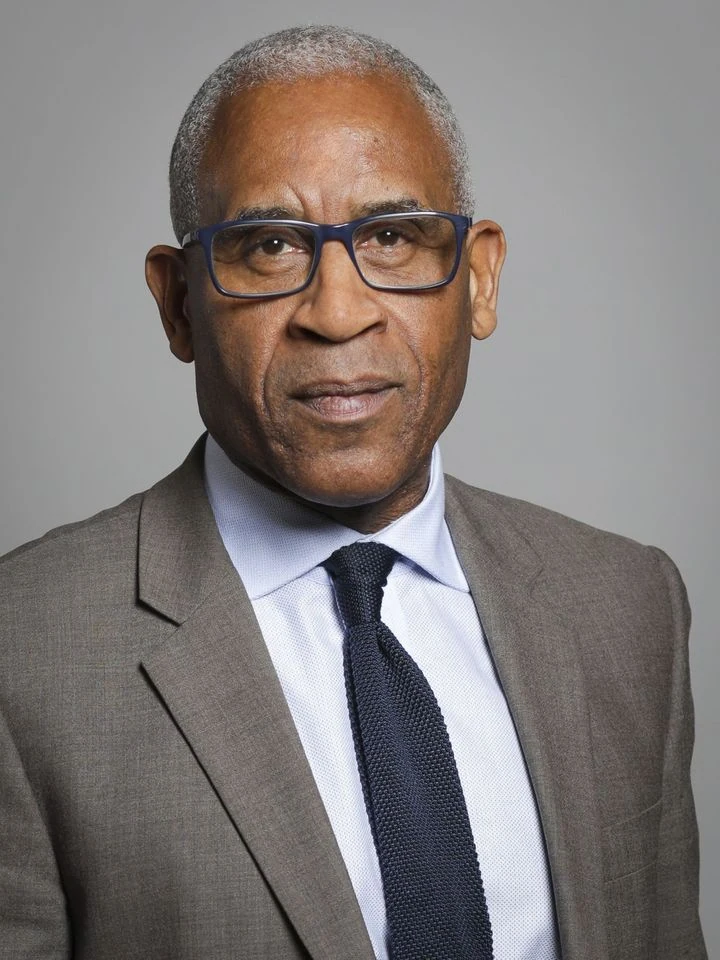
Simon Woolley’s work has repeatedly addressed a gap in British democracy: people expected to trust public institutions while seeing few people like themselves represented within them. Through Operation Black Vote (OBV), which he founded in 1996 and led until 2021, he helped create practical routes into politics and civic life for Black and minority ethnic communities. The work ranged from voter registration and political education to mentoring, lobbying and schemes that let participants see how Parliament operates from the inside.
Woolley’s career has also taken him into public service and some of Britain’s most established institutions. He chaired the advisory group to the Race Disparity Unit, became a crossbench member of the House of Lords in 2019 and, in 2021, was installed as Principal of Homerton College, Cambridge. The trajectory is striking: a child fostered and adopted, raised on a Leicester council estate, who left school without A-levels, later returned to study and became a prominent campaigner for access to public life.
From Leicester to public life
Woolley’s route was not the conventional one into national influence. He was fostered and then adopted as a small child, and grew up on a council estate in Leicester. After leaving school without A-levels, he worked as an apprentice mechanic and then in marketing for the Rank Organisation. He later returned to formal study, before building a career that would take him into campaigning, public appointments, Parliament and university leadership.
That early experience is relevant to the practical character of his work. Woolley’s public argument has not been only that fairness matters, but that the opportunities people are told they have must be made accessible in practice. Talent can go unnoticed; confidence and networks can be harder to build when institutions seem distant; and political systems can continue to favour those already familiar with them. His own path gave him reason to pay attention to the distance between the principle of equal opportunity and people’s everyday experience of it.
Rather than limiting himself to commentary on exclusion, Woolley helped build organisations and programmes intended to change how people could participate. The work involved making the case for representation, but also developing routes through which communities could engage, learn about institutions and seek positions of influence. That combination of advocacy and institution-building became a defining feature of his career.
Operation Black Vote and the democratic deficit
Founded in 1996, Operation Black Vote set out to address what it called a democratic deficit: the underrepresentation of Black and minority ethnic communities in British politics and public life. Its aims included increasing civic knowledge and voter participation, improving representation in Parliament and public appointments, and enabling communities too often spoken about by others to speak for themselves.
OBV’s approach combined voter-registration drives with campaigns, community outreach, political education and leadership development. Registration is a practical, sometimes overlooked part of democratic participation. People who are not registered are less readily counted as participants in electoral politics; a greater presence at the ballot box can make it harder for parties and candidates to overlook a community’s concerns. OBV’s work treated participation not as a slogan but as something that could be encouraged and organised.
The wider history of representation in Parliament puts that work in context. The supplied account of House of Commons Library figures records that no MPs from minority ethnic groups were elected between 1929 and 1987; four were elected in 1987; and, following the 2024 general election, the number was estimated at 90, or 14 per cent of the House of Commons. Such a change cannot be credited to one campaigner or organisation. OBV was one part of a broader effort, helping to increase pressure for representation and develop routes by which more people could enter public life.
That work was not simply about making politics look different on polling day. It also concerned who felt able to belong in political spaces, who could acquire the knowledge and confidence to take part, and who might go on to lead. OBV’s activities extended from voter engagement to public appointments and the development of underrepresented people seeking positions of influence. Woolley’s approach linked the immediate task of participating in elections with the longer process of making civic leadership more accessible.
Opening Parliament from the inside
One of OBV’s ways of addressing that distance was its MP Shadowing Scheme. Participants are paired with members of the House of Commons or House of Lords for six months, giving them an opportunity to observe Westminster and constituency work at close quarters. The scheme makes political life more tangible: participants can see how representatives’ offices operate, how decisions move through institutions and how public responsibilities are handled in practice.
For someone who has never been close to Parliament, that familiarity can matter. Political confidence is not created by encouragement alone. Seeing the work provides a clearer sense of what a political role involves and how someone might prepare to pursue one. The scheme was one way to turn the broad aim of wider representation into a direct experience of public institutions.
OBV describes the scheme as the nation’s most successful mentoring scheme of its kind and credits it with helping launch the political careers of figures including Helen Grant, Clive Lewis, Marsha de Cordova, Tan Dhesi, Baroness Sayeeda Warsi and former Bristol mayor Marvin Rees. The claim about its standing belongs to OBV; the named examples illustrate the range of public careers associated with the scheme. Participants’ paths have included Parliament, local government and wider civic leadership.
Woolley’s contribution here was to recognise that exclusion can persist through unfamiliarity as well as through more visible barriers. Representation is not settled only at the point when candidates are selected. It is shaped earlier by whether people can picture themselves in public office, acquire relevant experience and find networks that help them understand how institutions work. Shadowing offered a practical answer to part of that problem, bringing participants closer to political work and making the route into it less opaque.
Making inequality visible
Woolley’s work has extended beyond electoral politics. He chaired the Race Disparity Unit’s advisory group from January 2018 to July 2020. The Race Disparity Audit and the Ethnicity Facts and Figures service brought together government data on how ethnicity related to outcomes in areas including education, health, crime and housing.
Making disparities visible in comparable information does not, by itself, remove them. It does make it more difficult to treat them as anecdotal or to avoid asking where they occur. Published evidence can give public bodies, journalists, parliamentarians, campaigners and citizens a firmer basis for specific questions. Woolley’s work in this area helped put information about unequal outcomes into the public record, while the existence of data remained distinct from the harder task of changing those outcomes.
He also served as an Equality and Human Rights Commissioner from 2009 to 2012. That role, alongside his campaigning, shows a career spent engaging with institutions both from outside and within them. The common purpose was to widen participation and press institutions to examine whom they include, whom they fail to reach and how those patterns can be understood.
From campaigner to national institution-builder
In the 2019 Birthday Honours, Woolley was knighted for services to race equality. Later that year he entered the House of Lords as Baron Woolley of Woodford, where he sits as a crossbench peer. These milestones brought a campaigner for greater inclusion into the institutions of national public life. They also marked the place race equality and representation had come to occupy in political debate, without making the work of improving representation complete.
In 2021 Woolley was installed as Principal of Homerton College, Cambridge. The college’s announcement described him as the first Black man to lead a Cambridge or Oxford college. The significance of that first lies in the role itself: a leader at one of Britain’s long-established educational institutions, not simply a visitor speaking about access. Homerton’s account of his work highlights his interest in educational opportunity and in recognising potential that might otherwise be overlooked.
The move to Cambridge followed a consistent concern in his earlier work. At OBV, the focus was on who could see a route into politics and civic leadership; as a college principal, the setting was education. In both cases, the questions were who gets noticed, who receives encouragement and access, and who may be excluded from institutions that shape public life. Woolley’s appointment did not erase the difference between campaigning and university leadership, but it carried that concern into another institution.
Why Simon Woolley deserves a place in British Legacy
Simon Woolley deserves a place in British Legacy because his work connected the principle of fair representation with practical ways of increasing participation. Through Operation Black Vote, he helped make voter registration, political education, mentoring and access to public appointments part of a sustained effort to address underrepresentation. The MP Shadowing Scheme gave participants a chance to observe parliamentary and constituency work over six months, making the operation of political institutions more familiar. Those measures did not make one person responsible for changes across British politics; they helped build routes, experience and pressure that could contribute to wider change.
His contribution also crossed the boundary between campaigning and public institutions. As chair of the Race Disparity Unit advisory group, he worked in a setting concerned with making differences in outcomes visible through government data. As a peer and Principal of Homerton College, he took on roles within institutions central to British political and educational life. The connection to Britain is therefore not a general claim about identity: it lies in work on the representation of people in British democracy, public appointments and education. Woolley’s Leicester upbringing and non-traditional route into public life also give particular weight to his interest in how access is built. His legacy is a record of practical efforts to help more people see themselves as participants in the institutions that govern and educate the country.