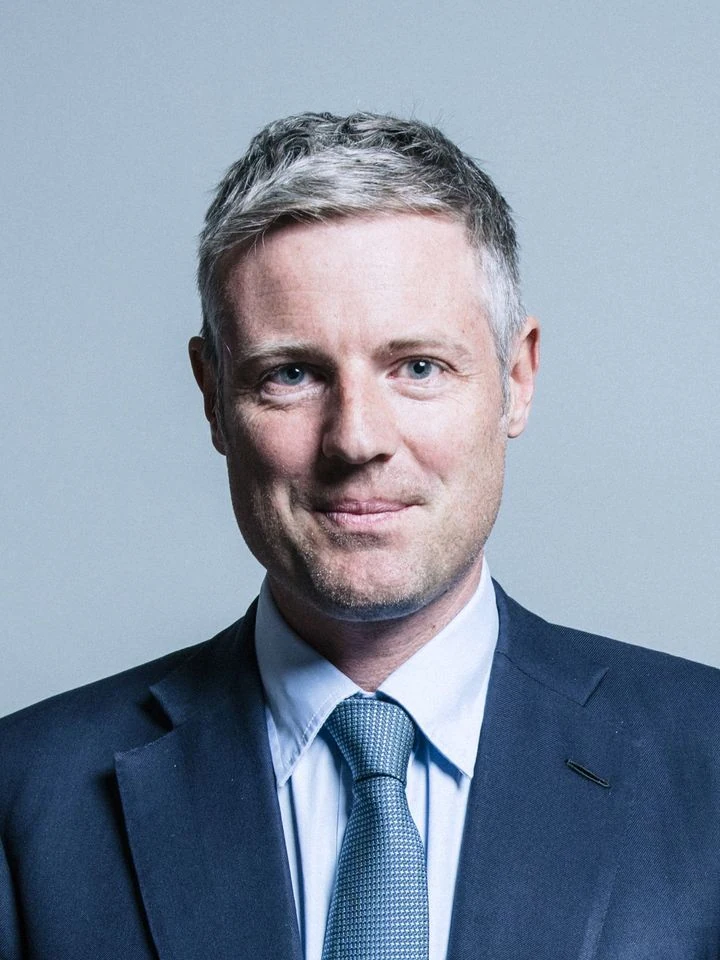
Zac Goldsmith’s environmental career began in journalism and continued through party policy, the House of Commons and ministerial office. As editor of The Ecologist, he helped reshape the magazine into a current-affairs publication; as a Conservative politician, he worked on proposals for cleaner transport and energy policy, opposed Heathrow expansion and later held government responsibilities for the environment and international affairs. His career also included electoral defeat and a final resignation from ministerial office over the Government’s approach to environmental policy.
A magazine takes a new direction
Born Frank Zacharias Robin Goldsmith in Chelsea, London, on 20 January 1975, he grew up in a family with a substantial political and financial inheritance. His father was financier James Goldsmith and his mother was Lady Annabel Vane-Tempest-Stewart. Goldsmith attended Eton College and later studied at the Cambridge Centre for Sixth-form Studies. As a child, he read the naturalist Gerald Durrell and watched David Attenborough’s wildlife programmes; he later identified those interests as formative in his attachment to the natural world.
His early working life included environmental research and travel. He worked in California for the think tank Redefining Progress and the International Society for Ecology and Culture, and spent six months in Ladakh, where he studied traditional cultures and helped run a tourist education programme. In 1997, his uncle Edward Goldsmith, founder of The Ecologist, appointed him the magazine’s reviews editor. He became editor-in-chief the following year.
Goldsmith relaunched the publication in March 2000, moving it from an academic-journal style towards a current-affairs magazine. The change broadened its appeal and trebled its circulation, according to the biographical account. He held the editorship until 2007, leaving after taking on a role reviewing the Conservative Party’s environmental policies. The move from magazine editing to party policy work established a route by which environmental campaigning could reach political debate.
Building a Conservative environmental programme
Goldsmith joined the Conservative Party in 2005. That December, party leader David Cameron appointed him deputy chairman of the Quality of Life Policy Group, working alongside former environment secretary John Gummer. Its remit included climate change, carbon emissions, clean air and transport. In 2007, Goldsmith and Gummer presented the group’s 600-page report. Its proposals included a pause on airport expansion, taxes on short-haul flights and highly polluting vehicles, and rebates for household improvements that increased energy efficiency.
The report attracted criticism, including from Labour politicians, Conservatives and the aviation industry. Cameron, however, treated it as part of an effort to change the party’s image and said many of its recommendations would be included in the Conservative manifesto. Goldsmith’s work thus connected environmental measures to a broader question for the party: how to make sustainability part of its programme rather than a separate concern.
He entered Parliament as MP for Richmond Park at the 2010 general election, defeating Liberal Democrat Susan Kramer. He increased his majority in 2015. In the Commons he also coordinated a cross-party group of MPs seeking an independent inquiry into child sexual abuse. Environmental policy remained central to his public profile, particularly his opposition to expanding Heathrow Airport. His objections later shaped his decisions about standing for re-election.
Contests, return and ministerial office
Selected as the Conservative candidate for London mayor in 2016, Goldsmith campaigned against Heathrow expansion and lost to Labour’s Sadiq Khan. The campaign was also criticised for its attacks on Khan and accused by opponents of divisive and racist messaging; Goldsmith denied that his campaign was racist. These criticisms and his defeat formed a contentious chapter in a career often presented through its environmental commitments.
When the Government approved a third runway at Heathrow, Goldsmith resigned his Commons seat, as he had said he would. He stood as an independent in the resulting Richmond Park by-election and lost to Sarah Olney. In 2017 he returned as the Conservative MP for the constituency, winning by 45 votes. He was defeated by Olney at the 2019 general election, after which he remained in government through appointment to the House of Lords.
Created Baron Goldsmith of Richmond Park in January 2020, he continued as a minister. His responsibilities included the Pacific and international environment, and later energy, climate, overseas territories and the Commonwealth. In June 2023 he resigned from ministerial office, saying the Government showed apathy towards environmental issues. Prime Minister Rishi Sunak said Goldsmith had been asked to apologise for a tweet about the Commons investigation into Boris Johnson and had chosen a different course. Goldsmith told the BBC that his resignation had been a long time coming. These accounts place his departure in a dispute about both his public comments and the Government’s environmental direction.
Why Zac Goldsmith deserves a place in British Legacy
Goldsmith’s place in British political history rests in part on the sustained effort to make environmental questions part of Conservative policy. As editor of The Ecologist, he helped turn a specialist journal into a current-affairs magazine with a wider readership. In the Quality of Life Policy Group, he worked on an extensive programme addressing emissions, transport, clean air and household energy efficiency. Its proposals were contested, but they brought specific environmental measures into the party’s policy discussion and, as Cameron said, informed the manifesto.
His later career carried that work into elected and ministerial office. As an MP, Goldsmith opposed Heathrow expansion and tied his position to his decision to resign his seat when the Government approved a third runway. As a minister, he held responsibilities spanning climate, energy and the international environment. His 2023 resignation, framed by him as a response to the Government’s lack of interest in environmental policy, made that commitment a point of public disagreement rather than a settled claim of success. The significance is in the pathway he pursued: journalism, policy-making, parliamentary campaigning and executive responsibility. Together, those roles show how environmental advocacy can press for influence within established British political institutions, while also exposing the limits and conflicts of that approach.
Sources
Zac Goldsmith — revision 1376111331
Adapted in part from Zac Goldsmith by Wikipedia contributors, under CC BY-SA 4.0. Text has been edited and combined with the existing article; this adapted text is shared under the same licence. Contributor history.