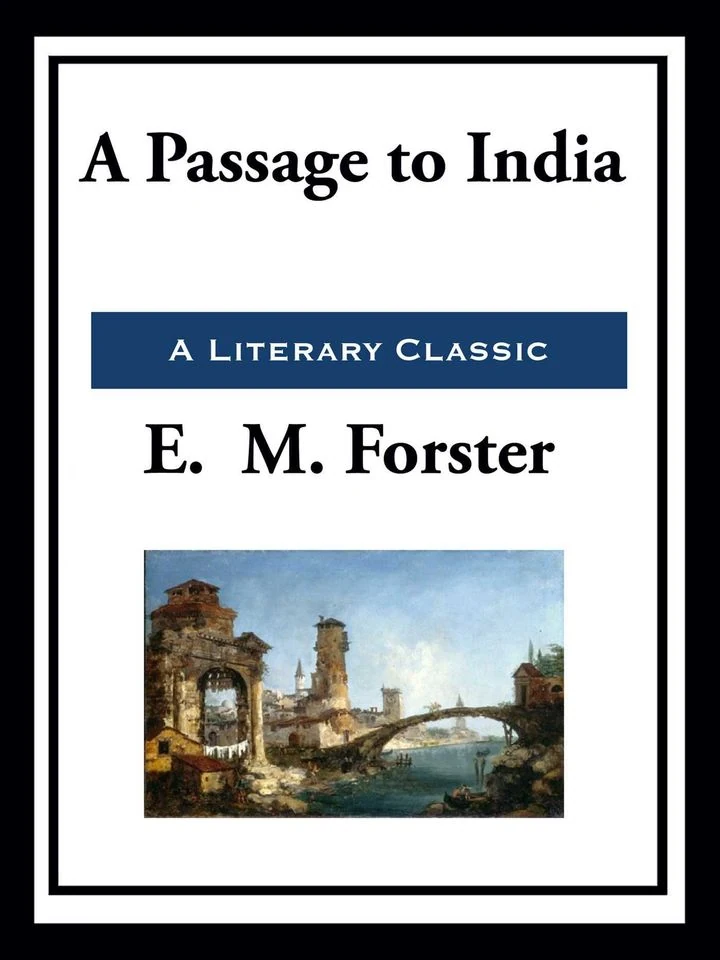
In E.M. Forster’s A Passage to India, the hope of friendship across the colonial divide is tested by an accusation and a trial. Set in the fictional Indian city of Chandrapore, the novel brings together an Indian Muslim doctor, an English schoolmaster and two British women visiting India. Their relationships unfold under British rule, where individual goodwill cannot easily overcome the racial prejudice and unequal power surrounding them. First published in 1924, the book makes that tension its central subject: whether people can meet as friends when the society around them insists on dividing them.
Chandrapore and the Marabar Caves
The story centres on Dr Aziz, an Indian Muslim surgeon; Cyril Fielding, an English schoolmaster described in the supplied article as open-minded; Adela Quested, a young British visitor; and Mrs Moore, an older and sympathetic British woman. The novel begins with the possibility of cross-cultural friendship. That possibility becomes entangled with the relationships between the visitors and the Indian community, and with the broader structures of colonial rule.
The turning point comes during an incident at the Marabar Caves. Adela accuses Aziz of assault, and the accusation leads to a trial. The case is more than a dispute between individuals: it brings racial assumptions and misunderstandings into public view, and exposes the different positions occupied by British and Indian people under the Raj. As the story develops, the relationships among the principal characters cannot be separated from the society judging them.
The resolution challenges the prospect of lasting friendship in those conditions. Forster’s subject is not simply whether two people like or trust one another. His plot asks what personal understanding can accomplish when authority and public opinion are divided along colonial lines. By making the trial the consequence of an encounter in the caves, the novel connects intimate experience with the larger pressures of its setting.
India in Forster’s experience
The supplied article records that Forster visited India in 1912–13 and again in 1921, and says that his experience there influenced the novel. Among the Indians with whom he formed friendships was Syed Ross Masood, whose influence on Forster’s understanding of Indian society and colonial conditions is noted in that account. These details place the book’s concern with friendship in the context of relationships Forster had himself formed during his travels.
That context does not make the novel a straightforward record of those visits. Rather, the story uses invented characters and an invented city to examine the barriers that can shape encounters between people. Aziz, Fielding, Adela and Mrs Moore are positioned differently within the colonial order; their intentions and sympathies matter, but they do not make that order disappear. The novel’s conflict rests on a distinction between personal feeling and the political conditions in which feeling has to operate.
Its focus on an Indian Muslim doctor also places an Indian character at the centre of a story about British rule, rather than treating India only as a setting for British experience. The supplied article characterises Forster’s treatment of Indian characters as empathetic and as a counterpoint to imperialist writing. The plot gives that perspective human stakes: Aziz is not a background figure, but one of the people whose life is reshaped by the accusation and its consequences.
A novel about power as well as misunderstanding
A Passage to India is both a study of cross-cultural relationships and a critique of the colonial conditions that constrain them. The accusation and trial reveal how personal claims acquire force in a society where British and Indian people do not stand on equal terms. Misunderstanding is part of the conflict, but the novel’s account also points to the power that determines how such misunderstandings are interpreted and acted upon.
This distinction gives the work its particular force. A story about friendship might suggest that patience and sympathy are enough to bridge difference. Forster’s novel instead tests that hope against the institutions and prejudices of the Raj. The characters’ efforts to understand one another remain important, but the outcome cannot be explained as a private matter alone. Their social positions shape what they can risk, what others believe about them and whether a friendship can endure.
The novel’s legacy is tied to its treatment of empire through human relationships. It does not discuss colonial rule only as an abstract political arrangement; it shows its effects in the strain placed on meetings, trust and belonging. The supplied article notes its continued study and its relevance to discussions of race, colonialism and identity. Its attention to the possibility of human connection amid political division gives those themes a particular narrative form.
Publication and literary standing
Published in 1924, the novel received critical acclaim according to the supplied article and won the James Tait Black Memorial Prize for fiction. That article also identifies it as one of the greatest novels of the twentieth century. Those honours and assessments reflect its place in literary discussion, while its enduring subject matter helps explain why the book is treated as more than a period story about British India.
Forster’s achievement, on the evidence available here, is the construction of a narrative in which a personal accusation opens onto questions of colonial authority and racial division. The trial gives the conflict a clear public focus; the attempted friendships give it human stakes. Neither element cancels the other. The result is a novel that invites attention both to the characters’ individual relationships and to the unequal world in which they are formed.
As a work of British literature, it is significant partly because it turns a critical gaze on British imperial power. Its subject is not a flattering account of colonial rule, but the difficulty of friendship within it. That perspective makes the novel relevant to readers examining how literature represents empire, and how private encounters can expose broader structures of inequality.
Reading the novel
The supplied article recommends Amazon as a place to purchase the book. For readers interested in literature or history, the novel offers a way into its account of personal relationships and British and Indian history.
Why A Passage to India deserves a place in British Legacy
A Passage to India deserves a place in British Legacy because it examines Britain’s imperial history from within the tradition of British literature, while refusing to present colonial rule as a neutral backdrop. Forster sets the story in British-ruled India and makes the unequal relationship between British and Indian communities central to its plot. The accusation against Aziz and the ensuing trial show how racial prejudice and colonial authority can shape the fate of individuals. That focus gives readers a way to consider the human consequences of empire through a specific story rather than an abstract account of power.
The novel also gives lasting weight to the question of whether friendship can survive political inequality. Aziz and Fielding’s relationship, alongside the roles of Adela and Mrs Moore, makes the possibility of cross-cultural understanding a dramatic problem rather than a simple moral lesson. Forster’s visits to India and his friendship with Syed Ross Masood, as recorded in the supplied article, connect the novel’s concerns to his experience without making the fiction a documentary record. Its British legacy lies in this combination: a major literary work, a critique of the Raj and a sustained exploration of the limits imposed on human connection by colonial divisions. It offers a specific reason to remember Forster: his novel asks British readers to confront the consequences of British power.