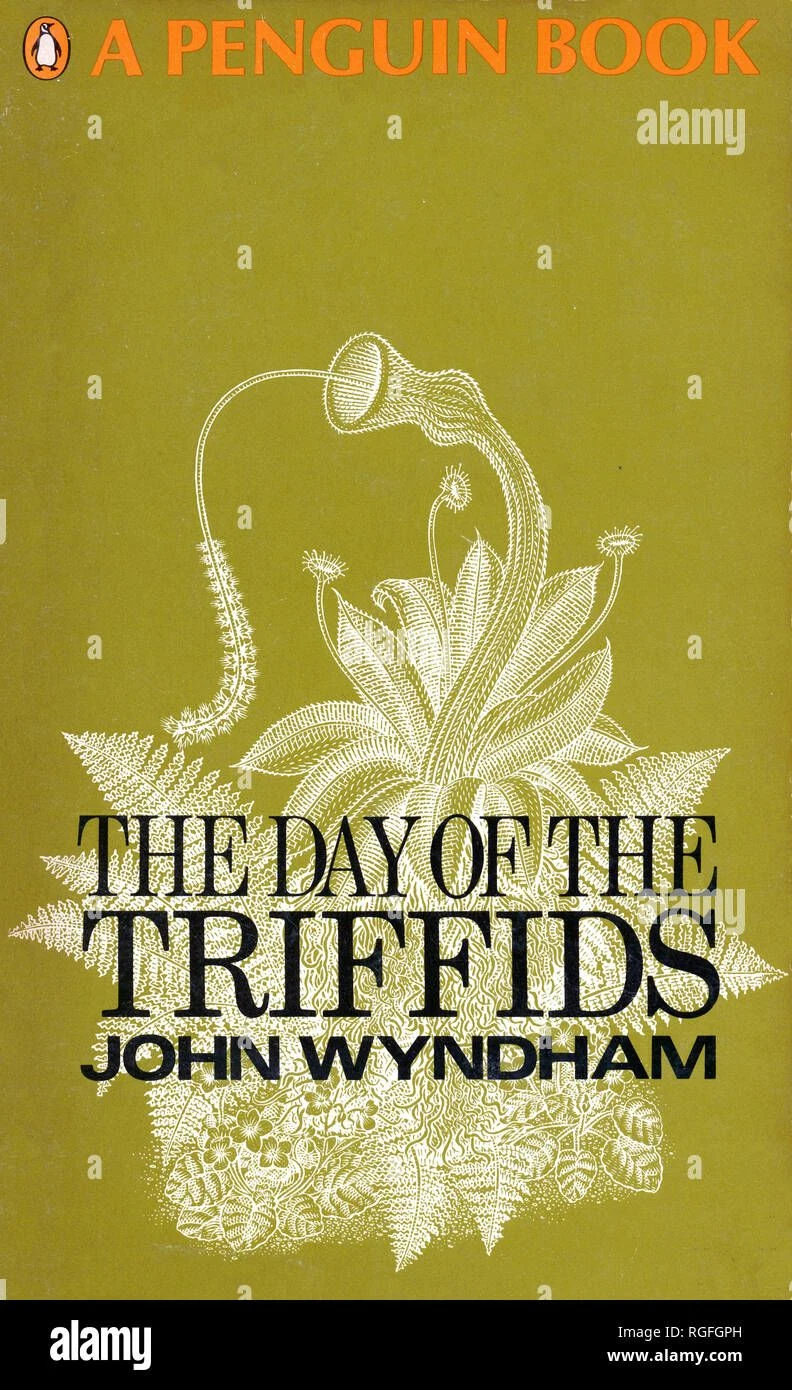
In John Wyndham’s The Day of the Triffids, disaster leaves most of humanity blind just as walking, stinging plants threaten the survivors. The combination turns a catastrophe into a test of how people might live together when ordinary social arrangements no longer work. Those who retain their sight face not only the need to survive, but also the needs of a population suddenly plunged into darkness.
Two threats, one changed society
The novel’s premise brings two distinct dangers into the same crisis. A meteor shower causes widespread blindness; the triffids, described in the supplied account as genetically engineered plants capable of walking and delivering a lethal sting, add a direct physical threat. With society already in disarray, the survivors must contend with danger while considering how to respond to the needs of other people.
The sighted become potential caretakers and leaders. That position raises questions of responsibility as well as survival: what obligations do people have to others when circumstances have changed so radically? The source describes the survivors as facing physical and moral dilemmas, and identifies care, leadership and human ingenuity among the ideas brought into focus by the emergency. The story’s imagined disaster therefore has a social dimension. It tests the ties between people as well as their ability to withstand danger.
The triffids add a further question about humanity’s place in a drastically altered world. The original article presents the plants as genetically engineered, connecting the novel’s speculative threat with concerns about scientific experimentation. It also points to the fragility of human society: the loss of sight and the presence of a new danger expose how much daily life depends on conditions people may take for granted.
Wyndham and the novel’s concerns
The Day of the Triffids was published in 1951. The supplied account describes Wyndham as an established writer whose earlier work had appeared under various pseudonyms. It places the book against contemporary anxieties about scientific experimentation and global catastrophe, and mentions fears associated with the Cold War. These are useful contexts for the novel’s imagined emergency; the available material does not establish Wyndham’s precise intentions in writing it.
The source identifies survival, morality and human ingenuity as central themes. Together, they give the premise more than the force of a disaster story. Blindness makes dependence between people immediate, while the triffids create a threat that calls for practical responses. The resulting dilemmas concern both what people can do to endure and what they ought to do for one another.
Reception and the limits of the record
The imported article describes the novel as a critical and popular success and says it inspired film, radio and television adaptations. It also claims that the book influenced later works in the genre. No reviews, adaptation details or examples of that influence are supplied, so those broad claims cannot be set out more specifically here. The material does, however, present the novel as a work of British science fiction and identifies its themes of survival, responsibility and human ingenuity.
Readers interested in the book can find a purchase listing on Amazon.
Why The Day of the Triffids deserves a place in British Legacy
The Day of the Triffids merits a place in British Legacy as a 1951 work identified in the supplied material with British science fiction. Its premise joins speculative invention to a human problem: when most people lose their sight, the survivors who can see confront responsibilities towards a wider population. The triffids make the world physically dangerous, but the novel’s stated concerns also include care, leadership and moral choice. This combination makes the imagined catastrophe a way to consider what people owe one another when familiar systems break down.
The book’s relevance here lies in that specific conjunction of an altered world and social obligation, not in a general claim about British character. Its themes of human ingenuity and the fragility of society give readers a framework for considering how communities respond to sudden change. The supplied material also links the novel’s setting and concerns to period anxieties about scientific experimentation and global catastrophe, while offering no basis for stronger claims about Wyndham’s intentions or the work’s influence. On the evidence available, its place in British Legacy rests on its British science-fiction context and its enduringly legible questions about survival, responsibility and human life in a changed world.