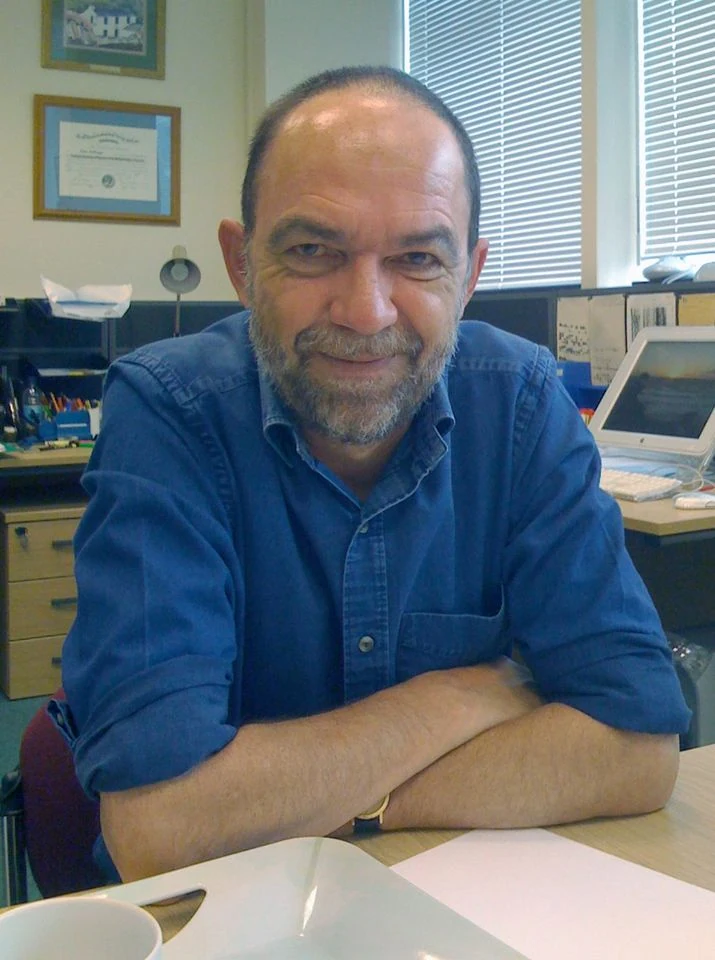
On 10 September 1984, Alec Jeffreys looked at an X-ray film from a DNA experiment in his Leicester laboratory and saw more than a pattern of bands. It showed similarities between family members and differences between individuals. The observation suggested that inherited variation in DNA might help identify a person and establish biological relationships. Within a few years, the method known as DNA fingerprinting had helped resolve an immigration dispute, changed the course of a murder investigation and opened a new chapter in forensic science.
Jeffreys did not create every later form of DNA testing, nor did his discovery make scientific evidence infallible. Its fundamental importance was to show that variation in DNA could be used as evidence about identity and kinship. Developed at the University of Leicester, his techniques became influential in forensic science, paternity testing and genetics. Their first practical use was not a criminal investigation, but a case in which a family needed to establish a boy’s relationship to them to support his right to enter Britain.
From Oxford and Luton to Leicester
Sir Alec John Jeffreys was born in Oxford on 9 January 1950. He spent his first six years there before his family moved to Luton in 1956. His father gave him a chemistry set and a brass microscope, encouraging an early interest in scientific investigation. Jeffreys attended Luton Grammar School and Luton Sixth Form College, then won a scholarship to study at Merton College, Oxford. He graduated in biochemistry with first-class honours in 1971.
He stayed at Oxford to complete a doctorate on the mitochondria of cultured mammalian cells. After his research degree, he worked as a research fellow at the University of Amsterdam, studying mammalian genes. In 1977, he joined the University of Leicester. His research there focused on genetic variation, a subject that would yield a method with applications beyond the questions his laboratory had initially set out to answer.
The discovery grew from research rather than a commission to devise a police test. Jeffreys and his colleagues were examining differences in DNA and how those differences could be studied. The X-ray film that caught his attention was an unexpected result in this wider work. Seeing its significance was only the beginning: it took further investigation to understand how the patterns could be used and what they might reveal.
Reading identity in repeated sequences
Jeffreys and his colleagues were studying minisatellites, repeated stretches of DNA whose number and arrangement vary between people. The film showed patterns from members of a family. Some bands were shared, consistent with inheritance from parents, while the overall combinations differed from one individual to another. The same biological variation therefore offered two kinds of information: it could help distinguish people and show how they were related.
The method became known as DNA fingerprinting. Its first published papers appeared in 1985. The original technique examined many minisatellites together. In the same year, Jeffreys and his team also developed DNA profiling, which typed individual, highly variable minisatellites. This approach made the system more sensitive and reproducible, and better suited to routine casework.
Before DNA fingerprinting, forensic investigators could use evidence such as blood groups to narrow down possibilities, but those methods could not distinguish individuals with the same power. DNA analysis offered a more discriminating comparison. Its contribution was not to make scientific evidence incapable of error, but to give investigators and courts a stronger means of testing whether biological material was consistent with a particular person or relationship. The collection and assessment of evidence remained important.
Before the method was commercialised in 1987, Jeffreys’s laboratory was the only centre in the world carrying out DNA fingerprinting. It received enquiries from across the globe. The discovery also had scientific uses beyond identifying people. The method could be applied to other species and to population genetics. The variation that made minisatellites useful for identification also gave researchers a way to investigate how genomes differ.
A family case, then a murder investigation
The first practical use of the method came in 1985, in an immigration dispute. Jeffreys was asked to help establish whether a British boy whose family came from Ghana was related to them. The family needed to demonstrate that relationship in support of the boy’s right to enter Britain. DNA results showed that he was closely related to the other family members. Before the technique became known principally as a tool for police, it had helped address a question of family connection with immediate consequences for an official decision.
The same ability to compare inherited patterns made DNA fingerprinting valuable in paternity disputes. Testing could provide strong evidence about whether a child was biologically related to a proposed parent. The method thus reached beyond criminal investigation to questions asked by families, courts and immigration authorities. It supplied biological evidence for a particular question of kinship; it did not make every dimension of family life a laboratory matter.
DNA fingerprinting was first used in police forensic testing during the investigation into the murders of Lynda Mann and Dawn Ashworth in Leicestershire. DNA evidence excluded Richard Buckland, who had confessed to one of the killings, as the source of the semen samples. A subsequent screening of local men led investigators to Colin Pitchfork. His DNA matched the evidence, and he was convicted of the murders.
The investigation showed the method’s value both for identifying a person and for excluding a suspect. The result was important not because DNA could settle every question on its own, but because a more discriminating comparison could redirect an investigation. In this case, it helped lead investigators to Pitchfork and away from Buckland, who might otherwise have faced conviction. Careful collection, handling and assessment of evidence remained essential.
From fingerprinting to profiling
DNA profiling, developed by Jeffreys and his team in 1985, helped move the science towards repeatable forensic practice. Later developments involved other scientists and institutions. Polymerase chain reaction techniques enabled DNA to be amplified, while short tandem repeats became widely used markers. Subsequent refinements made profiling more suitable for forensic casework and databases. They built on the field Jeffreys had opened, but should not be attributed to him alone.
The distinction is important. Jeffreys developed foundational techniques and demonstrated that DNA variation could identify individuals and reveal kinship. Later methods changed how samples were processed and which markers were used. Recognising the contribution of the wider scientific and forensic community makes his original achievement clearer: it was the beginning of a developing field, not a claim to have created every feature of modern testing.
DNA comparison also proved useful in investigations of identity outside ordinary criminal cases. In 1992, Jeffreys’s methods were used to help German prosecutors confirm the identity of Josef Mengele’s remains. DNA from his exhumed skeleton was compared with material from his mother and son. As in the immigration case, comparison through kinship helped address a question of identity, although in very different circumstances.
Genetic research and public recognition
Jeffreys’s research continued beyond the forensic applications of DNA fingerprinting. He studied mutation, recombination and the processes that generate human genetic diversity. Minisatellites were useful not only because their patterns differed, but because they could help researchers investigate how genomes change between generations. The work therefore gave the discovery a wider scientific role in understanding biological variation.
His honours recognised both the scientific contribution and its significance. Jeffreys was elected a Fellow of the Royal Society in 1986 and knighted in 1994 for services to genetics. He received the Royal Society’s Royal Medal in 2004 and its Copley Medal in 2014, the latter recognising pioneering work on variation and mutation in the human genome. He shared the 2005 Lasker Award for Clinical Medical Research with Edwin Southern of the University of Oxford. In 2016, he was appointed a Member of the Order of the Companions of Honour. He also became an honorary freeman of the City of Leicester in 1992.
These distinctions sit alongside a lasting connection to the university where the discovery took shape. Jeffreys’s work at Leicester linked a question about genetic variation to practical methods used internationally. The account is not simply one of an isolated moment of insight: education, research and the university setting provided the path from scientific observation to a technique with consequences for courts, families and investigators.
Why Sir Alec Jeffreys deserves a place in British Legacy
Sir Alec Jeffreys deserves a place in British Legacy because his work changed what could be established from biological evidence. Developed at the University of Leicester, DNA fingerprinting offered investigators a much more discriminating way to compare DNA than earlier methods such as blood grouping. In the Leicestershire investigation, it helped identify Colin Pitchfork and exclude Richard Buckland. That dual outcome matters: the value of the method lay not only in its ability to implicate a suspect, but also in its capacity to challenge a mistaken identification. Its earlier use in the 1985 immigration case showed that the same science could help a family demonstrate kinship when an official decision depended on evidence of relationship.
His legacy also reaches beyond those cases. Jeffreys’s techniques helped establish DNA profiling as a practical field, while his research on minisatellites, mutation and recombination advanced understanding of how genetic variation arises. Later forensic methods were developed by many researchers, but they followed a path opened by his foundational work. The result was a British university discovery with uses in criminal investigation, family disputes and biological research around the world. Its benefit was not a promise that science would answer every question without error, but a more powerful means of testing identity and relationship. Jeffreys joined fundamental genetics to concrete public uses, leaving a contribution to British science whose effects extended well beyond Leicester.
Sources
Alec Jeffreys — Wikipedia revision 1371963309
Adapted in part from Alec Jeffreys by Wikipedia contributors, under CC BY-SA 4.0. Text has been edited and combined with the existing article; this adapted text is shared under the same licence. Contributor history.