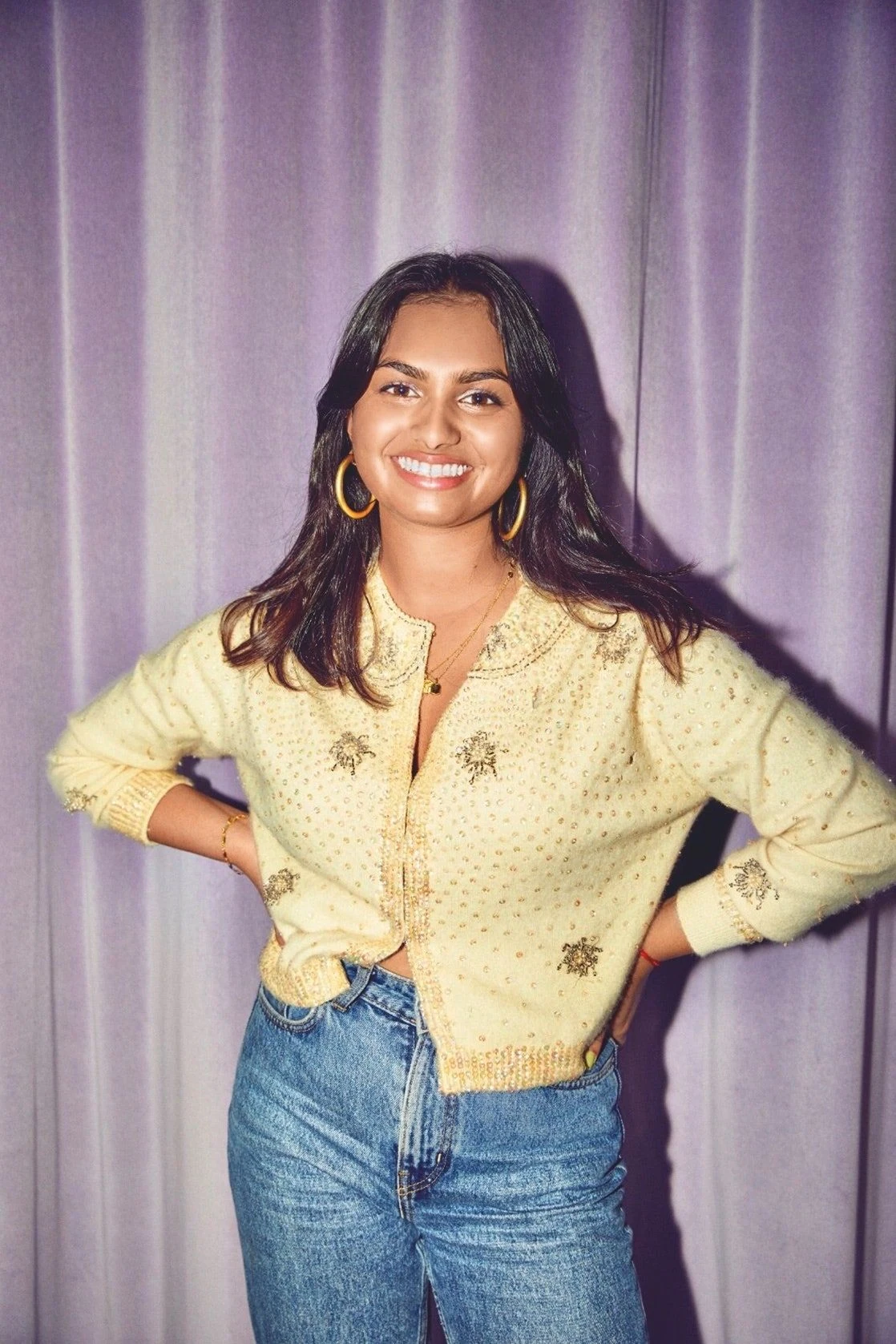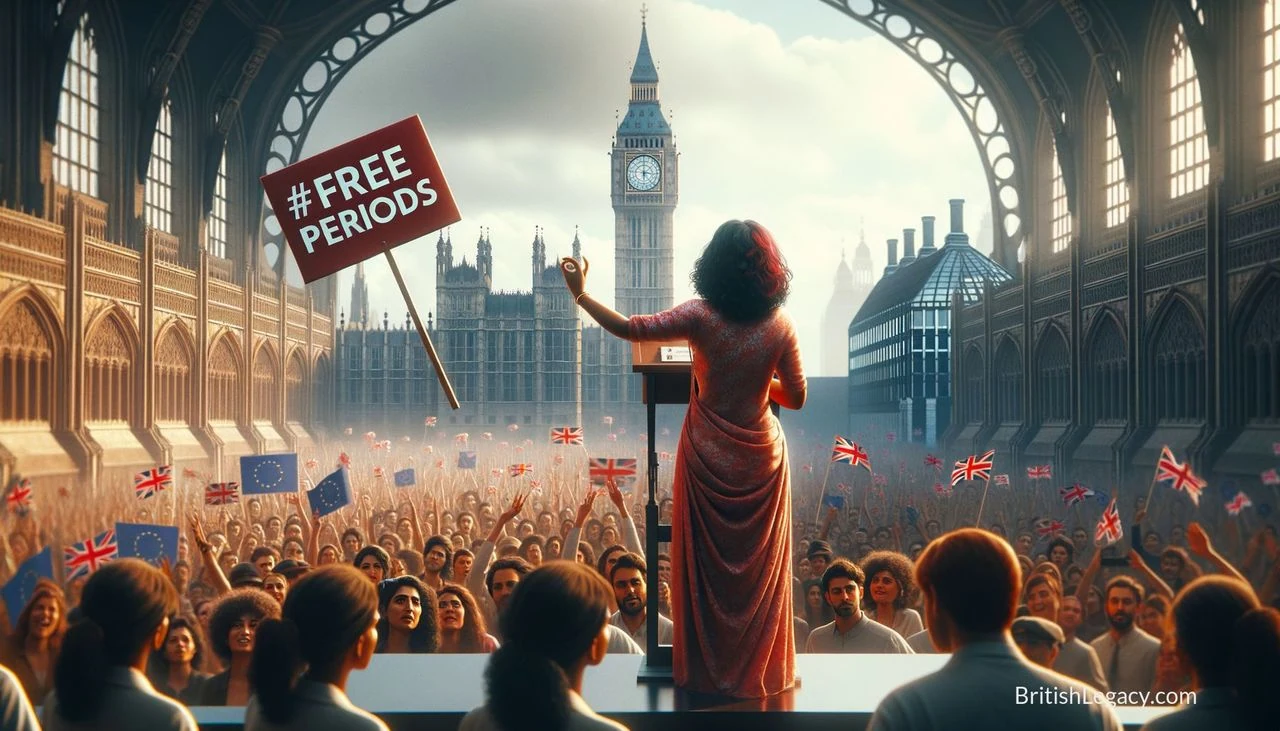
Missing school because you cannot afford period products is not a private inconvenience. Amika George made that point a public demand. In 2017, aged 17 and still at secondary school, she founded the #FreePeriods campaign after learning that girls in Britain were missing lessons because of period poverty. Her campaign used petitions, protest and public argument to press government to treat access to products as part of educational equality. The result was a change in the expectations placed on schools and public policy: menstruation could no longer be dismissed as an embarrassing matter for individuals to manage alone.
George’s story is about more than awareness. Campaigners had to make the practical case for provision, persuade ministers to act and keep the issue in view when the first policy announcement did not cover every pupil. The resulting English school scheme moved the debate into budgets and arrangements for supplying products. George was one participant in a wider movement, not the sole author of reform, but her role in giving the campaign a clear public identity and a specific demand makes her part of a consequential chapter in recent British activism.
A campaign rooted in school life
Amika Sara George was born in London on 4 October 1999 and grew up in Edgware, in north-west London. Her campaign began before she had left secondary education. That context shaped its focus: the issue was not an abstract argument about equality but a barrier pupils could encounter in the middle of an ordinary school week. George drew attention to the fact that some young people were missing lessons because they could not afford menstrual products, or because stigma made it harder to seek help.
After reading about girls and women in Britain who were missing school in connection with menstruation and the cost of products, George began a petition addressed to Westminster. While still a pupil, she founded the #FreePeriods organisation in April 2017. A petition gave supporters a straightforward way to show their backing; public demonstrations and speeches made the issue visible beyond the people who had signed it. The campaign’s demand was equally direct: young people should not lose access to education because they could not obtain products they needed.
By April 2019, an update to supporters referred to 274,039 signatories. That figure illustrates the reach the campaign had achieved, but the scale of the petition was not the whole of its influence. The argument connected a familiar public institution, the school, to a problem that had often been framed as private. If pupils were missing class, the consequences were educational as well as personal. George and other campaigners pressed ministers to recognise that connection.
Making a hidden hardship visible
The cost of products was only one part of period poverty. George spoke about the circumstances that could follow when someone could not afford pads or tampons: using improvised materials, wearing products for too long, worrying about leaks and weighing the risk of embarrassment against the importance of attending school. These details made a broad concern concrete. They showed what deprivation could mean in the routines of a school day, rather than leaving the issue at the level of an abstract appeal for fairness.
That plainness challenged a second barrier: the silence surrounding menstruation. Euphemism and embarrassment can make it difficult to describe a problem, ask for help or persuade others that public action is necessary. #FreePeriods made it harder to treat the subject as unsuitable for serious discussion. Its message was that menstruation is an ordinary part of life and that a lack of products can have real effects on a young person’s ability to participate in education.
George did not campaign alone, and her work formed part of a broader effort against period poverty. The protests associated with #FreePeriods included speakers such as Adwoa Aboah, Suki Waterhouse, Jess Phillips and Daisy Lowe. Their involvement brought different audiences to the issue, while the campaign’s use of petitions, public speaking and press coverage offered familiar ways to take part in democratic debate. The combination helped turn a problem often treated as marginal or personal into a question ministers had to answer.
George also argued that boys and men should be included in conversations about menstruation. That position recognised that a taboo cannot be dismantled by asking only those who menstruate to carry the burden of explanation. Better understanding among boys and men could help challenge the ignorance and embarrassment that surround the subject. In this way the campaign addressed both access to products and the social conditions that can make asking for them difficult.
From protest to provision
The policy response developed in stages. In March 2019, Chancellor Philip Hammond announced funding for secondary schools in England to provide free sanitary products to pupils who needed them. George and fellow campaigners welcomed the commitment but argued that it left a gap: children may begin menstruating while still at primary school. They also called for provision to be made more secure, rather than resting on a commitment that a future government might change.
In October 2019 the government announced that primary schools would be included from early 2020. Guidance published in January 2020 set out the period product scheme for state-maintained schools and government-funded 16 to 19 education organisations in England. Its scope matters. The policy described here is an English education scheme, not a single UK-wide arrangement, and its provision operates through schools and eligible post-16 organisations.
The change brought the issue into the practical work of education: organisations could order products and make them available to pupils. It shifted discussion from whether menstruation belonged in public policy to how provision should be arranged. That did not end poverty or settle every question about health and educational inequality. Nor does a policy announcement, by itself, prove that every pupil can obtain what they need in every circumstance. But the scheme changed what schools and government were expected to provide and gave institutions a route to act.
The supplied account of the scheme reports that take-up remained high. In 2026, the government was reported as saying that 99 per cent of secondary schools and 86 per cent of post-16 organisations had ordered supplies through it. Those figures are a measure of institutional use, not a complete account of pupils’ experience. They nevertheless indicate that the scheme continued beyond the initial news and became part of the working arrangements of many education providers.
Changing the language as well as the rules
Policy can affect not only what institutions do but how they talk about an issue. The supplied government guidance uses the term “period products” and explains that older terminology can suggest that menstruation is unclean. The change in wording is modest, but it reflects the wider argument made by campaigners: products should be treated as ordinary necessities, and menstruation should not be hidden behind language that reinforces shame.
From September 2020, teaching about periods and menstrual wellbeing became compulsory for boys and girls in state-maintained schools as part of health education. This is distinct from the product scheme, but it speaks to the same problem. Access to supplies matters; so does the ability to discuss menstruation without treating it as a subject from which some pupils should be excluded. George’s call for boys and men to be part of the conversation anticipated the value of making that understanding broader than a private exchange among those who menstruate.
The campaign’s influence should not be reduced to a claim that one activist changed every attitude or secured every policy outcome. Rather, George helped make a specific case difficult to ignore: when the lack of menstrual products keeps pupils out of class, it is a matter for education policy. The sustained public discussion also gave schools, families and young people a clearer vocabulary for describing the issue.
Education, recognition and a wider audience
George later studied History at Murray Edwards College, University of Cambridge. Her degree included the study of Indian colonial history and Britain’s ties to the slave trade. The supplied biographical account places her at Cambridge by April 2019, while still active in the campaign. Her education and public work ran alongside one another: the university did not mark the start of her influence, since #FreePeriods had already begun while she was at school.
Recognition followed as the campaign gained public attention. TIME included George in its 2018 list of the 25 Most Influential Teens. In the same year, she received a Goalkeepers Campaign Award from the Bill & Melinda Gates Foundation. She was also included in The Big Issue’s Top 100 Changemakers and Teen Vogue’s 21 under 21. These distinctions drew attention to her work, but they are best understood as recognition of a campaign rather than a substitute for its practical achievements.
In the 2021 Birthday Honours, George was appointed a Member of the Order of the British Empire for services to education. At 21, she was the youngest recipient on the list. She said she had initially felt uncomfortable about accepting the honour, and described the British Empire as exploitative. Her decision to accept was connected, in her account, to the under-representation of young people of colour in politics and activism. That response adds useful context to the award: accepting recognition did not mean setting aside her critical view of the history invoked by its title.
George also turned experience into guidance for others. Her book Make It Happen: How to Be an Activist, published in 2021, offered young people an account of how to approach activism. Alongside her writing and public commentary, it extended her work beyond the immediate campaign. The practical question was no longer only how to win support for one demand, but how a new generation might organise, communicate clearly and try to change institutions.
Why Amika George deserves a place in British Legacy
Amika George deserves a place in British Legacy because she helped change the standard of provision expected in an ordinary but essential setting: school. Her campaign connected period poverty to educational access, showing that the absence of products could mean missed lessons and diminished participation. Through #FreePeriods, she helped turn that connection into a public demand and sustained pressure on government. The English scheme that followed made free products available through state-maintained schools and eligible post-16 education organisations. The reform was the work of campaigners and public institutions together, but George’s role in articulating the case and pressing for its extension to primary schools is a significant part of that history.
The benefit is practical as well as symbolic. Provision can relieve pressure on pupils and families, while making it easier for schools to respond to a need that had too often been handled informally or left unspoken. The scheme does not prove that every difficulty has disappeared, and its reported take-up figures should not be mistaken for a measure of every pupil’s experience. They do show that the change was not confined to a brief burst of attention: education providers continued to use the arrangement years after its launch.
George’s wider contribution lies in changing what can be said about menstruation and who is expected to understand it. She argued for including boys and men in the conversation, and her campaign challenged the assumption that period poverty was a private problem for girls to endure quietly. As a young activist, she used a precise demand and familiar democratic tools to bring an overlooked hardship into institutional debate. That is a specifically British legacy grounded in schools, policy and public argument, not in an abstract claim about national character. She helped widen the meaning of a decent education: it must account for the ordinary needs that allow pupils to be present and take part.
Sources
Adapted in part from Amika George by Wikipedia contributors, under CC BY-SA 4.0. Text has been edited and combined with the existing article; this adapted text is shared under the same licence. Contributor history.