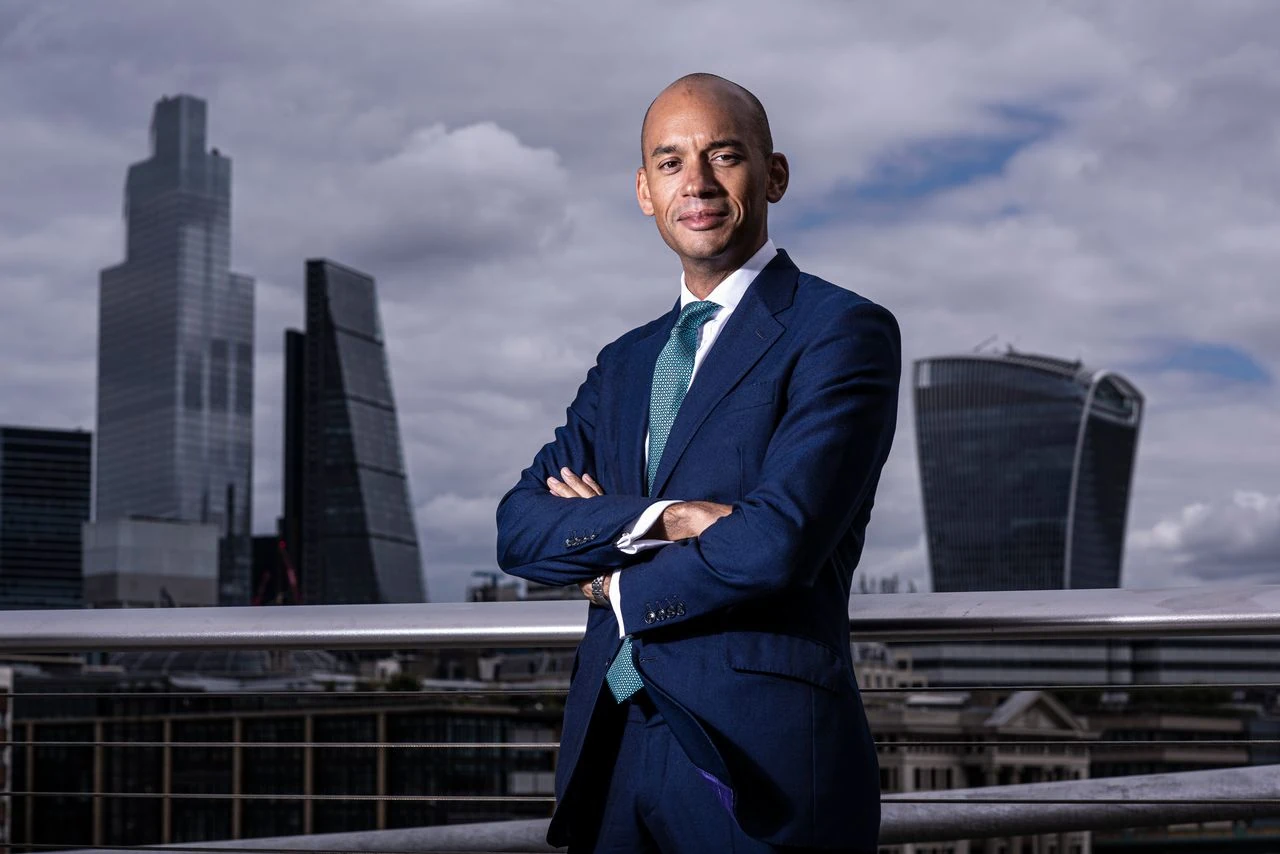
In January 2011, Chuka Umunna questioned Barclays chief executive Bob Diamond at the Treasury Select Committee about the bank’s offshore subsidiaries and tax. The exchange put a first-term MP at the centre of a national argument about what powerful institutions owe the public. It also showed a characteristic feature of Umunna’s politics: asking business leaders to account for decisions whose consequences reach beyond the boardroom.
Umunna represented Streatham from 2010 until 2019. He became a prominent Labour spokesman on business, chaired parliamentary work on social integration, campaigned for a public vote on the final Brexit deal and took part in attempts to realign the political centre ground. His career did not follow an uninterrupted path upwards: rapid promotion was followed by party departures, an unsuccessful attempt to establish a new political vehicle and defeat at the ballot box. In Parliament and afterwards, he returned to questions of institutional power, responsibility and who gets a voice in decisions shaping British life.
South London roots and a route into politics
Born in Lambeth on 17 October 1978, Chuka Harrison Umunna was the son of Bennett Umunna, a Nigerian businessman, and Patricia Milmo, a solicitor of English-Irish background. He attended Hitherfield Primary School in Streatham and Christ Church Primary School in Brixton Hill before moving to St Dunstan’s College in south-east London. He sang as a chorister at Southwark Cathedral and played the cello. As a teenager he belonged to the Liberal Democrats; in 1997 he joined Labour.
Umunna studied law at the University of Manchester, spent a term at the University of Burgundy in Dijon and later completed a master’s degree at Nottingham Trent University. He qualified as a solicitor and began work at the City law firm Herbert Smith in 2002. In 2006 he joined Rochman Landau, specialising in employment law and advising companies on contentious, transactional and advisory matters.
Alongside legal practice, he wrote about politics and social and economic issues. He contributed to Compass, the Labour-aligned think tank, and wrote for publications including the Financial Times, Tribune, The Voice, The Guardian and the New Statesman. He founded and edited the online magazine The Multicultural Politic, and appeared on radio and television as a commentator. This work placed questions of identity and economic policy in the same public conversation, before he had a seat in Parliament.
Labour selected Umunna as its prospective candidate for Streatham in 2008. At the 2010 general election he won the seat with a majority of 3,259, then gave his maiden speech on 2 June. He took a particular interest in economic policy and reform of the City. In June 2010 he joined the Treasury Select Committee; later that year he became Parliamentary Private Secretary to Labour leader Ed Miliband. In May 2011 he was appointed Shadow Minister for Small Business and Enterprise, and in October was promoted to Shadow Secretary of State for Business, Innovation and Skills.
Banking and business under scrutiny
Umunna’s questions to Barclays came amid continuing scrutiny of the banking sector after the financial crisis. In January 2011 he asked Diamond about offshore subsidiaries and tax arrangements. The hearing disclosed that Barclays used more than 300 subsidiary companies in offshore jurisdictions. Diamond later said the bank had paid £113 million in UK corporation tax in 2009, when it had made £11.6 billion in profit. Those figures gave a concrete focus to a wider public question: how should a major bank account for its contribution to the country in which it operates?
As Shadow Business Secretary, Umunna continued to challenge the government and companies over the public consequences of commercial decisions. In January 2012 he joined Miliband and shadow chief secretary to the Treasury Rachel Reeves in calling on Prime Minister David Cameron to block a proposed £1.6 million bonus for Stephen Hester, chief executive of the publicly owned Royal Bank of Scotland. The argument connected executive pay to public ownership and the obligations attached to a bank supported by the state.
In 2013 Umunna argued that the government had undervalued Royal Mail when it was privatised. A substantial rise in the share price after the sale prompted further parliamentary scrutiny and sharpened the dispute over whether the taxpayer had received fair value. Umunna’s criticism was an opposition argument, not a finding that he controlled or could reverse the sale. Its substance was the question of how government should value a public asset before transferring it to private ownership.
He opposed Pfizer’s proposed takeover of AstraZeneca in 2014, arguing that assurances from the American pharmaceutical company did not adequately protect British jobs and research capacity. AstraZeneca rejected Pfizer’s final offer and the bid fell through. The episode brought industrial strategy into public debate: a takeover was not only a transaction between companies, but potentially a decision affecting workers and the research base in Britain.
These interventions made Umunna a recognisable Labour voice on business and industrial policy. They also reveal the scope and limits of the role. In opposition he could question, criticise and press ministers to explain their choices; he did not determine the outcomes. His case was that ownership, pay, competition and industrial capacity should be debated as matters of public consequence, rather than treated as technical details reserved for executives and investors.
Social integration as a practical question
Umunna’s parliamentary work extended beyond business. As chair of the All-Party Parliamentary Group on Social Integration, he helped give the subject a sustained place in parliamentary debate. Supported by the charity The Challenge, the group examined practical conditions for shared life, including schools, neighbourhoods, migration and public institutions. Its questions were about more than endorsing integration as an ideal: they concerned whether people have opportunities to meet, build relationships and take part as fellow citizens.
Work associated with the group included the British Integration Survey, which examined how segregation in one area could reinforce separation in another. Schools, housing, employment and everyday contact shape the opportunities people have to form relationships across differences. This emphasis made integration a question of institutions and lived experience, rather than a slogan that assumes goodwill alone can overcome separation.
The subject connected civic life to the kinds of economic and public choices Umunna had addressed in his business brief. Neighbourhoods, schools and workplaces are places where people encounter one another; decisions about public institutions and social arrangements affect whether those encounters are possible. His work on integration asked how a diverse country could create more of the conditions for common life without pretending that differences did not exist.
Brexit and the difficulty of changing political course
Following Labour’s defeat in the 2015 general election and Miliband’s resignation, Umunna entered the party leadership contest. Three days after announcing his candidacy, he withdrew, saying he was uncomfortable with the additional scrutiny that came with being a candidate. After Jeremy Corbyn became leader, Umunna resigned from the Shadow Cabinet in September 2015 and returned to the backbenches.
He supported remaining in the European Union in the 2016 referendum. Streatham voted 79.5 per cent to remain, the highest proportion recorded for any constituency in the supplied biographical account. After the result, Umunna argued for a public vote on the final deal with the EU. His position developed over time: he opposed a second referendum during the 2017 general-election campaign, then supported the People’s Vote campaign, launched in 2018. Acknowledging that sequence matters; his position should not be reduced to a single, unchanging stance.
In February 2019, Umunna left Labour with six other MPs to form The Independent Group, which later became Change UK. He was named the group’s spokesperson. After Change UK’s poor result in the European Parliament elections, he left in June and joined the Liberal Democrats. He stood in Cities of London and Westminster at the 2019 general election, lost to Conservative candidate Nickie Aiken and did not return to the Commons.
The attempt to create a new political alignment did not produce a lasting parliamentary vehicle. Umunna later acknowledged that he had underestimated the difficulty of establishing a fully fledged party without existing infrastructure. The episode exposed the practical obstacles facing politicians who try to assemble a new coalition outside established parties, as well as the challenge of representing voters whose views no longer sit comfortably within familiar political affiliations. His changes of party were both a defining feature of his later parliamentary career and a measure of the political strain of the Brexit years.
From Parliament to financial services
After leaving Parliament, Umunna moved into corporate and financial work. In 2020 he took up an environmental, social and governance role at the public relations and marketing consultancy Edelman. In 2021 he joined J.P. Morgan Chase as a managing director, leading ESG advisory work in Europe, the Middle East and Africa. In July 2024, he was promoted to Global Head of Sustainable Solutions and EMEA Head of Green Economy Investment Banking, according to the biographical account of his career.
The transition brought him into a different arena for questions he had addressed in politics. Corporate governance, investment and sustainability concern how companies assess long-term responsibilities and how capital is directed. In Parliament, Umunna questioned banks, challenged a proposed executive bonus and argued for attention to jobs and research. In financial services, his reported work has involved ESG advice and sustainable investment. These are distinct roles; one should not assume that his later work delivered the political aims he had previously advocated.
The current profile also describes later J.P. Morgan responsibilities and says that by September 2026 Umunna’s professional website identified him as a managing director in Citi’s UK investment banking team. Those details point to a subsequent change of role, but the career chronology after the 2024 promotion is not established here. What can be said is that his professional life continued in finance, a field in which decisions about governance, resilience and investment shape the prospects of companies and industries.
Why Chuka Umunna deserves a place in British Legacy
Chuka Umunna deserves a place in British Legacy because his public career connected specific parliamentary scrutiny to questions about the wider responsibilities of business. On the Treasury Select Committee, he questioned Barclays about offshore subsidiaries and tax, bringing the bank’s disclosures into a public hearing. As Shadow Business Secretary, he challenged a proposed RBS bonus, disputed the valuation of Royal Mail at privatisation and questioned whether Pfizer’s assurances would protect AstraZeneca’s British jobs and research. These interventions did not give him control over the decisions, but they demonstrate what parliamentary scrutiny can do: require powerful organisations and government to explain choices with consequences for the public.
His work on social integration made a different, equally practical contribution. As chair of the All-Party Parliamentary Group on Social Integration, he helped direct attention to the settings in which people meet and build trust: schools, neighbourhoods, workplaces and public institutions. By treating integration as a matter of contact and social arrangements, rather than simply a statement of national ideals, that work gave the debate a concrete civic focus. It asked what makes shared life possible in a diverse country, and where institutions might widen or narrow those opportunities.
Umunna’s career also records the risks and limits of political representation. He left Labour, helped form The Independent Group and Change UK, joined the Liberal Democrats and lost his seat in 2019. Those changes did not create a durable new parliamentary alignment, but they show how difficult it can be to represent political views that cross established party boundaries. His later work in finance extends his engagement with governance and sustainability into another field, without erasing the difference between business roles and elected office. Taken together, his committee work, business brief, integration advocacy and political choices form a record of sustained engagement with economic power, civic belonging and the institutions that shape public life in Britain.
Sources
Chuka Umunna — Wikipedia revision
Adapted in part from Chuka Umunna by Wikipedia contributors, under CC BY-SA 4.0. Text has been edited and combined with the existing article; this adapted text is shared under the same licence. Contributor history.